Kishan Reddy Hails ISRO's Three Gaganyaan Qualification Tests
Synopsis
Union Minister G. Kishan Reddy praised ISRO on 21 July 2026 for completing three Gaganyaan Crew Module qualification tests — covering uprighting, module separation, and structural loads — marking a key step toward India's first crewed spaceflight under PM Modi's Space Vision 2047.
Key Takeaways
Three qualification tests for Gaganyaan Crew Module systems were successfully completed, as announced on 21 July 2026 .
The Float Inflation Test confirmed the module can right itself after sea splashdown, protecting astronaut safety.
The Crew Module Structure withstood simulated loads of 1.75 times estimated forces during apex cover separation.
The Connect and Disconnect System was validated for clean separation of CSU-2 and panel structural stability.
Gaganyaan was approved in 2018 with an outlay of approximately Rs 10,000 crore and targets low-Earth orbit crewed missions.
The tests advance India toward PM Modi's Space Vision 2047 , which includes the Bharatiya Antariksha Station by 2035 .
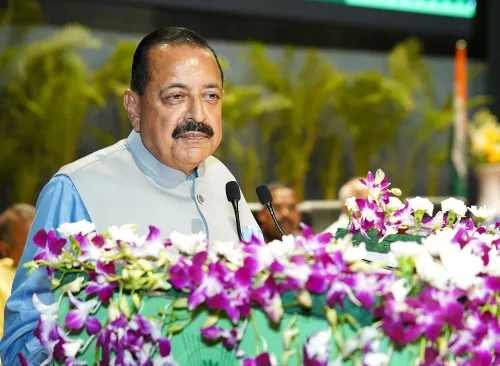
Union Coal and Mines Minister G. Kishan Reddy on Tuesday, 21 July 2026 congratulated the Indian Space Research Organisation (ISRO) for successfully completing three major qualification tests for the Crew Module systems of the Gaganyaan Mission, calling the achievement a significant milestone toward India's first human spaceflight.
What Was Tested
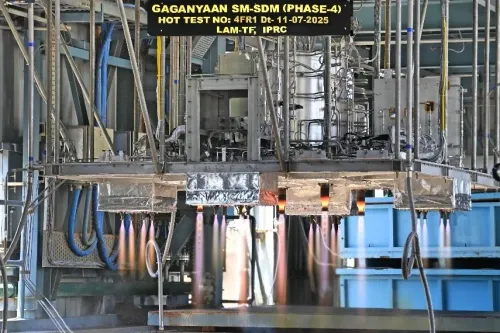
The minister detailed three distinct tests cleared by ISRO's Gaganyaan team. The Float Inflation Test of the Crew Module Up-righting System validated the module's ability to return to an upright position after splashdown in the sea, a critical safety requirement for astronaut recovery. The Crew Module Service Module Connect and Disconnect System was verified for clean separation of CSU-2 as well as the structural stability of the Crew Module panel and its interfaces.
The third test subjected the Crew Module Structure to simulated loads of 1.75 times the estimated forces during apex cover separation, confirming its design margins ahead of parachute deployment. Together, the three tests address survival, separation, and structural integrity — three of the most safety-critical phases of a crewed orbital mission.
Context
The Gaganyaan programme was approved by the Union Cabinet in 2018 with an outlay of approximately Rs 10,000 crore, making it India's most ambitious and expensive human spaceflight initiative to date. The programme aims to place a crew of up to three astronauts into low-Earth orbit aboard an indigenous vehicle. Prime Minister Narendra Modi publicly committed to the mission during his 2018 Independence Day address, framing it as a demonstration of India's technological self-reliance.
Kishan Reddy linked the tests directly to PM Modi's Space Vision 2047, which sets out a roadmap for India to become one of the world's most consequential space powers. A centrepiece of that vision is the Bharatiya Antariksha Station, India's planned national space station, targeted for orbit by 2035.
Policy Backdrop
Gaganyaan sits at the intersection of India's Atmanirbhar Bharat agenda and its strategic ambitions in space. The programme integrates multiple technology streams — life-support systems, crew escape mechanisms, and recovery infrastructure — that India has had to develop largely from scratch. Progress on qualification tests signals that the programme is advancing from design validation toward operational readiness, even as exact timelines for unmanned orbital trials and the first crewed attempt remain under official review.
The government has consistently presented Gaganyaan milestones as evidence that India's space sector can compete with established spacefaring nations without dependence on foreign crew systems. The three tests cleared now are among the prerequisites regulators and mission planners require before any astronaut boards the vehicle.
Stakeholders and Impact
ISRO's scientists, engineers, and technicians form the core team behind the qualification campaign. The programme also draws on India's growing private space industry, which has been increasingly integrated into component manufacturing and testing under the post-2020 space sector liberalisation framework. Successful qualification tests strengthen the case for continued and expanded budget allocations, with the next Union Budget expected to be watched closely for Gaganyaan-related announcements.
For the four astronaut-designates — Indian Air Force pilots who have undergone training — each cleared test brings the mission one step closer to a launch date. International partners and observers tracking India's independent human spaceflight capability will also note the milestone as confirmation that the programme remains on track.
What's Next
The immediate pipeline for Gaganyaan includes unmanned orbital flight trials, which must demonstrate end-to-end mission performance before a crew is committed. Astronaut selection announcements and a formal launch window declaration are expected to follow. Kishan Reddy closed his post by wishing the team 'continued success as India moves closer to its first human spaceflight mission,' underscoring the government's intent to maintain momentum toward both the crewed Gaganyaan flight and the longer-horizon goal of an operational Bharatiya Antariksha Station by 2035.
Point of View
Tying technical progress explicitly to PM Modi's Space Vision 2047 branding. Clearing structural and separation qualification tests is genuinely significant: these are not routine checks but safety-critical gates that must be passed before any unmanned orbital trial can proceed. The framing around the Bharatiya Antariksha Station and the 2035 deadline also suggests the government is keen to project a seamless continuum from Gaganyaan to a permanent Indian space station, reinforcing the Atmanirbhar narrative in a domain with clear strategic and diplomatic weight.
NationPress
20 Oct 2026
Frequently Asked Questions
What are the three Gaganyaan qualification tests ISRO completed?
ISRO completed the Float Inflation Test of the Crew Module Up-righting System, the Crew Module Service Module Connect and Disconnect System test, and a structural test of the Crew Module at 1.75 times estimated loads during apex cover separation.
What is the Gaganyaan Mission?
Gaganyaan is India's first approved human spaceflight programme, sanctioned in 2018 with an outlay of approximately Rs 10,000 crore, aiming to send a crew of up to three astronauts into low-Earth orbit using an indigenous vehicle.
What is India's Space Vision 2047?
Space Vision 2047 is PM Narendra Modi's long-term roadmap for India to become a leading space power, with milestones including the Gaganyaan crewed mission and the Bharatiya Antariksha Station targeted for orbit by 2035.
What is the Bharatiya Antariksha Station?
The Bharatiya Antariksha Station is India's planned national space station, referenced in official government statements as a goal to be achieved by 2035 under the Space Vision 2047 framework.
When will India's first human spaceflight mission launch?
An exact launch date has not been officially declared; unmanned orbital flight trials and further qualification milestones must be completed first, with astronaut-related announcements expected to follow.