Dr. Jitendra Singh Backs India's Vikram Lunar Mission
Synopsis
Union Minister Dr. Jitendra Singh posted '#IndiaWithVikram1' on X on 18 July 2026, rallying public support for India's Vikram lunar lander — a symbol of ISRO's historic Chandrayaan-3 success at the lunar south pole in 2023.
Key Takeaways
Jitendra Singh , Union Minister for Science and Technology, posted #IndiaWithVikram1 on 18 July 2026 , accompanied by a video.
The hashtag references Vikram , the lander that achieved India's first successful soft landing near the lunar south pole in August 2023 during Chandrayaan-3 .
India's lunar programme spans three missions: Chandrayaan-1 (2008), Chandrayaan-2 (2019), and the successful Chandrayaan-3 (2023).
ISRO remains the primary agency behind India's space achievements, with the IN-SPACe framework now opening the sector to private players.
Ministerial social-media posts of this nature signal continued political support for India's space science and technology ambitions.
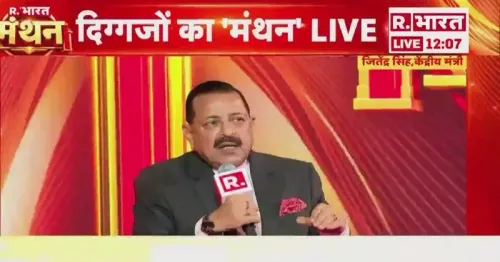
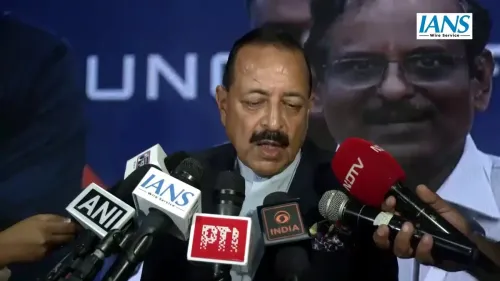
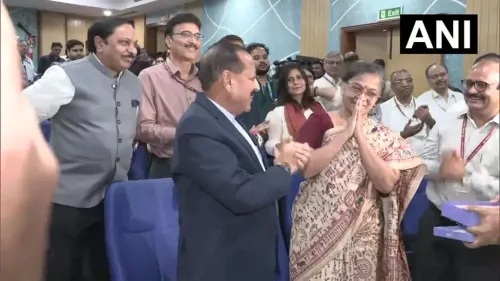
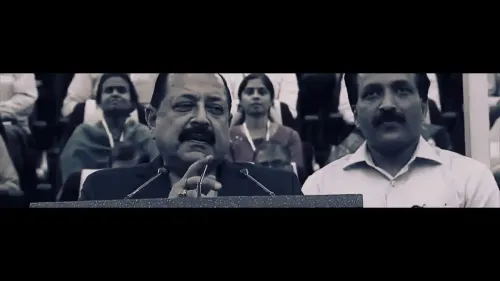
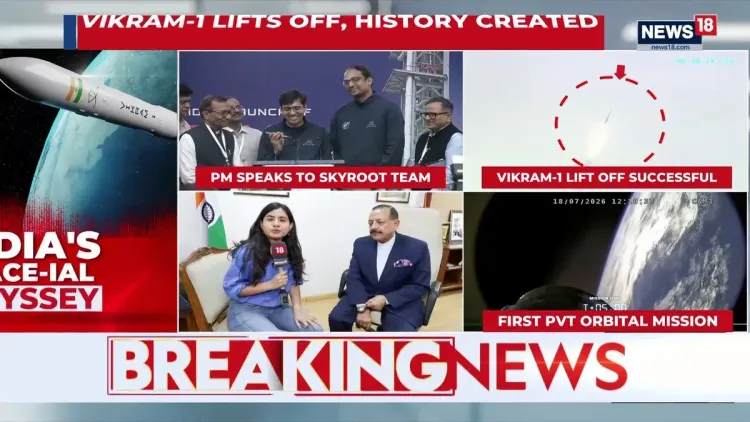
Union Science and Technology Minister Dr. Jitendra Singh on Saturday, 18 July 2026, posted on X in solidarity with India's lunar lander Vikram, sharing the hashtag #IndiaWithVikram1 alongside a video, signalling continued governmental and public support for the country's space endeavours.
Context
The hashtag #IndiaWithVikram1 invokes the legacy of Vikram, the lander central to ISRO's Chandrayaan missions. The name 'Vikram' honours Dr. Vikram Sarabhai, the founding father of India's space programme, and has been carried by the landers in both Chandrayaan-2 and Chandrayaan-3. The minister's post, accompanied by a video, appears to rally national sentiment around this symbol of India's space ambition.
Chandrayaan-3's Vikram lander achieved a historic milestone in August 2023, completing India's first successful soft landing near the lunar south pole — a feat that placed India among an elite group of nations capable of lunar surface operations. The mission's success was widely celebrated as a defining moment for Indian science and technology.
Policy Backdrop
India's lunar programme has followed a deliberate, step-by-step trajectory. Chandrayaan-1 in 2008 established India's first lunar orbital presence and contributed to the discovery of water-ice signatures on the Moon. Chandrayaan-2 in 2019 attempted a soft landing, with the Vikram lander losing contact in the final descent phase. Chandrayaan-3 in 2023 rectified that with a textbook landing and successful rover operations.
Under the current government, space policy has expanded significantly, with the establishment of IN-SPACe (Indian National Space Promotion and Authorisation Centre) to open the sector to private players, and a dedicated Space Policy 2023 to govern commercial and scientific activities. Dr. Jitendra Singh, as the minister overseeing the Department of Space, has been a consistent public voice amplifying ISRO's achievements.
Stakeholders and Impact
ISRO scientists and engineers who designed, built and operated the Vikram lander are the primary stakeholders of this renewed public attention. Ministerial endorsements on platforms such as X help sustain public interest and political will for space funding, which directly benefits the thousands of researchers and technologists working within India's space ecosystem.
The broader scientific community, including academic institutions collaborating with ISRO on payload development and data analysis from lunar missions, also stands to benefit from continued high-level political visibility. India's growing community of space-technology startups, energised by the IN-SPACe framework, watches such signals closely as indicators of sustained government commitment.
What's Next
ISRO is expected to build on the Chandrayaan-3 success with further deep-space ambitions, including studies for a lunar sample-return mission and India's participation in international crewed lunar exploration discussions. The IN-SPACe regulatory framework is also being refined to accommodate a growing pipeline of private satellite and launch ventures.
Parliamentary oversight of space budgets and policy updates will be closely watched by the scientific community and industry alike. Posts such as this one from Dr. Jitendra Singh serve as informal indicators of where ministerial attention and, by extension, policy emphasis may be directed in the months ahead.
Point of View
Making high-level political visibility especially valuable for sustaining investor and public confidence. The choice to rally around the 'Vikram' name specifically — which carries the weight of both the Chandrayaan-3 triumph and the near-miss of Chandrayaan-2 — is a reminder of how India's space story has been framed as one of resilience and eventual success. Analysts will watch whether such signals precede a policy announcement, a budget allocation, or a mission update from ISRO.
NationPress
17 Oct 2026
Frequently Asked Questions
What is #IndiaWithVikram1 about?
#IndiaWithVikram1 is a hashtag used to express public and governmental solidarity with India's Vikram lunar lander, which is central to ISRO's Chandrayaan missions. It gained fresh attention after Union Minister Dr. Jitendra Singh posted it on 18 July 2026 .
Who is the Vikram lander and what did it achieve?
The Vikram lander, named after space pioneer Dr. Vikram Sarabhai , achieved India's first successful soft landing near the lunar south pole in August 2023 as part of the Chandrayaan-3 mission, making India the fourth country to land on the Moon.
What is Dr. Jitendra Singh's role in India's space programme?
Dr. Jitendra Singh serves as Union Minister of State (Independent Charge) for Science and Technology and Earth Sciences, which includes oversight of the Department of Space and ISRO . He is a regular public communicator of India's space achievements.
What are India's future lunar mission plans?
ISRO is studying follow-on missions building on Chandrayaan-3 's success, including potential lunar sample-return missions and participation in international crewed lunar exploration discussions, supported by the Space Policy 2023 and the IN-SPACe framework.
What is IN-SPACe and how does it relate to India's space programme?
IN-SPACe (Indian National Space Promotion and Authorisation Centre) is the regulatory body established to allow private companies to participate in India's space sector alongside ISRO , reflecting a major shift in the country's space policy towards commercialisation and self-reliance.