Dr. Jitendra Singh Backs #IndiaWithVikram1 Space Push
Synopsis
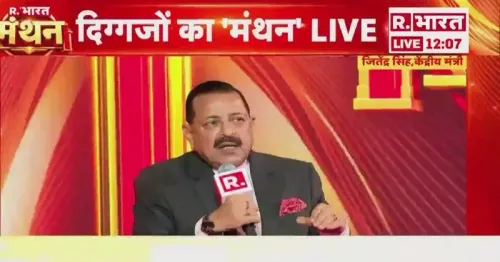
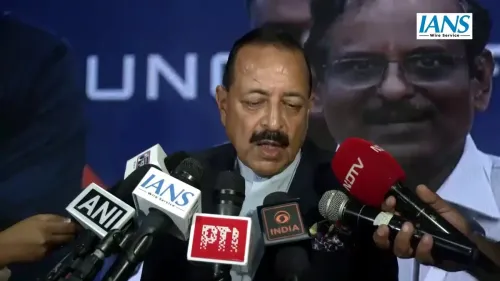
Union Science and Technology Minister Dr. Jitendra Singh on 18 July 2026 publicly endorsed the hashtag #IndiaWithVikram1, signalling government backing for what could be the next phase of India's Vikram lunar lander programme under ISRO.
Key Takeaways
Jitendra Singh , Union Minister for Science and Technology, publicly backed #IndiaWithVikram1 on 18 July 2026 .
The 'Vikram' name honours space pioneer Dr.
Vikram Sarabhai and has been used for lander modules in Chandrayaan-2 and Chandrayaan-3 .
India achieved its first successful lunar soft landing with the Vikram lander on 23 August 2023 during Chandrayaan-3, near the lunar south pole.
Ministerial endorsement of the hashtag suggests a forthcoming formal announcement on a new mission or programme milestone by ISRO .
India's space roadmap includes potential follow-on missions such as Chandrayaan-4 and the crewed Gaganyaan programme.
Union Science and Technology Minister Dr. Jitendra Singh on Saturday, 18 July 2026, lent his public voice to the hashtag #IndiaWithVikram1 on X, signalling ministerial solidarity with what appears to be a new chapter in India's Vikram lander programme under the Indian Space Research Organisation (ISRO).
Context
The hashtag #IndiaWithVikram1 carries unmistakable resonance for India's space community. The name 'Vikram' honours Dr. Vikram Sarabhai, the founding father of India's space programme, and has been borne by the lander modules of both Chandrayaan-2 and Chandrayaan-3. A minister-level public endorsement of a trending space hashtag typically precedes or accompanies a significant mission milestone, announcement, or launch event.
Dr. Jitendra Singh, who holds independent charge of the Ministry of Science and Technology and the Ministry of Earth Sciences, as well as portfolios in the Prime Minister's Office and the Ministry of Personnel, has consistently been the government's public face for ISRO achievements and space-policy announcements.
Policy Backdrop
India's lunar exploration roadmap has been built on incremental technological gains. Chandrayaan-2, launched in 2019, attempted a soft landing near the lunar south pole but the Vikram lander lost contact during descent. Chandrayaan-3 corrected those failures and achieved India's first successful lunar soft landing on 23 August 2023, making India the fourth country in the world — and the first to land near the lunar south pole — to accomplish the feat.
That success established ISRO's credibility in precision landing and deep-space operations. The government has since signalled ambitions for follow-on missions, including a potential Chandrayaan-4 and the crewed Gaganyaan programme, as part of a broader strategy to demonstrate technological self-reliance in space.
Stakeholders and Impact
ISRO scientists and engineers form the core stakeholder group for any Vikram-named mission. A successful new Vikram mission would further validate India's indigenous launch vehicle and lander technology stack, with downstream benefits for the growing Indian private space sector, which has been opened up to commercial players under recent policy reforms.
The broader scientific community, academic institutions, and India's expanding space start-up ecosystem all stand to gain from the visibility and data that a successful lunar or planetary mission generates. International partners watching India's space trajectory — particularly those engaged in Artemis Accords discussions and bilateral space cooperation — will also be attentive to any formal mission announcement.
What's Next
A formal government or ISRO press briefing is likely to follow ministerial social-media activity of this nature, potentially detailing mission objectives, launch timelines, or budgetary allocations. Parliament's oversight committees on science and space are expected to seek updates on the 2024–29 space budget and mission roadmap in the coming sessions.
If #IndiaWithVikram1 marks the public launch of a new dedicated mission identity, it would represent a significant step in India's post-Chandrayaan-3 ambitions — reinforcing New Delhi's intent to remain a frontline player in the global return to the Moon.
Point of View
Whether a mission naming ceremony, a launch-window announcement, or a budgetary green-light. Coming three years after Chandrayaan-3's landmark success, the signal fits a pattern of the Modi government using social momentum to build public investment in flagship science missions before formal announcements. The timing also serves a domestic political purpose: space achievement has become a reliable pillar of the BJP government's technological-nationalism narrative, and associating ministerial authority early with 'Vikram1' seeds that narrative ahead of any official reveal.
NationPress
17 Oct 2026
Frequently Asked Questions
What is #IndiaWithVikram1?
#IndiaWithVikram1 is a trending hashtag on X that appears to reference a new Vikram-named mission or initiative under India's space programme, publicly endorsed by Union Science and Technology Minister Dr. Jitendra Singh on 18 July 2026.
Who is the Vikram lander named after?
The Vikram lander is named after Dr. Vikram Sarabhai , widely regarded as the father of India's space programme and the founder of ISRO.
What did India's Vikram lander achieve in Chandrayaan-3?
The Vikram lander successfully soft-landed near the lunar south pole on 23 August 2023 as part of the Chandrayaan-3 mission, making India the first country to land near that region of the Moon.
What is Dr. Jitendra Singh's role in India's space programme?
Dr. Jitendra Singh holds independent charge of the Ministry of Science and Technology and the Ministry of Earth Sciences , making him the senior government minister responsible for overseeing ISRO and India's broader space policy.
What are India's next planned space missions?
India is working towards follow-on lunar missions including a potential Chandrayaan-4 and the crewed Gaganyaan programme, alongside the new Vikram1 initiative that has gained ministerial attention in July 2026.