Naver Q3 operating profit drops 20.9% as AI investments weigh on earnings
Synopsis
Naver's Q3 profit fell 20.9% — not because the business is struggling, but because it is spending aggressively to build AI infrastructure alongside Nvidia and Brookfield. With a 2-trillion-won computing contract already secured and AI factory revenues set to hit the books in Q4, the question is whether this deliberate margin sacrifice will pay off at scale.
Key Takeaways
Naver reported Q3 operating profit of 451.3 billion won , down 20.9 percent year-on-year, due to heavy AI investment .
Net profit fell 45.2 percent to 402.5 billion won ; sales rose 10.7 percent to 3.47 trillion won .
Global ventures sales grew 15.9 percent , driven by Poshmark and enterprise operations in Saudi Arabia .
The AI factory, jointly developed with Brookfield and Nvidia Corp. , has secured a computing contract worth around 2 trillion won ; revenues expected from Q4 2026 .
Naver plans a new logistics affiliate requiring up to 1 trillion won in investment by 2030 to bolster its commerce delivery capabilities.
Naver, South Korea's largest online portal operator, reported a 20.9 percent year-on-year decline in third-quarter operating profit on Thursday, even as revenues climbed, citing heavy spending on artificial intelligence infrastructure and capabilities. The results underline a deliberate strategic trade-off: short-term margin compression in exchange for long-term AI competitiveness.
Key Financial Figures
Naver posted an operating profit of 451.3 billion won (approximately US$338.5 million) for the July–September 2026 quarter. Net profit fell more sharply, down 45.2 percent to 402.5 billion won. Sales, however, rose 10.7 percent to 3.47 trillion won, signalling that the top line remains healthy even as the bottom line takes the hit from elevated capex.
In a regulatory filing, the company attributed the profit decline to 'increased investments to secure competitiveness in AI, including those in infrastructure, content and offline data.'
Business Segment Performance
Naver's platform division — its core domestic business spanning search and advertising — recorded sales growth of 7.3 percent on-year, buoyed by a rise in advertising revenue and expanded consumer purchases. The company's global ventures segment outperformed the platform unit, with sales up 15.9 percent on-year. That growth was driven by the success of its global commerce platforms, including second-hand goods marketplace Poshmark, as well as its enterprise operations in Saudi Arabia.
The AI Factory Play
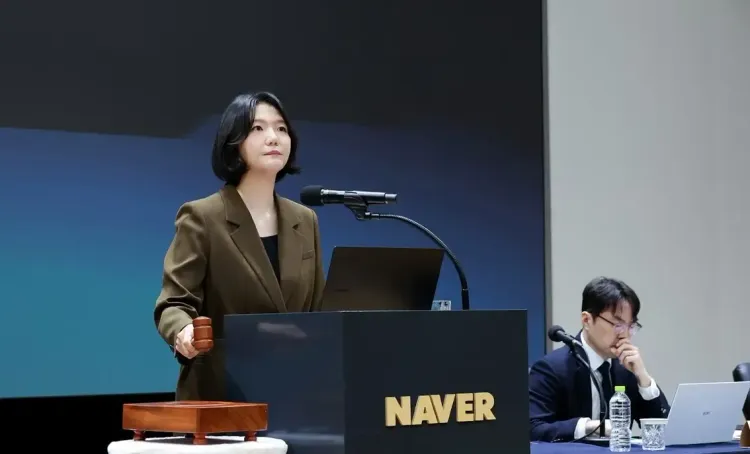
Choi Soo-yeon, Chief Executive Officer of Naver, indicated that the company's AI factory — being jointly developed with Brookfield and Nvidia Corp. — is set to begin contributing to revenues in the coming quarter. 'Revenues from our AI factory business will gradually be generated, as we have secured customers through a computing service contract of around 2 trillion won,' she said in a release. The AI factory initiative represents a significant bet on cloud and computing infrastructure at a time when South Korean tech majors are racing to establish credible AI capacity. Notably, the involvement of Nvidia and Brookfield — global leaders in semiconductors and infrastructure capital respectively — lends the venture considerable scale and credibility.
Logistics Expansion Plan
Naver also announced plans to establish a dedicated logistics affiliate aimed at strengthening its delivery capabilities and sustaining growth in its commerce business. Speaking during the third-quarter earnings call, CEO Choi said, 'We will establish a company dedicated to logistics services to bring our delivery competitiveness up a notch, and gradually strengthen our delivery infrastructure, focusing on leased logistics centres.' The new entity is expected to require around 1 trillion won in investments by 2030. Naver said it plans to finance this in ways that minimise impact on cash flow, though specific financing instruments were not disclosed.
Outlook and What Comes Next
Naver's AI factory revenues are expected to be reflected in fourth-quarter results. The company said it intends to advance AI-based services to unlock new revenue streams while expanding its customer base for the AI factory venture. With a 2-trillion-won computing contract already in hand and partnerships with two global heavyweights, analysts will be watching closely to see whether AI revenues can offset sustained margin pressure in the quarters ahead.
Point of View
And if AI factory revenues take longer to ramp than guided, the sustained bottom-line pressure could test investor patience. The logistics bet adds another capital-intensive layer, compressing near-term free cash flow even further.
NationPress
12 Nov 2026
Frequently Asked Questions
Why did Naver's Q3 operating profit fall?
Naver's Q3 operating profit fell 20.9 percent to 451.3 billion won because the company sharply increased investments in AI infrastructure, content and offline data to build long-term competitiveness. Sales, however, rose 10.7 percent over the same period.
What is Naver's AI factory and who are its partners?
Naver's AI factory is a computing infrastructure venture being jointly developed with global asset manager Brookfield and chipmaker Nvidia Corp. The company has already secured customers through a computing service contract worth around 2 trillion won, with revenues expected to be reflected starting from the fourth quarter of 2026.
How did Naver's global ventures perform in Q3?
Naver's global ventures segment reported a 15.9 percent on-year sales increase, driven by its second-hand goods platform Poshmark and its enterprise business in Saudi Arabia, outperforming its core domestic platform division.
What is Naver's logistics expansion plan?
Naver plans to establish a dedicated logistics affiliate to strengthen delivery capabilities for its commerce business, requiring around 1 trillion won in investment by 2030. CEO Choi Soo-yeon said financing would be structured to minimise impact on cash flow.
When will Naver's AI investments start generating returns?
According to CEO Choi Soo-yeon, revenues from the AI factory business will begin to be generated in the upcoming quarter, as Naver has already secured customers through a 2-trillion-won computing service contract with Brookfield and Nvidia.