Sonia Gandhi memoir: Palmist predicted Rajiv, not Sanjay, would be PM
Synopsis
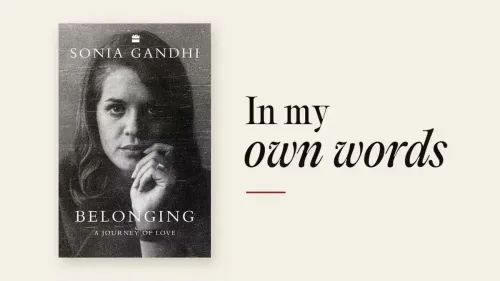
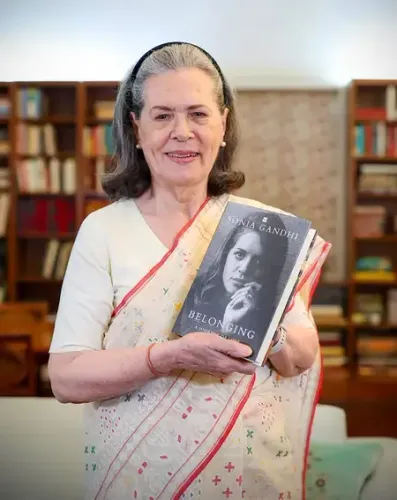
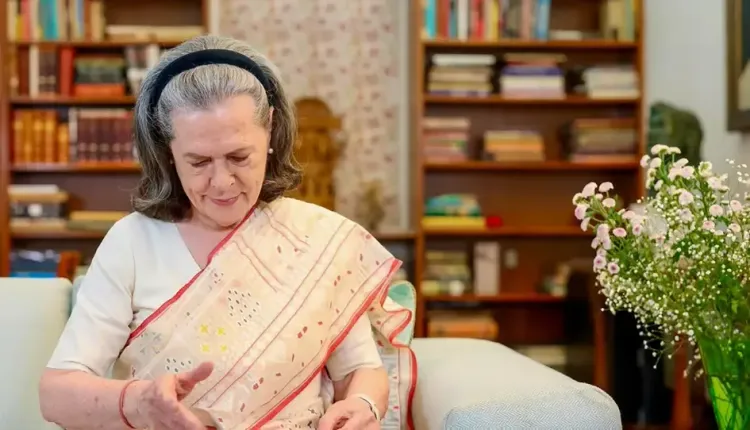
Sonia Gandhi's memoir 'Belonging: A Journey of Love' opens a rare window into the Gandhi family's private world — including a gatecrasher palmist who predicted Rajiv, not Sanjay, would be Prime Minister. What seemed laughable at the time became a haunting thread through a decade of assassinations, plane crashes, and reluctant political destiny.
Key Takeaways
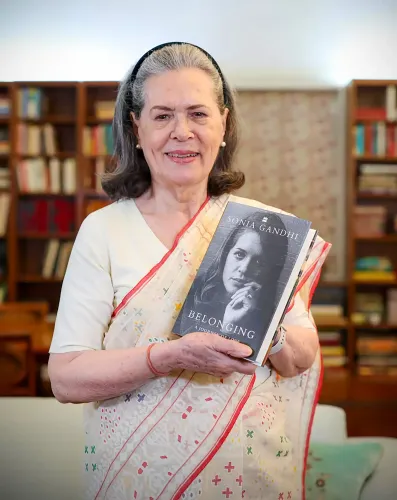
Sonia Gandhi 's memoir 'Belonging: A Journey of Love' was released on 10 November 2026 .
The memoir recounts a palmist's unsolicited prediction at 12 Willingdon Crescent in the late 1970s that Rajiv Gandhi , not Sanjay Gandhi , would become Prime Minister.
Sanjay Gandhi died in a plane crash in June 1980 ; Indira Gandhi was assassinated in October 1984 , after which Rajiv was sworn in as PM within hours.
Rajiv reportedly told Sonia amid her protests against his entering politics: 'They will kill me anyway.' The couple moved to 10 Janpath on 5 February 1990 , dismissing colleagues' warnings that the property was 'inauspicious'; Rajiv was assassinated 15 months later in May 1991 .
Sonia writes she was not superstitious, but acknowledges certain events made her wonder if coincidence carried deeper meaning.
Congress Parliamentary Party Chairperson Sonia Gandhi's memoir 'Belonging: A Journey of Love', released on 10 November 2026, recounts a peculiar encounter with a palmist at the Gandhi family's former Delhi residence that initially drew laughter — but later took on a haunting resonance following a string of political tragedies. The prediction, made decades ago, was that her husband Rajiv Gandhi — and not his younger brother Sanjay Gandhi — would one day become Prime Minister of India.
The 'Baara Number' Days in Delhi
The incident dates to the late 1970s, when the Gandhi family was residing at Bungalow Number 12, Willingdon Crescent, New Delhi — a period Sonia describes in the memoir as the 'Baara Number days'. Late Prime Minister Indira Gandhi had moved her family into the four-bedroom house after losing power in 1977; the residence had been vacated for her by family friend Mohammad Yunus.
At the time, Rajiv Gandhi was employed as a commercial pilot and had little interest in politics. His younger brother Sanjay Gandhi was widely regarded as Indira Gandhi's political heir apparent, making the palmist's declaration all the more improbable — and, to those present, faintly comic.
The Uninvited Palmist and His Prediction
Sonia recalls in the memoir how the palmist entered their portion of the house without permission and refused to leave despite her protests. She writes: 'One day, a fat man dressed in white forced his way onto our side of the house and began calling out to me, brandishing a paper with the imprint of a palm...I didn't believe in astrology, I told him. I asked him politely to leave -- I had no time to waste, I had work to do, I knew my past, and I was not interested in knowing my future.'
When she 'flew angrily at him to chase him off', the palmist turned and shouted as he fled: 'Nahi, nahi, Sanjay nahi — aapke pati Rajivji ek din pradhan mantri banenge!' (No, no, not Sanjay — your husband Rajiv will become prime minister one day!)
The moment became unexpectedly amusing when Sonia found that Rajiv had already engaged with the same man. She writes: 'Then I saw Rajiv, laughing heartily, with the imprint of the palmist's ink on his palm. He'd been waylaid by the astrologer and humoured him, thinking it was a great joke. I rushed to my room and tried to calm down, but burst out crying instead.'
Tragedies That Gave the Prediction New Meaning
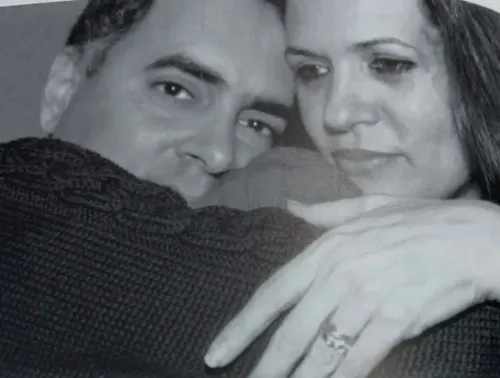
Sanjay Gandhi died in a plane crash in June 1980. Four years later, Indira Gandhi was assassinated in October 1984, and Rajiv Gandhi was sworn in as Prime Minister within hours. According to the memoir, he accepted the responsibility despite Sonia's tearful appeals against his entry into politics. His reported response to her: 'They will kill me anyway.'
The memoir also recounts an ominous moment during Rajiv Gandhi's 41st birthday celebrations in August 1985, when the family received news mid-dinner that Akali leader Harchand Singh Longowal had been shot dead in Punjab. Sonia writes: 'I couldn't share what was going through my mind, that this was a tragedy but also a bad omen. Why on Rajiv's birthday — was that just a coincidence, I wondered, or a warning?'
10 Janpath and the Shadow of Superstition
The memoir revisits the couple's move to 10 Janpath on 5 February 1990, where Sonia Gandhi continues to reside today. Several of Rajiv Gandhi's colleagues had reportedly advised against the choice, calling the property 'inauspicious'. Behind the rear gate was a mound believed to hold an elephant's grave; opposite it stood the grave of a Sufi pir. The couple dismissed the concerns: 'Neither he nor I were superstitious and laughed it away,' Sonia writes.
Rajiv Gandhi was assassinated in May 1991 — just 15 months after moving into the residence — lending yet another layer of retrospective significance to the episodes Sonia has chosen to record. Throughout the memoir, she maintains that she was not superstitious, even as she acknowledges that certain events made her pause and wonder whether coincidence could carry deeper meaning.
The memoir's release offers a rare, intimate window into the private world of one of India's most consequential political families, and is likely to draw renewed public attention to this era of Indian political history.
Point of View
A husband who accepted his fate with grim resignation. That Rajiv's words — 'They will kill me anyway' — are presented without embellishment is the starkest passage in the excerpts so far. For Congress, the memoir's release at this political moment is also a reminder of the party's foundational martyrology — a narrative that has sustained the Gandhi family's centrality to the organisation even as its electoral standing has fluctuated.
NationPress
12 Nov 2026
Frequently Asked Questions
What is Sonia Gandhi's memoir 'Belonging: A Journey of Love' about?
'Belonging: A Journey of Love' is a memoir by Congress Parliamentary Party Chairperson Sonia Gandhi, released on 10 November 2026, that recounts her personal journey alongside the Gandhi family, including intimate accounts of life at their Delhi residences, Rajiv Gandhi's reluctant entry into politics, and a series of tragedies that defined one of India's most prominent political dynasties.
What did the palmist predict about Rajiv Gandhi?
The palmist, who entered the Gandhi family's home at 12 Willingdon Crescent uninvited in the late 1970s, shouted as he was chased away that Rajiv Gandhi — then a commercial pilot — would one day become Prime Minister, specifically saying 'not Sanjay' would hold the post. At the time, Sanjay Gandhi was considered Indira Gandhi's political heir, making the prediction appear far-fetched.
How did Sanjay Gandhi die, and when did Rajiv Gandhi become Prime Minister?
Sanjay Gandhi died in a plane crash in June 1980. Indira Gandhi was subsequently assassinated in October 1984, following which Rajiv Gandhi was sworn in as Prime Minister within hours. According to the memoir, he accepted the role despite Sonia's tearful appeals against his entry into politics.
What is the significance of 10 Janpath in the memoir?
The memoir recounts that Rajiv Gandhi and Sonia moved into 10 Janpath on 5 February 1990, dismissing colleagues' warnings that the property was 'inauspicious'. Rajiv Gandhi was assassinated in May 1991, just 15 months after moving in, adding a retrospective dimension to those concerns — though Sonia writes that neither of them was superstitious at the time.
What did Rajiv Gandhi say to Sonia about the dangers of entering politics?
According to the memoir, when Sonia tearfully appealed to Rajiv not to enter politics after Indira Gandhi's assassination, he responded: 'They will kill me anyway.' The remark, presented without further commentary, is among the most striking disclosures in the excerpts published so far.