NBFC fintech loan book grows 21.2% in June 2026 as higher-ticket lending rises

Synopsis
India's NBFC fintechs are no longer chasing volume — they are chasing quality. A 21.2% portfolio expansion in June 2026 masks a more telling shift: higher-ticket loans, fewer new-to-credit borrowers, and a growing share of 36–50-year-old borrowers. The sector is maturing fast, and the next test is whether discipline holds as geographic expansion accelerates.
Key Takeaways
NBFC fintech portfolio outstanding grew 21.2 per cent year-on-year as of June 2026 , per the CRIF High Mark and UFF report.
The sector now represents approximately 9 per cent of total NBFC portfolio outstanding.
Q1 FY27 originations reached ₹79,900 crore , up 53 per cent in value and 21 per cent in volume year-on-year.
Share of loans above ₹1 lakh rose from 21.6 per cent (June 2024) to 26.3 per cent (June 2026).
New-to-credit borrower share fell from 14.2 per cent to 11.4 per cent , signalling more selective underwriting.
The 36–50 age group grew 31.7 per cent YoY , reflecting a shift toward more mature borrowers.
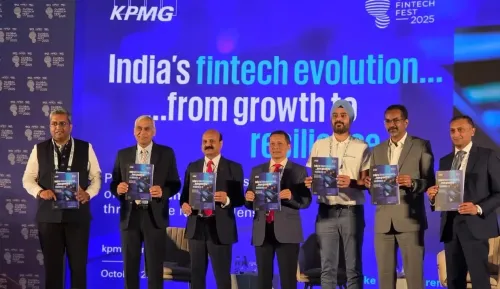
India's non-banking financial company (NBFC) fintech sector recorded a 21.2 per cent year-on-year expansion in portfolio outstanding as of June 2026, propelled by stronger underwriting standards and a decisive pivot toward higher-ticket credit, according to a report released on Wednesday, 12 August 2026. The findings, published jointly by CRIF High Mark and the Unified Fintech Forum (UFF), point to a sector entering a more disciplined growth phase after years of rapid, volume-driven expansion.
Scale and Market Share
NBFC fintechs now account for approximately 9 per cent of total NBFC portfolio outstanding, according to the report. The segment is characterised by what the report describes as a 'maturing phase marked by calibrated lending' — a notable shift from the aggressive origination strategies that defined the sector in earlier cycles.
Originations in Q1 FY27 reached ₹79,900 crore, surging 53 per cent in value and 21 per cent in volume year-on-year. The growth was driven largely by personal loans above ₹1 lakh.
Shift Toward Higher-Ticket and Unsecured Business Loans
The share of loans above ₹1 lakh in portfolio outstanding climbed from 21.6 per cent in June 2024 to 26.3 per cent in June 2026, reflecting lenders' preference for larger, more creditworthy borrowers. The report identifies unsecured business lending in the ₹1 lakh–₹5 lakh range as an emerging opportunity alongside the dominant personal loan segment.
'While personal loans continue to anchor the segment, unsecured business lending is emerging as a significant opportunity, particularly in the ₹1 lakh–₹5 lakh range,' the report noted.
Geographic Expansion Beyond Metro Centres
NBFC fintechs are extending their footprint beyond the largest urban centres. Personal loan originations from BT100 cities rose from 32.1 per cent to 34.5 per cent in value between Q1 FY25 and Q1 FY27. Unsecured business loan originations from these cities climbed more sharply, from 23.3 per cent to 30 per cent over the same period, indicating a broadening role in extending formal credit access to emerging markets.
Borrower Profile: Maturing and More Selective
The share of new-to-credit borrowers in the NBFC fintech segment moderated from 14.2 per cent in June 2024 to 11.4 per cent in June 2026, signalling a more selective approach to onboarding first-time credit users. Borrowers aged 26–35 years remain the core base, accounting for 43.5 per cent of the total NBFC fintech borrower pool as of June 2026. Notably, the 36–50 age group grew 31.7 per cent year-on-year, indicating a gradual shift toward more financially mature borrowers.
What This Signals for the Sector
The data collectively suggest that India's NBFC fintech lenders are recalibrating — prioritising credit quality and ticket size over raw origination volumes. This comes amid broader regulatory scrutiny of unsecured retail lending and rising delinquency concerns in the sub-₹50,000 personal loan segment that dominated earlier growth cycles. Whether the sector can sustain 21 per cent portfolio growth while maintaining asset quality will be the defining test in the quarters ahead.
Point of View
But the more consequential number is the drop in new-to-credit borrowers — from 14.2 per cent to 11.4 per cent in two years. NBFC fintechs are quietly retreating from the riskiest end of the credit frontier, likely in response to rising delinquencies in small-ticket unsecured loans that regulators flagged through 2024–25. The pivot to higher-ticket lending and older borrowers is prudent, but it also narrows the financial-inclusion argument that justified the sector's regulatory latitude. If fintechs are now chasing the same creditworthy customers as traditional banks, the differentiation story needs a rethink.
NationPress
27 Sept 2026
Frequently Asked Questions
How much did the NBFC fintech loan book grow in June 2026?
India's NBFC fintech sector recorded a 21.2 per cent year-on-year expansion in portfolio outstanding as of June 2026, according to a report by CRIF High Mark and the Unified Fintech Forum. The sector now accounts for about 9 per cent of total NBFC portfolio outstanding.
What drove NBFC fintech loan growth in Q1 FY27?
Originations in Q1 FY27 reached ₹79,900 crore, up 53 per cent in value and 21 per cent in volume year-on-year, driven largely by personal loans above ₹1 lakh. A shift toward higher-ticket credit and stronger underwriting standards were the primary growth drivers.
Why is the share of new-to-credit borrowers declining among NBFC fintechs?
The share of new-to-credit borrowers fell from 14.2 per cent in June 2024 to 11.4 per cent in June 2026, reflecting a more selective and calibrated lending approach. Lenders are prioritising borrowers with established credit histories over first-time credit users, likely in response to asset quality pressures in the sub-₹50,000 loan segment.
Which age group is driving growth in NBFC fintech borrowing?
Borrowers aged 26–35 years remain the largest cohort at 43.5 per cent of the base as of June 2026, but the 36–50 age group recorded the fastest growth at 31.7 per cent year-on-year, signalling a gradual shift toward more financially mature borrowers.
Are NBFC fintechs expanding beyond major cities?
Yes. Personal loan originations from BT100 cities rose from 32.1 per cent to 34.5 per cent in value between Q1 FY25 and Q1 FY27, while unsecured business loan originations from these cities climbed from 23.3 per cent to 30 per cent, indicating broader geographic reach into emerging urban markets.