Nifty 500 Companies Experience 16% Profit Surge in Q3, Marking an 8-Quarter High

Synopsis
In a remarkable turnaround, the Nifty 500 companies have reported a staggering 16% year-on-year profit growth in Q3 FY26, the highest in over two years. This resurgence indicates a solid recovery in corporate profitability, setting a promising stage for future equity market performance.
Key Takeaways
16% year-on-year profit growth for Nifty 500 in Q3 FY26.
Highest profit growth seen in 8 quarters .
Broad-based recovery in profitability supports equity markets.
Challenges include geopolitical tensions and market volatility.
Positive outlook for future corporate earnings.
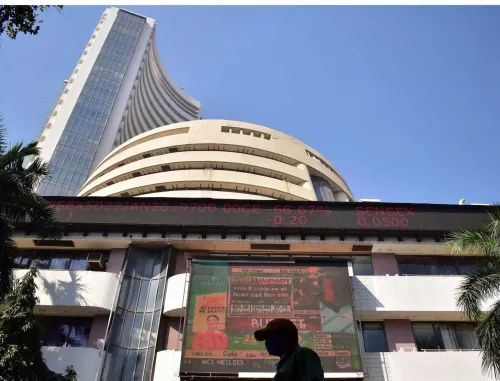
New Delhi, March 13 (NationPress) The corporate earnings landscape in India has demonstrated robust growth, as profits for firms within the Nifty 500 index surged by 16 percent year-on-year (YoY) in the third quarter of FY26. This marks the highest growth in eight quarters and signifies one of the most powerful reporting seasons witnessed in recent years, according to a report released on Friday.
This reporting season showcases a widespread recovery in profitability, which offers a more favorable environment for equity markets in the future, as highlighted in the Bajaj Finserv AMC report.
Nevertheless, the report indicates that domestic equity markets have remained relatively stagnant for about 18 months despite a strong upward trend in several global markets. However, improving domestic fundamentals are beginning to alleviate some of the previously existing challenges.
“The momentum in corporate earnings has seen significant strengthening over the past few quarters. The current reporting season reflects a widespread recovery in profitability, thus providing a more supportive foundation for equity markets moving forward,” stated Sorbh Gupta, Head of Equity at Bajaj Finserv Asset Management Limited.
Additionally, other domestic indicators have shown improvement. Credit growth has rebounded to double digits, signaling stronger demand and enhanced liquidity, while consumption indicators are witnessing a recovery following GST cuts, as per the report.
The report also emphasizes that the cumulative 125 basis points rate cuts by the Reserve Bank of India, along with liquidity-enhancing measures, have contributed to reduced borrowing costs for both companies and consumers.
However, new uncertainties in 2026 have introduced additional volatility in the market. The swift rise of artificial intelligence globally has sparked concerns regarding potential short-term impacts on demand for Indian IT services and job creation, which has led to the sector's recent underperformance.
“Technological transitions like artificial intelligence often bring about periods of uncertainty for traditional service models. Nevertheless, Indian IT companies have historically shown resilience and adaptability to such shifts,” Gupta remarked.
Geopolitical tensions in the Middle East have further heightened risks associated with crude oil prices. India relies on imports for about 85 percent of its crude oil needs, with nearly half of these shipments traversing the Strait of Hormuz, thus making supply routes susceptible during regional conflicts.
A prolonged conflict may escalate inflation, weaken the rupee, and impact sectors including aviation, paints, chemicals, and oil marketing companies, while potentially leading to foreign portfolio investor outflows, according to Bajaj Finserv AMC.
Meanwhile, fixed income markets have also experienced volatility following the Union Budget and the Monetary Policy Committee meeting, with foreign portfolio investor outflows and geopolitical tensions driving the rupee to a record low while bond yields increased.
Siddharth Chaudhary, Head of Fixed Income at Bajaj Finserv Asset Management Limited, noted that the revamped Consumer Price Index series with a 2024 base year confirms a benign core inflation rate, reinforcing the case for a stable policy environment.
However, escalating tensions between the US and Iran have subsequently driven crude prices higher again, further weakening the rupee and steepening the bond yield curve, particularly at the ultra-long end.
Point of View
The recent profit growth among Nifty 500 companies signifies a positive shift in the Indian corporate landscape. While there are challenges, including geopolitical concerns and market volatility, the overall trend suggests a potential for sustained economic growth and investor confidence.
NationPress
19 Sept 2026
Frequently Asked Questions
What is the profit growth percentage of Nifty 500 companies in Q3 FY26?
Nifty 500 companies reported a profit growth of 16 percent year-on-year in Q3 FY26.
How does this profit growth compare to previous quarters?
This profit growth is the highest recorded in the last eight quarters.
What factors contributed to the profit growth?
Contributing factors include improved credit growth, liquidity, and a broad-based recovery in profitability.
What challenges do Nifty 500 companies face?
Challenges include geopolitical tensions, market volatility, and uncertainties related to artificial intelligence's impact on the IT sector.
What is the outlook for Indian equity markets?
The outlook appears positive due to the recovery in corporate earnings, although external factors may introduce volatility.