Noel Tata on Tata Trusts' roadmap: hospitals, colleges, and accountability
Synopsis
Noel Tata used IIM Bangalore's IIMBue 2026 conclave to signal a major scaling of Tata Trusts' social infrastructure play — not-for-profit multi-speciality hospitals on a cross-subsidy model, 17 cancer care centres already underway in Assam, and a new undergraduate institution with IIM Bangalore. The message: India's largest philanthropic body is shifting from legacy stewardship to active, accountable institution-building.
Key Takeaways
Noel Tata outlined the Tata Trusts' roadmap at IIMBue 2026 in Bengaluru on 2 August .
The Trusts plan to develop several not-for-profit multi-speciality hospitals across India on a cross-subsidy model .
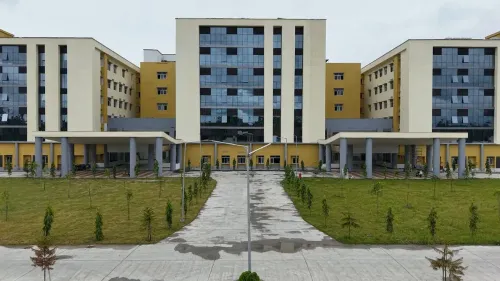
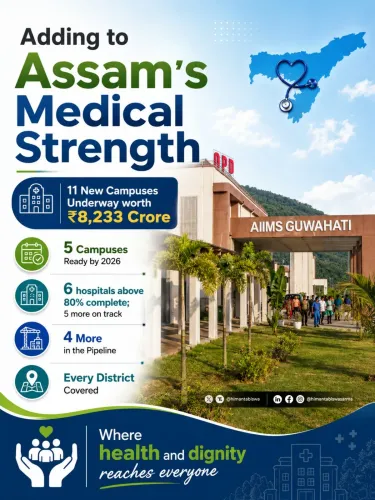
A partnership with the Assam government is already delivering 17 cancer care hospitals in the state.
A new undergraduate institution is being established in partnership with IIM Bangalore to address the shortage of quality higher-education seats in India.
Tata reaffirmed the founders' mandate — 'do good for India' — as the non-negotiable guiding principle of the organisation.
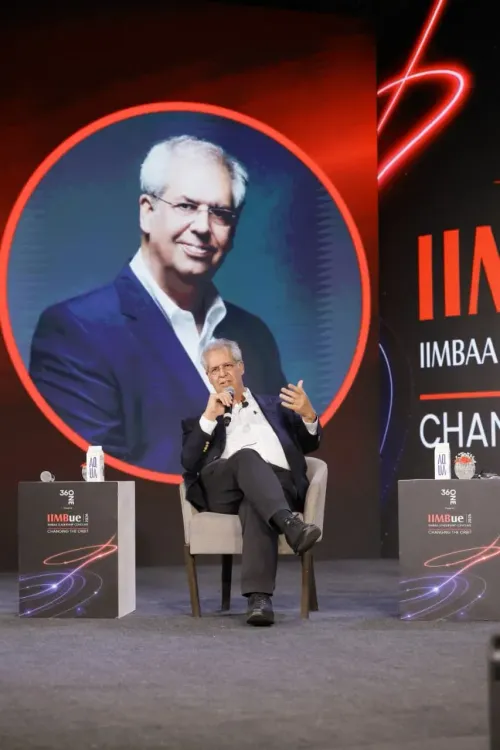
Tata Trusts Chairman Noel Tata on Sunday, 2 August laid out an ambitious roadmap for India's largest philanthropic organisation, anchoring its next phase around affordable healthcare infrastructure and world-class education while calling for sharper accountability in every rupee of social spending. He was speaking at IIM Bangalore's flagship alumni leadership conclave, IIMBue 2026, in Bengaluru.
The Founding Philosophy, Restated
Tata opened with a reminder of the mandate bequeathed by the founders of the Tata Group: 'do good for India.' He was emphatic that commercial success was never the end goal. 'They never said become the biggest company. The companies exist to serve India and improve the quality of life,' he said, signalling that this principle would continue to anchor every decision the Trusts make.
Describing his own transition from corporate leadership to philanthropy as a fundamental shift in mindset, Tata put it plainly: 'You stop trying to make money and start trying to spend it.' He added that working in the social sector confronts one with the sheer scale of challenges faced by ordinary citizens — and with the weight of ensuring that every rupee creates lasting value rather than a fleeting outcome.
Healthcare: Cross-Subsidy Hospitals Across India
On the healthcare front, Tata announced plans to develop several not-for-profit multi-speciality hospitals across the country. This follows the Trusts' partnership with the Assam government to establish 17 cancer care hospitals in the state — a model that is now being scaled nationally.
The proposed hospitals will operate on a cross-subsidy framework: paying patients will help finance treatment for underserved populations, without any compromise on the quality of doctors, medicines, or medical facilities. Notably, this approach mirrors the original ethos of institutions like Tata Memorial Hospital, which the Trusts helped build decades ago.
Education: A New Undergraduate Institution With IIM Bangalore
Education will be the second major pillar of the Trusts' next phase. Tata described the proposed undergraduate institution being established in partnership with IIM Bangalore as a significant milestone, arguing that India urgently needs many more world-class educational institutions at the undergraduate level.
He pointed to a structural gap: thousands of talented Indian students pursue higher education abroad every year, not by preference but because quality seats at home remain scarce. The new institution is positioned as a direct response to that drain.
Legacy of Institution-Building
Tata underscored that the Trusts' commitment to building enduring institutions — rather than funding one-off programmes — remains unchanged. He cited a legacy that includes the Indian Institute of Science, Bengaluru; Tata Institute of Fundamental Research, Mumbai; Tata Memorial Hospital; Tata Institute of Social Sciences; and the National Centre for Performing Arts, Mumbai, among others.
The throughline, he suggested, is permanence: institutions that outlast any single generation of leadership and continue to serve the public long after the initial investment.
What Comes Next
With the Assam cancer-care network already underway and the IIM Bangalore undergraduate partnership in motion, the Trusts appear to be moving from articulation to execution. The cross-subsidy hospital model, if it scales successfully, could redefine how large philanthropic endowments approach healthcare access in India's tier-2 and tier-3 cities.
Point of View
But the explicit pivot to cross-subsidy hospitals and a new undergraduate college signals impatience with the pace of India's public social infrastructure. What is striking is the accountability framing — 'every rupee creates lasting value' is a harder standard than most philanthropic bodies set for themselves. The real test will be whether the cross-subsidy hospital model survives contact with India's cost pressures outside metro markets, and whether the IIM Bangalore undergraduate venture can attract the faculty depth needed to compete with institutions abroad that currently drain Indian talent.
NationPress
17 Sept 2026
Frequently Asked Questions
What is Noel Tata's roadmap for Tata Trusts?
Noel Tata has outlined a two-pronged expansion focused on affordable healthcare and quality education. The Trusts plan to build not-for-profit multi-speciality hospitals on a cross-subsidy model and establish a new undergraduate institution in partnership with IIM Bangalore.
What is the cross-subsidy hospital model Tata Trusts is adopting?
Under the cross-subsidy model, paying patients will help finance treatment for underserved sections of society, without compromising on the quality of doctors, medicines, or medical facilities. The approach is already being piloted through 17 cancer care hospitals being set up in Assam in partnership with the state government.
What is the Tata Trusts–IIM Bangalore undergraduate institution?
Tata Trusts is partnering with IIM Bangalore to establish a new undergraduate institution, described by Noel Tata as a significant milestone. It is intended to address the shortage of world-class higher-education seats in India that currently pushes thousands of students to study abroad each year.
What institutions has Tata Trusts built in the past?
The Trusts' institution-building legacy includes the Indian Institute of Science (Bengaluru), Tata Institute of Fundamental Research (Mumbai), Tata Memorial Hospital, Tata Institute of Social Sciences, and the National Centre for Performing Arts (Mumbai), among others.
Where did Noel Tata make these announcements?
Noel Tata spoke at IIMBue 2026, the flagship alumni leadership conclave of IIM Bangalore, on 2 August in Bengaluru.