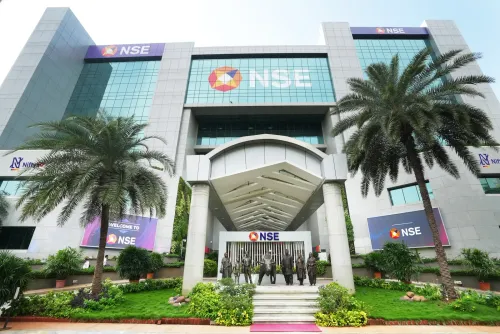
NSE IPO GMP falls to ₹43 ahead of September 24 listing
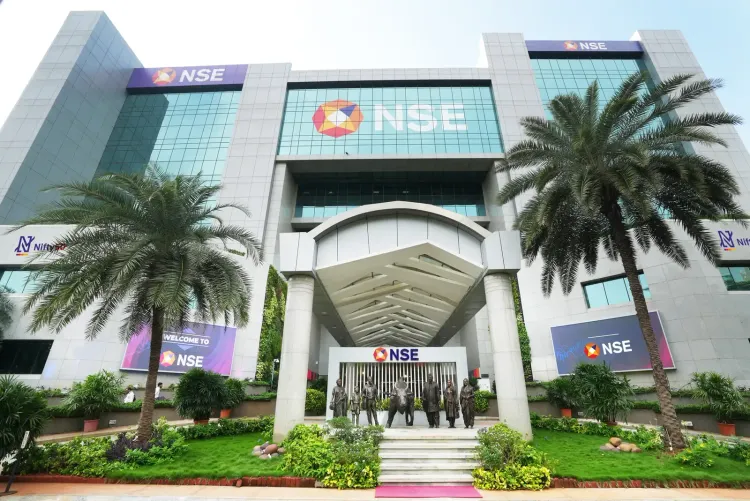
Synopsis
NSE's long-awaited market debut on September 24 is set for a muted start, with the grey market premium crashing from ₹145 to just ₹43 per share — slashing expected listing gains from over 8% to a slim 2.41%. The ₹22,568.94 crore OFS saw robust QIB demand at 12.68 times, but retail enthusiasm was tepid at 1.39 times, and the exchange's heavy reliance on derivatives revenue adds a structural question mark.
Key Takeaways
NSE IPO GMP has fallen to ₹43 per share on 23 September 2026 , pointing to a likely listing price of ₹1,828 — a 2.41% premium over the issue price of ₹1,785 .
GMP had previously peaked at ₹145 per share , implying over 8% listing gains — a level that has since eroded sharply.
The ₹22,568.94 crore IPO was subscribed 5.71 times ; QIBs led at 12.68 times , while retail investors subscribed 1.39 times .
The issue was entirely an OFS of 12.64 crore shares — no fresh capital raised for the company.
NSE held a 93% share in equity cash and 99.79% in equity futures in FY26 ; options trading contributed over 60% of operating revenue.
The stock lists on BSE on Thursday, September 24 .
The grey market premium (GMP) of the National Stock Exchange (NSE) IPO has fallen sharply ahead of its stock market debut on September 24, with the premium reportedly sliding to ₹43 per share on Wednesday, September 23. The latest grey market signal points to a likely listing price of around ₹1,828 per share — a modest premium of 2.41 per cent over the IPO issue price of ₹1,785.
Grey Market Sentiment Weakens Sharply
The decline marks a significant cooling from pre-issue levels, when the GMP had climbed to around ₹145 per share, implying a potential listing gain of over 8 per cent. The grey market, while unofficial and unregulated, is widely tracked as a proxy for investor sentiment ahead of a listing. The erosion in premium suggests that post-allotment enthusiasm has moderated, likely reflecting broader market conditions and profit-booking expectations.
Subscription Numbers and Investor Demand
The ₹22,568.94 crore public issue, which was open for subscription from September 17 to September 21, was subscribed 5.71 times overall. According to exchange data, the issue received bids for over 50.58 crore shares against the 8.86 crore shares on offer, with total bids valued at ₹90,287.33 crore.
Among investor categories, Qualified Institutional Buyers (QIBs) led demand with a subscription rate of 12.68 times. The Non-Institutional Investors (NIIs) segment was subscribed 6.55 times, while the Retail Individual Investors (RIIs) category was booked 1.39 times. Share allotment was finalised on September 22, and the stock is scheduled to list on the BSE on Thursday.
Issue Structure and Pricing
The NSE IPO was priced in the range of ₹1,700 to ₹1,785 per share. Notably, the issue was entirely an offer for sale (OFS) of 12.64 crore equity shares by existing shareholders, meaning the exchange itself received no fresh capital from the offering. This structure implies that listing-day proceeds flow to selling shareholders rather than the company's balance sheet.
NSE's Market Dominance and Revenue Profile
NSE commands an overwhelming share of Indian capital markets activity. In FY26, the exchange held a market share of nearly 93 per cent in the equity cash segment, 99.79 per cent in equity futures, 74.71 per cent in equity options by premium turnover, and 99.48 per cent in currency futures. However, its share in the equity options market moderated to 68.48 per cent in the first quarter of FY27.
On the revenue side, transaction charges accounted for 78.65 per cent of NSE's revenue from operations in FY26, with options trading alone contributing over 60 per cent of operating revenue — a concentration that underscores the exchange's structural dependence on derivatives activity.
What to Watch at Listing
With GMP indicating a sub-3 per cent opening premium, investors who applied for listing gains may find the debut underwhelming relative to pre-issue expectations. Analysts will be watching whether institutional demand at listing sustains the price above the issue price, or whether early profit-booking by allottees pushes it lower. The stock's longer-term trajectory will hinge on regulatory developments around derivatives volumes and NSE's ability to diversify its revenue base beyond options trading.
Point of View
Not fundamental. More revealing is the subscription split: QIBs piled in at nearly 13 times, while retail investors barely crossed 1.39 times — a divergence that suggests sophisticated money sees long-term value in NSE's near-monopoly, while retail applicants were primarily chasing listing pops that now look unlikely. The deeper concern is structural: over 60 per cent of operating revenue tied to options trading means NSE's financials are directly exposed to SEBI's ongoing tightening of the derivatives framework. That regulatory overhang, not the GMP, is the real variable to watch after listing.
NationPress
23 Sept 2026
Frequently Asked Questions
What is NSE's IPO grey market premium today?
The NSE IPO grey market premium (GMP) has reportedly fallen to ₹43 per share on 23 September 2026, ahead of its listing on September 24. This indicates a likely listing price of around ₹1,828 — a premium of 2.41% over the issue price of ₹1,785.
When is NSE IPO listing date and on which exchange?
NSE's IPO is scheduled to list on the BSE on Thursday, September 24, 2026. Share allotment was finalised on September 22.
How many times was the NSE IPO subscribed?
The NSE IPO was subscribed 5.71 times overall, receiving bids for over 50.58 crore shares against 8.86 crore on offer. QIBs subscribed 12.68 times, NIIs 6.55 times, and retail investors 1.39 times.
What was the NSE IPO issue price and size?
The NSE IPO was priced at ₹1,785 per share (top of the ₹1,700–₹1,785 band) and was entirely an offer for sale of 12.64 crore equity shares, making it a ₹22,568.94 crore issue with no fresh capital raised for the company.
Why is NSE's revenue concentration in options trading a concern?
Options trading alone contributed over 60 per cent of NSE's operating revenue in FY26, making its financials sensitive to any regulatory curbs on derivatives activity. SEBI has been progressively tightening the derivatives framework, which poses a potential headwind to NSE's dominant revenue stream post-listing.