Will NSE's New Pre-Open Session Transform Futures and Options Trading?
Synopsis
The National Stock Exchange is set to revolutionize equity trading with a new pre-open session for futures and options. Starting December 8, this initiative aims to enhance price discovery and manage market volatility effectively. Traders are eager to see how this change will impact their strategies and the overall market dynamics.
Key Takeaways
15-minute pre-open session to enhance market efficiency.
Real-time access to opening prices and order data.
Traders can modify and cancel orders during the session.
Aligns the futures market with the equity cash market.
Significant growth in India's equity derivatives market.
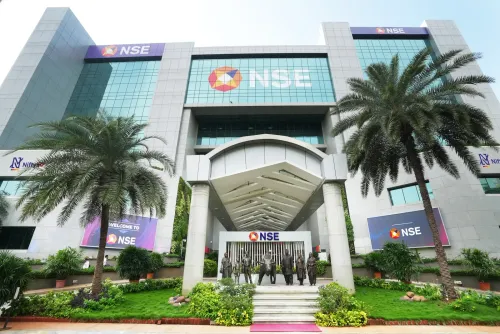
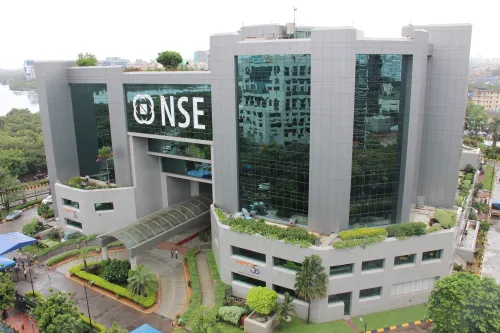
Mumbai, Nov 4 (NationPress) The National Stock Exchange (NSE) is set to implement a 15-minute pre-open session for equity futures and options beginning on December 8. This initiative aims to enhance price discovery, boost transparency regarding gap movements, and manage volatility.
The pre-open session will function as a 15-minute call auction window from 9:00 am to 9:15 am, designed to establish opening prices for both index and single-stock futures before the regular trading hours commence, as outlined by the exchange.
During this session, participants can enter, modify, and cancel orders until a random closure occurs between 9:07 and 9:08 am. Price discovery and trade matching will continue until 9:12 am, followed by a three-minute buffer to smoothly transition into continuous trading at 9:15 am.
This new approach aligns the derivative market with the pre-open call auction currently utilized in the equity cash market, as reported by the exchange.
On December 6, a mock trading session will be conducted, allowing brokers and participants a brief opportunity to test the system before the live launch.
The mechanism will initially focus on current-month futures for single stocks and indices, with plans to extend to next-month contracts during the last five trading days leading up to expiry.
It is important to note that options, spreads, and corporate-action ex-dates are excluded from this new framework, as stated in the announcement.
Traders will have access to real-time indicative opening prices as well as order imbalance data. During the pre-open session, limit and market orders will be permitted, whereas stop-loss and Immediate or Cancel orders (IOC) will not be allowed.
Any unmatched limit orders will carry over into the normal market retaining their original time-stamp, while unmatched market orders will convert to limit orders at the price discovered during the session.
The equity derivatives market in India has experienced remarkable growth, with turnover in equity derivatives at the NSE soaring from Rs 177 trillion in FY10 to over Rs 40,000 trillion by FY25, reflecting a compound annual growth rate (CAGR) of approximately 43.5 percent.
Point of View
I believe this new initiative by the NSE exemplifies a commitment to enhancing market efficiency and transparency in India's rapidly evolving financial landscape. By aligning the derivatives market with the cash market, we can expect a more cohesive trading environment that benefits all participants.
NationPress
29 Sept 2026
Frequently Asked Questions
What is the purpose of the pre-open session introduced by NSE?
The pre-open session aims to enhance price discovery, improve transparency regarding gap movements, and manage volatility in the market.
When will the pre-open session start?
The pre-open session will commence on December 8.
What are the operating hours of the pre-open session?
The pre-open session will run from 9:00 am to 9:15 am.
What types of orders are allowed during the pre-open session?
Limit and market orders can be placed, but stop-loss and Immediate or Cancel orders (IOC) are not permitted.
How will unmatched orders be handled after the pre-open session?
Unmatched limit orders will carry over into the normal market with their original time-stamp, while unmatched market orders will convert to limit orders at the opening price discovered.