NSE overtakes London Stock Exchange, now world's No. 3 by m-cap

Synopsis
Two months after a lukewarm debut and a slide below its IPO price, NSE has staged a near-50% rebound to overtake the London Stock Exchange as the world's third-largest exchange by market cap. Only CME Group and Intercontinental Exchange now rank higher.
Key Takeaways
NSE became the world's third-largest stock exchange by market cap on 26 November 2026 , overtaking the London Stock Exchange .
NSE's market cap stood at about ₹5.86 lakh crore versus LSE's ₹5.77 lakh crore , according to LSEG data.
The stock hit a new high of ₹2,400 , gaining in 14 of 18 sessions in November after a 34% surge in October.
Shares have rebounded nearly 50% from a post-listing low of ₹1,640 , below the IPO price of ₹1,785 .
CME Group ($111.6 billion) and Intercontinental Exchange ($99.4 billion) rank first and second.
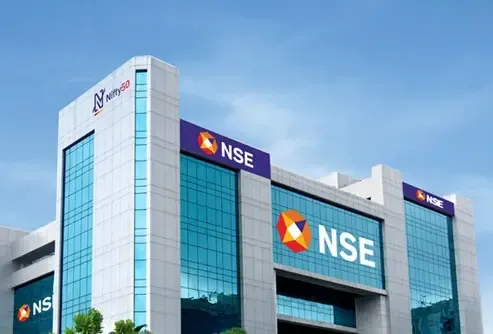
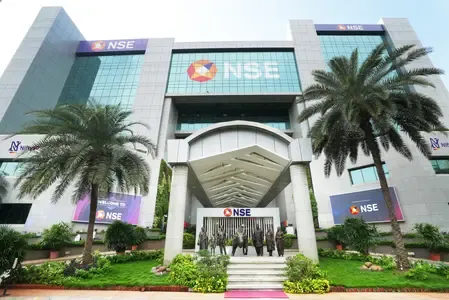
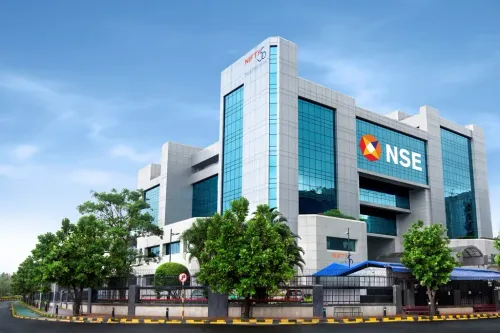
The National Stock Exchange (NSE) on Thursday, 26 November 2026, became the world's third-largest stock exchange by market capitalisation, overtaking the London Stock Exchange (LSE). According to LSEG data, NSE's market capitalisation stood at about ₹5.86 lakh crore, ahead of LSE's ₹5.77 lakh crore.
The milestone comes barely two months after NSE's long-awaited market debut. It places India's largest bourse operator behind only two US-based exchange groups in the global ranking.
Key Developments
NSE's shares extended their rally for a second consecutive session on Thursday. The stock has gained in 14 of the 18 trading sessions so far in November, lifting it to a fresh high of ₹2,400.
As of 11:15 am IST, shares of National Stock Exchange of India were trading at ₹2,381.85, up ₹64.20, or 2.77%, from the previous close. The stock had already surged 34% in October.
From Listing Day to Record High
NSE made its stock market debut on the Bombay Stock Exchange (BSE) on 24 September. The shares listed at ₹1,800, a premium of 0.84% over the issue price of ₹1,785, before rising to ₹1,876.70 during the session.
The early momentum did not last. The stock later slipped to a post-listing low of ₹1,640, below its IPO price. Notably, it has since rebounded nearly 50% from that low, a turnaround that has powered its climb up the global rankings.
Where NSE Stands Globally
CME Group leads the global list of exchanges by market capitalisation at $111.6 billion, followed by Intercontinental Exchange at $99.4 billion. NSE now sits third, edging past LSE, one of the world's oldest and most established exchange operators.
The shift reflects how sharply investor sentiment toward the stock has turned since its subdued post-listing phase. It also underlines the growing weight of Indian market infrastructure in the global financial system.
What NSE's CEO Has Said
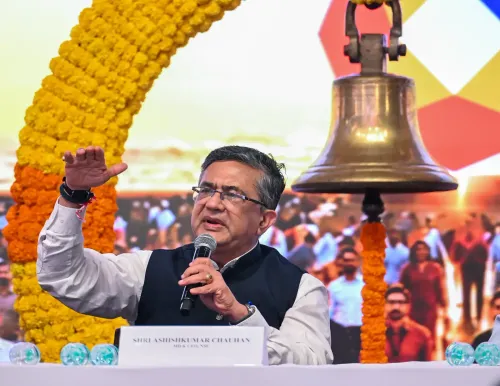
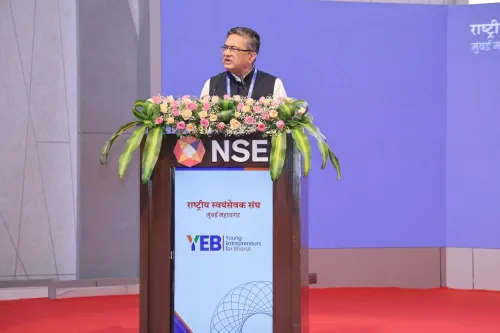
Even as the stock rallies, NSE Managing Director and CEO Ashish Kumar Chauhan had earlier in November cautioned investors against chasing quick returns. He warned against acting on unsolicited stock recommendations and trading in futures and options (F&O) without adequate knowledge, stressing discipline and a long-term approach to investing.
Drawing parallels with the internet boom of the late 1990s, Chauhan said the current AI-driven investment cycle shares similarities with the dot-com boom of 1998-2000. For investors lacking the time or expertise to track markets, companies and economic developments, he recommended mutual funds and professional services, including fund managers, financial advisers and portfolio managers.
What Comes Next
With NSE now ranked third globally, market participants will watch whether the stock can sustain its momentum above the ₹2,400 mark or consolidate after a steep two-month run. Any further gains could widen its lead over LSE in the months ahead.
Point of View
But the ranking rests on a stock that has rallied roughly 50% in about two months. The sharpest irony is that NSE's own CEO has likened the current AI-driven cycle to the dot-com boom and warned retail investors against chasing quick returns — advice that applies squarely to his own exchange's shares. A valuation built on F&O-heavy volumes also invites the question of how durable it is if regulators keep tightening derivatives trading. The milestone is real; whether it is sustainable is a separate test.
NationPress
26 Nov 2026
Frequently Asked Questions
Has NSE become the world's third-largest stock exchange?
Yes, the National Stock Exchange became the world's third-largest exchange by market capitalisation on 26 November 2026, overtaking the London Stock Exchange. Its market cap stood at about ₹5.86 lakh crore against LSE's ₹5.77 lakh crore, according to LSEG data.
Which exchanges are larger than NSE by market cap?
CME Group leads the global ranking with a market capitalisation of $111.6 billion, followed by Intercontinental Exchange at $99.4 billion. NSE now ranks third.
What is the NSE share price today?
As of 11:15 am IST on Thursday, NSE shares were trading at ₹2,381.85, up ₹64.20 or 2.77% from the previous close. The stock earlier touched a new high of ₹2,400.
When did NSE list on the stock market and at what price?
NSE debuted on the BSE on 24 September, listing at ₹1,800, a 0.84% premium over its issue price of ₹1,785. It later fell to a post-listing low of ₹1,640 before rebounding nearly 50%.
What did NSE CEO Ashish Kumar Chauhan advise investors?
Chauhan cautioned investors against chasing quick returns, acting on unsolicited tips and trading F&O without adequate knowledge. He compared the AI-driven investment cycle to the 1998-2000 dot-com boom and recommended mutual funds and professional advisers for those lacking time or expertise.