NSE shares close 1.8% higher at ₹1,818 on listing day after ₹22,561 crore IPO
Synopsis
After years as one of India's most-anticipated unlisted names, NSE finally hit the bourses — and underwhelmed. Shares closed just 1.8% above the issue price, well below grey market expectations, even as the ₹22,561 crore IPO drew 5.71x subscription. The muted debut spotlights a key risk investors are now pricing: over 60% of NSE's revenue comes from options trading, making it acutely sensitive to any regulatory crackdown on derivatives.
Key Takeaways
NSE shares closed at ₹1,818 apiece on 24 September 2026 , up 1.8 per cent from the issue price of ₹1,785 .
The stock listed at ₹1,800 on BSE — a 0.84 per cent premium — missing grey market estimates.
NSE's market capitalisation at debut stood at approximately ₹4.45 lakh crore .
The ₹22,561.57 crore IPO was subscribed 5.71 times , generating bids of ₹90,287.33 crore .
The offering was India's second-largest IPO , after Hyundai Motor India's ₹27,870 crore issue in 2024 .
Options trading contributed over 60 per cent of NSE's operating revenue in fiscal 2026 , flagging derivatives concentration risk.
Shares of the National Stock Exchange (NSE) ended 1.8 per cent higher at ₹1,818 apiece on Thursday, 24 September 2026, above their issue price of ₹1,785, after a muted debut on Dalal Street that fell short of grey market expectations. The listing capped a landmark public offering — India's second-largest IPO — worth ₹22,561.57 crore.
How the listing unfolded
NSE shares opened at ₹1,800 apiece on the Bombay Stock Exchange (BSE), marking a 0.84 per cent premium over the issue price and missing grey market estimates. The stock then surged more than 5 per cent intra-day before paring gains to close at ₹1,818. At the time of debut, the company's market capitalisation stood at approximately ₹4.45 lakh crore.
IPO subscription and structure
The NSE IPO was open from 17 September to 21 September 2026, with a price band of ₹1,700–₹1,785 per share. The issue was subscribed 5.71 times, drawing bids worth ₹90,287.33 crore against an issue size of ₹22,568.94 crore. The offering consisted entirely of an offer for sale (OFS) of 12.64 crore equity shares by existing shareholders, meaning no fresh capital was raised by NSE itself. The IPO ranked as India's second-largest public issue, behind Hyundai Motor India's ₹27,870 crore IPO in 2024.
What the CEO said
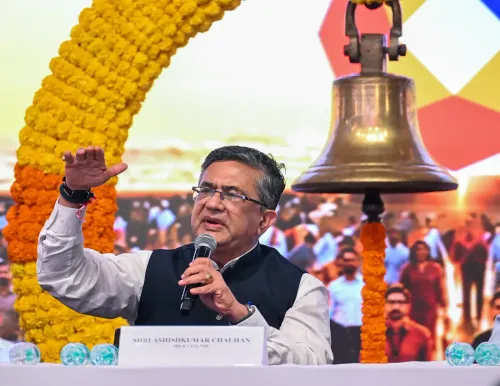
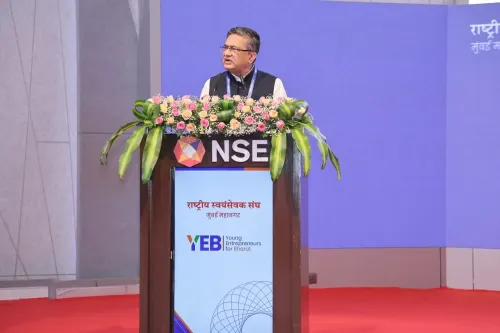
NSE Managing Director and CEO Ashishkumar Chauhan said the exchange is developing a comprehensive, mobile-first framework to consolidate investors' trading data, portfolio information, and analytics on a single platform. Chauhan underscored the exchange's societal scale: 'NSE is the democracy being expressed in real-time across 13 crore Indians, 27 crore accounts, 9 crore households, the largest cohort of any type in India today. For me, capital markets are an essence of well-functioning human societies. In the face of uncertainties and ever fast changing world, capital markets express in real-time society's collective hopes, its fears, its joys, its sorrows, its expectations for future, its progress, its anticipations, all combined into one price in nanoseconds time,' he said.
Revenue mix and derivatives dependence
A closer look at NSE's financials reveals a notable concentration risk. Transaction charges accounted for 78.65 per cent of the exchange's revenue from operations in fiscal 2026, with options trading alone contributing over 60 per cent of operating revenue. This heavy reliance on derivatives activity has drawn attention from analysts, who note that any regulatory tightening on options volumes — as seen in past Securities and Exchange Board of India (SEBI) interventions — could disproportionately affect earnings. Notably, SEBI has in recent years taken steps to curb retail participation in high-risk derivatives, making this revenue concentration a key watch point for investors.
What comes next
With the listing formalities complete, market participants will now focus on NSE's execution of its mobile-first investor platform and its ability to diversify revenue beyond derivatives. The exchange's public market status also brings heightened disclosure obligations and shareholder scrutiny that were absent during its long tenure as an unlisted entity. How NSE navigates regulatory oversight as a listed company will be closely watched by both investors and the broader capital markets community.
Point of View
Enormous retail investor reach — but the revenue structure is a structural vulnerability that a listing only makes more visible. With over 60 per cent of operating revenue tied to options volumes, NSE's earnings are essentially a leveraged bet on retail derivatives activity continuing at current intensity. SEBI has already moved once to cool that market; another intervention would hit NSE's top line directly and publicly, now that shareholders are watching every quarter.
NationPress
24 Sept 2026
Frequently Asked Questions
What was the NSE IPO listing price on 24 September 2026?
NSE shares listed at ₹1,800 on the BSE on 24 September 2026, a 0.84 per cent premium over the issue price of ₹1,785. The stock later closed at ₹1,818, up 1.8 per cent on the day.
How many times was the NSE IPO subscribed?
The NSE IPO was subscribed 5.71 times, receiving bids worth ₹90,287.33 crore against an issue size of ₹22,568.94 crore. The offer was open from 17 September to 21 September 2026.
What is NSE's market capitalisation after its listing?
NSE's market capitalisation stood at approximately ₹4.45 lakh crore at the time of its stock market debut on 24 September 2026.
Why did NSE shares miss grey market expectations on listing?
NSE shares listed at a modest 0.84 per cent premium and closed just 1.8 per cent above the issue price, well below levels that grey market premiums had implied. Analysts point to the exchange's heavy dependence on derivatives revenue — options trading alone accounts for over 60 per cent of operating revenue — as a valuation concern, given SEBI's track record of regulating retail derivatives activity.
Is the NSE IPO an offer for sale or a fresh issue?
The NSE IPO consisted entirely of an offer for sale (OFS) of 12.64 crore equity shares by existing shareholders, meaning no fresh capital was raised by NSE. It was India's second-largest public issue, after Hyundai Motor India's ₹27,870 crore IPO in 2024.