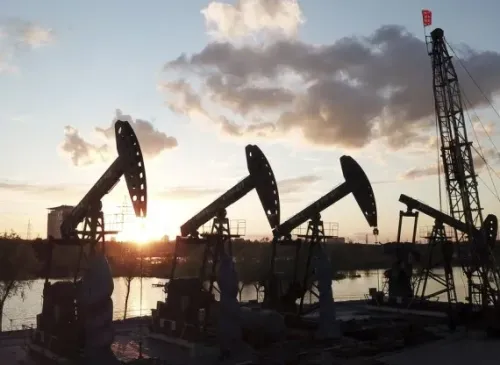
Crude Oil Prices Plummet Nearly 6% Amid Easing Iran Tensions

Synopsis
In early trading, crude oil prices have seen a significant drop of nearly 6%, influenced by hopes of de-escalation in the West Asia conflict. This decline follows a surge past the $100 mark just a day prior, marking a notable shift in global energy markets.
Key Takeaways
Crude oil prices have dropped nearly 6% amid easing tensions in West Asia.
Brent crude now stands at $92.45 per barrel.
WTI crude is priced at $88.65 per barrel.
President Trump indicated the US campaign against Iran may conclude soon.
The Strait of Hormuz remains a critical oil transit route.
New Delhi, March 10 (NationPress) As tensions ease in West Asia, crude oil prices have declined by nearly 6% during early trading on Tuesday, following a surge past $100 a barrel on Monday.
Brent futures saw a decrease of $6.51, representing a 6.6% drop, settling at $92.45 a barrel, while US West Texas Intermediate (WTI) crude fell by $6.12, or 6.5%, to $88.65.
The decline in oil prices coincided with President Donald Trump's statement indicating that the US military campaign against Iran would conclude “very soon,” defining success as the moment Tehran lacks the ability to develop threatening weapons against the US, Israel, or its allies.
Trump cautioned Iran against jeopardizing global energy supplies through the Strait of Hormuz, a crucial oil shipping route. He stated, “The Strait of Hormuz is going to remain safe. We have a lot of Navy ships there.”
The Strait of Hormuz serves as a vital link between the Gulf and the Arabian Sea, acting as one of the world's key oil transit chokepoints. A significant portion of crude oil exports from Gulf nations passes through this route, making any potential threats a major concern for global energy markets.
Earlier this month, the US executed substantial strikes against Iranian targets as part of a coordinated military effort with Israel aimed at diminishing Iran’s military and nuclear capabilities.
Previously, oil prices reached session peaks of $119.50 for Brent and $119.48 for WTI, marking their highest levels since 2022.
According to Finance Minister Nirmala Sitharaman, the impact of rising global crude oil prices on inflation rates in India is not expected to be considerable at this time, as inflation is currently near the “lower bound.”
She noted that the price of imported crude oil has been trending downward over the past year until geopolitical tensions escalated in West Asia on February 28, 2026, as mentioned in her response to a question in the Lok Sabha.
Point of View
The recent fluctuations in crude oil prices reflect ongoing geopolitical tensions and their direct impact on global markets. The statements from influential leaders highlight the delicate balance of power in the region and its implications for energy security worldwide.
NationPress
19 Sept 2026
Frequently Asked Questions
What caused the recent drop in oil prices?
The recent decline in oil prices is attributed to easing tensions in the West Asia conflict and statements from President Donald Trump indicating a potential end to the US campaign against Iran.
How much did oil prices drop?
Crude oil prices dropped nearly 6% in early trading, with Brent futures down by $6.51 and WTI crude down by $6.12.
What is the significance of the Strait of Hormuz?
The Strait of Hormuz is a critical oil shipping route, and any threats to its safety can have major implications for global energy markets.
How has the situation affected inflation in India?
The Finance Minister of India mentioned that the impact of rising crude oil prices on inflation is not expected to be significant at this time.
What were the peak prices for oil recently?
Recently, oil prices reached session highs of $119.50 for Brent and $119.48 for WTI, the highest since 2022.