OneWeb should get India approval before Starlink, says Sunil Mittal
Synopsis
Sunil Bharti Mittal publicly demanded that Eutelsat OneWeb receive India's satellite broadband approval before Starlink — pointing to satellites positioned over India for five years and ground networks ready for three. With the government insisting all operators are at 'broadly the same stage,' Mittal's intervention turns a licensing queue into a high-stakes public confrontation between India's telecom establishment and Elon Musk's ambitions.
Key Takeaways
Sunil Bharti Mittal said Eutelsat OneWeb applied for Indian regulatory approval approximately five years before Starlink and deserves priority clearance.
OneWeb's ground network has reportedly been ready for three years ; its satellites have been positioned over India for five years .
Mittal made the remarks at the Bloomberg New Economy Forum 2026 in New Delhi on 14 October 2026 .
The remarks follow Elon Musk 's allegations on X that Indian businesses were blocking Starlink 's India launch.
The Ministry of Communications rejected claims of bias, stating all three satellite operators are 'at broadly the same regulatory stage.'
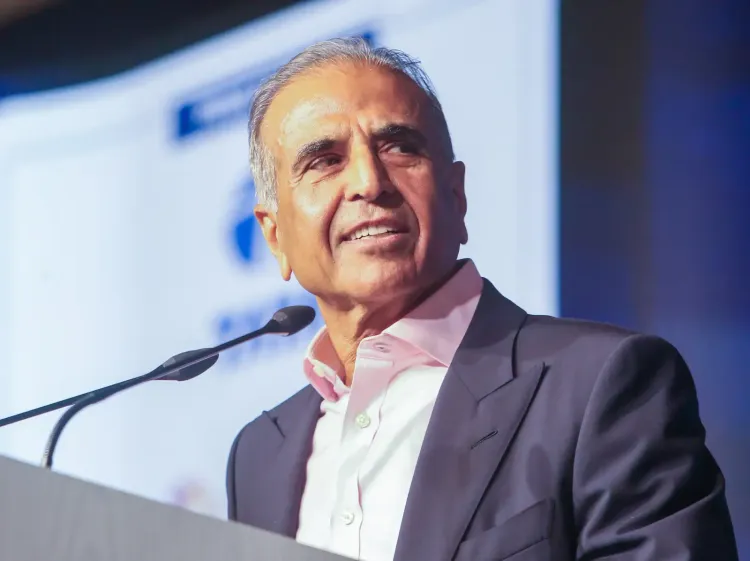
Sunil Bharti Mittal, founder and chairman of Bharti Enterprises, on Wednesday, 14 October 2026, publicly asserted that Eutelsat OneWeb deserves regulatory clearance in India ahead of Starlink, pointing to the company's five-year head start in the approval queue. Mittal made the remarks at the Bloomberg New Economy Forum 2026 in New Delhi, wading into an intensifying national debate over satellite broadband licensing in India.
What Mittal Said
'As I have already said, we are awaiting our approvals. I believe we are significantly ahead of him in the queue because we applied five years ago,' Mittal said during a panel discussion at the forum. He argued that Eutelsat OneWeb's lengthy wait makes its case for priority treatment self-evident.
Mittal added: 'Our ground networks have been ready for the past three years, and our satellites have been hovering over India for the past five years. We still do not have the necessary permission, so we would be very happy to receive it, even a few days before him.'
OneWeb's Ground-Level Readiness
According to Mittal, Eutelsat OneWeb's infrastructure preparedness sets it apart from newer entrants. The company's ground network has reportedly been operational and ready for three years, while its satellites have been positioned over Indian skies for approximately five years — a timeline that predates Elon Musk-led Starlink's formal push into the Indian market by a considerable margin.
Notably, this level of on-ground readiness without corresponding approvals raises questions about regulatory velocity — and whether India's satellite communication licensing framework has kept pace with the sector's commercial momentum.
The Starlink Row and Musk's Allegations
Mittal's remarks come amid a sharp escalation in public discourse around Starlink's India entry. Over the past week, Elon Musk used social media platform X to allege that certain Indian businesses were actively obstructing Starlink's plans to launch satellite broadband services in the country — a claim that drew widespread attention and political reaction.
This is not the first time the satellite broadband licensing debate has flared in India. The sector has witnessed recurring friction between incumbent telecom interests and new-age satellite operators, with spectrum allocation and the administrative approval process repeatedly emerging as flashpoints.
Government's Response
The Ministry of Communications has firmly rejected allegations of preferential treatment or discrimination in the approval process. In a formal statement responding to Musk's claims, the ministry said all satellite communication operators are being evaluated through a fair and non-discriminatory framework.
'At present, all the three entities are at broadly the same regulatory stage. As such, the suggestion that the framework or its application is unfair or discriminatory is baseless and misconceived,' the ministry stated.
The government's pushback effectively contests both Musk's allegation of bias and, implicitly, Mittal's claim of queue priority — setting the stage for a potentially prolonged regulatory and public-relations standoff among the three operators vying for India's satellite broadband market.
What Comes Next
With the government insisting all three operators stand at roughly the same regulatory stage, the timeline for final approvals remains unclear. India's satellite broadband market — estimated to serve millions of underserved users across rural and semi-urban geographies — is widely seen as one of the most consequential licensing decisions of the year. How the Centre navigates competing commercial and geopolitical pressures will shape the sector's trajectory for years to come.
Point of View
Exposing a gap between commercial readiness and administrative reality. The deeper issue is structural: India still lacks a clear, time-bound satellite broadband licensing pathway, and that vacuum is now being filled by competing billionaire narratives. What gets lost in the Mittal-versus-Musk framing is the public interest question — millions of rural users remain unserved while approvals gather dust.
NationPress
14 Oct 2026
Frequently Asked Questions
Why does Sunil Mittal believe OneWeb should get India approval before Starlink?
Mittal argues that Eutelsat OneWeb applied for regulatory approval in India approximately five years before Starlink, giving it a significant head start in the queue. He also notes that OneWeb's ground network has been ready for three years and its satellites have been positioned over India for five years, making the case for priority clearance on both time and preparedness grounds.
What did Elon Musk allege about Starlink's India entry?
Elon Musk used social media platform X to allege that certain Indian businesses were obstructing Starlink's plans to launch satellite broadband services in India. The claims, made over the past week, sparked a public debate and prompted a formal response from the Ministry of Communications.
How did the Indian government respond to the Starlink approval controversy?
The Ministry of Communications rejected allegations of bias, stating that all satellite communication operators are being evaluated through a fair and non-discriminatory framework. The ministry said all three entities are 'at broadly the same regulatory stage' and called suggestions of unfair treatment 'baseless and misconceived.'
Who are the three satellite broadband operators seeking approval in India?
Based on official and public statements, the three operators referenced by the Ministry of Communications include Eutelsat OneWeb, Starlink (backed by Elon Musk), and a third unnamed entity. All three are reportedly at broadly the same stage of the Indian regulatory approval process.
Where did Sunil Mittal make these remarks?
Mittal made the remarks during a panel discussion at the Bloomberg New Economy Forum 2026 in New Delhi on 14 October 2026.