Pakistan extends airspace ban on Indian aircraft until November 24
Synopsis
Pakistan has rolled over its airspace ban on Indian aircraft by another month to 24 November 2026 — the latest in a string of extensions that have been in place since the Pahalgam terror attack in April 2025. With no diplomatic thaw in sight, Indian carriers continue to absorb the cost of longer westward detours, and both countries show no sign of breaking the aviation deadlock.
Key Takeaways
Pakistan extended its airspace ban on Indian aircraft to 24 November 2026 via a fresh NOTAM from the Pakistan Airports Authority .
The ban, first imposed on 23 April 2025 , covers both civilian and military aircraft across the Karachi and Lahore Flight Information Regions .
India imposed reciprocal restrictions on Pakistani aircraft from 30 April 2025 ; both sets of curbs have been repeatedly extended.
The restrictions stem from heightened tensions following the Pahalgam terror attack in Jammu and Kashmir in April 2025 .
Similar airspace bans were enforced during the 1999 Kargil conflict and after the 2019 Pulwama attack , according to media reports.
No diplomatic signal of an imminent easing has emerged from either government as of 18 October 2026 .
Pakistan has extended its ban on Indian aircraft using its airspace until 24 November 2026, according to a fresh Notice to Airmen (NOTAM) issued by the Pakistan Airports Authority (PAA). The latest extension supersedes the earlier deadline of 24 October 2026 and applies to both civilian and military aircraft registered in India or operated by Indian airlines and aviation operators.
What the New NOTAM Covers
The PAA announced the extension on social media platform X, specifying that the ban encompasses all categories of Indian aircraft — including military flights. The restrictions span both the Karachi and Lahore Flight Information Regions, effectively sealing Indian aircraft out of all sectors of Pakistani-controlled airspace for another month.
Indian-registered aircraft, as well as those owned, operated, or leased by Indian airlines and aviation operators, remain barred from entering Pakistani airspace unless authorities announce any change before the revised deadline.
Origins: Pahalgam Attack and Bilateral Escalation
The aviation curbs trace their origins to a sharp deterioration in India-Pakistan relations following the Pahalgam terror attack in Jammu and Kashmir in April 2025. Pakistan initially shut its airspace to Indian aircraft on 23 April 2025. India responded a week later by imposing reciprocal restrictions on Pakistani airlines and aircraft from 30 April 2025.
India accused Pakistan of backing the Pahalgam attack — a charge that Islamabad rejected — triggering a cascade of diplomatic and military tensions. Since then, both countries have repeatedly extended the curbs, with no indication so far of an imminent easing of restrictions.
A Recurring Pattern in India-Pakistan Tensions
The current restrictions follow a well-established precedent. According to media reports, Pakistan enforced similar airspace bans on Indian aircraft during the 1999 Kargil conflict and in the aftermath of the 2019 Pulwama attack. Notably, each previous episode eventually concluded with a mutual reopening of airspace — though the timelines varied considerably depending on the diplomatic climate.
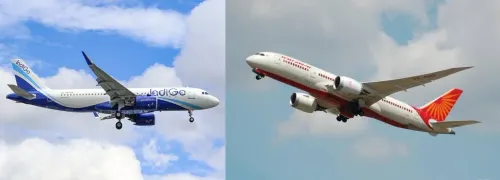
This is the latest in a series of monthly extensions since the ban was first imposed, underscoring the continued freeze in bilateral ties. The aviation restrictions carry direct consequences for Indian long-haul carriers flying westward routes, as Pakistani airspace closure forces longer detours over Central Asia, adding to fuel costs and flight times.
What Happens Next
With the revised deadline now set for 24 November 2026, aviation authorities and airlines on both sides will watch closely for any diplomatic signal that could prompt an early lifting of the ban. There has been no official statement from either government indicating imminent talks or a resolution framework. The Directorate General of Civil Aviation (DGCA) in India has not issued fresh guidance to carriers as of this report.
Point of View
Which is itself a signal: both governments appear comfortable using aviation as a long-term leverage tool rather than a short-term pressure valve. The cost, however, is asymmetric. Indian long-haul carriers absorb measurably higher fuel and time penalties on westward routes, while Pakistani aviation — already diminished — feels the reciprocal Indian ban less acutely. The longer this drags on, the more airlines restructure around it permanently, making any future reopening commercially disruptive rather than simply welcome.
NationPress
18 Oct 2026
Frequently Asked Questions
Why has Pakistan extended the airspace ban on Indian aircraft?
Pakistan extended the ban — now running until 24 November 2026 — as part of ongoing restrictions imposed following the Pahalgam terror attack in Jammu and Kashmir in April 2025. India accused Pakistan of backing the attack, triggering a freeze in bilateral ties that has sustained the aviation curbs through multiple monthly extensions.
Which Indian aircraft are affected by Pakistan's airspace ban?
The ban applies to all Indian-registered aircraft and any aircraft owned, operated, or leased by Indian airlines and aviation operators, covering both civilian and military categories. It spans the Karachi and Lahore Flight Information Regions, covering all sectors of Pakistani-controlled airspace.
When did Pakistan first close its airspace to Indian aircraft?
Pakistan first shut its airspace to Indian aircraft on 23 April 2025, shortly after the Pahalgam terror attack. India responded with reciprocal restrictions on Pakistani airlines from 30 April 2025.
Has Pakistan imposed similar airspace bans on India before?
Yes, according to media reports, Pakistan enforced comparable airspace bans during the 1999 Kargil conflict and in the aftermath of the 2019 Pulwama attack. Both previous episodes eventually ended with mutual reopening of airspace.
What is the impact of the airspace ban on Indian airlines?
The closure of Pakistani airspace forces Indian carriers operating westward routes — to Europe, the Middle East, and Central Asia — to take longer detours, increasing fuel costs and flight durations. The economic impact compounds with each month-long extension.