Why Has Pakistan's Development Ranking Plummeted?
Synopsis
Pakistan's recent plunge in global development rankings raises critical concerns about its health, education, and governance. This report highlights the need for urgent reforms to regain lost ground and improve public trust.
Key Takeaways
Pakistan's HDI ranking has dropped to 168th , indicating significant development challenges.
Gender Inequality Index shows low female participation in key areas.
The decline in global innovation underscores the need for increased R&D investment .
Experts recommend improving governance and aligning education with industry needs.
Structural issues continue to hinder economic progress.
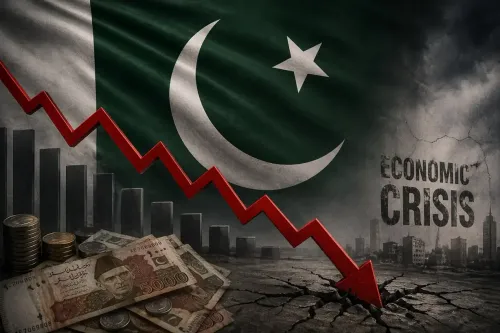
New Delhi, Dec 13 (NationPress) Pakistan has seen a significant decline in global development and innovation rankings, primarily due to ongoing challenges in health, education, governance, and economic resilience, according to a recent report.
The report from European Times highlights that the deterioration in these areas is largely attributed to diminished investments and a decline in public trust.
In the UNDP Human Development Index, Pakistan fell to the 168th position out of 193 countries in 2025, achieving a score of 0.544, with its inequality-adjusted HDI dropping to 0.392.
The Gender Inequality Index, which stands at 0.536, indicates low female participation in education, the workforce, and politics. Pakistan's HDI ranking has plummeted from 161 in 2020–21 to 168 in 2025, marking one of the steepest declines globally.
In contrast, regional counterparts like India, Bangladesh, and Sri Lanka are performing better, thanks to more robust investments in education, health, and governance.
Furthermore, on the Sustainable Development Goals Index 2024, Pakistan ranked 137th out of 166 countries, scoring 57.02, indicating limited progress on international development goals.
These challenges are exacerbating economic constraints, increasing the cost of public service delivery, and undermining Pakistan's credibility with foreign creditors and investors.
The decline in the Global Innovation Index (GII) 2025 further underscores the impact of inadequate investment in research and development (R&D), poor infrastructure, and inconsistent policies.
Experts suggest that Pakistan must focus on long-term R&D investments, enhance governance and anti-corruption measures, and align education with industry needs to bolster its global standing.
In a recent analysis, it was noted that the International Monetary Fund's (IMF) approval of a $1.2 billion tranche for Pakistan may help the country avert an immediate foreign debt default, but it is unlikely to alleviate pressures on ordinary households.
The report also pointed out structural issues, including a trade deficit, looming foreign-exchange crisis, and political instability.
Point of View
It is crucial to acknowledge the challenges Pakistan faces in its development journey. The decline in rankings serves as a wake-up call for policymakers to prioritize investments in key sectors, enhance governance, and restore public trust. Our nation must rise to these challenges to secure a brighter future.
NationPress
10 Oct 2026
Frequently Asked Questions
What caused Pakistan's drop in development rankings?
The drop is primarily due to weaknesses in health, education, governance, and economic resilience, exacerbated by lower investments and eroding public trust.
How does Pakistan's ranking compare to its regional peers?
Pakistan's ranking has declined significantly, while regional peers like India, Bangladesh, and Sri Lanka continue to perform better due to stronger investments.
What is the significance of the Gender Inequality Index?
The Gender Inequality Index reflects poor female participation in education and the workforce, highlighting critical areas for improvement.
What steps can Pakistan take to improve its rankings?
Experts recommend prioritizing long-term investments in research and development, strengthening governance, and aligning education with industry needs.
What are the structural issues affecting Pakistan's economy?
Key structural issues include a trade deficit, foreign-exchange crisis, and political discord, which pose significant challenges for the economy.