Is Rajasthan the Solar Powerhouse of India?
Synopsis
Rajasthan is not only redefining its identity from a desert state to a solar energy giant but also leading India’s clean energy revolution with remarkable growth in renewable energy capacity. Discover how this transformation is reshaping lives and contributing to national energy goals.
Key Takeaways
Rajasthan contributes 27.2% of India’s solar capacity.
Largest solar park planned capacity is 2,450 megawatts .
Installed 1,09,209 rooftop solar systems under PM Suryaghar Yojana.
Rajasthan added 17,820 megawatts of renewable energy in two years.
Decentralized solar energy initiatives are thriving.
Jaipur, Dec 13 (NationPress) Once celebrated for its magnificent forts, rich folklore, and expansive deserts, Rajasthan is quickly transforming its image into a pivotal player in India’s clean energy movement.
With its abundant sunshine, proactive governance, and innovative policy changes, this desert state is emerging as the leading hub for solar energy in the country.
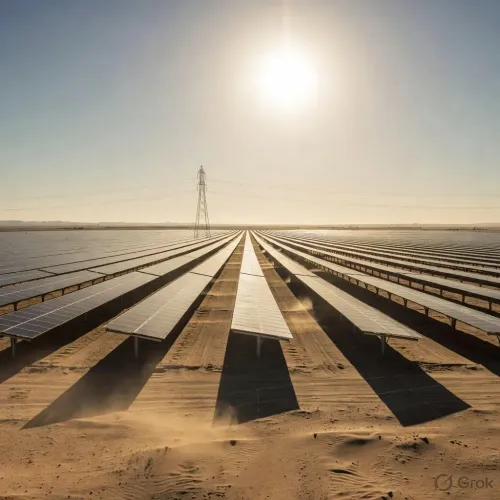
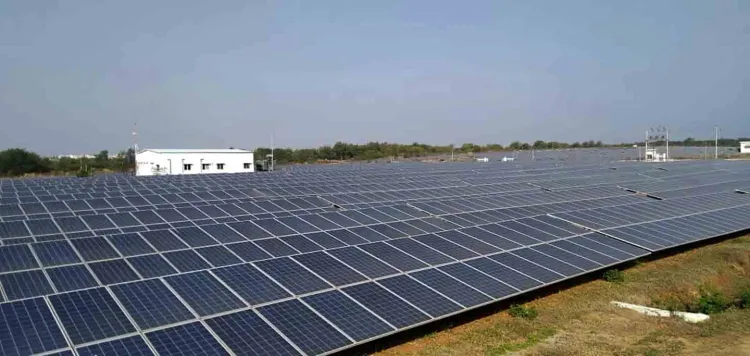
At the heart of this evolution is Pugal in Bikaner, where India’s largest solar park is being developed.
The park is expected to have a capacity of 2,450 megawatts along with an extensive 5,000 megawatt-hours of battery energy storage, marking a significant milestone not just for Rajasthan, but for India's renewable energy goals.
In addition, four substantial battery energy storage projects are in the works, collectively providing nearly 6,000 megawatt-hours of storage, backed by an investment of Rs 6,000 crore.
These initiatives have achieved the lowest tariffs in the nation and are projected to be operational by November 2027, as confirmed by officials from the Chief Minister’s Office.
Parliamentary Affairs Minister Jogaram Patel stated that the Cabinet has given conditional approval for land allocation for significant renewable energy projects.
This includes 161.45 hectares in Karni Sar, Bhatiyan village (Pugal tehsil, Bikaner) and 356.25 hectares in Kharnai village (Rawatbhata tehsil, Chittorgarh) for solar project development.
Moreover, 70.6 hectares in Sokharu, Barmer district, have been designated for Powergrid Barmer-1 Transmission Limited to set up a 765 KV substation.
These steps will enhance the state’s renewable energy transmission infrastructure and guarantee a stable power supply for its residents, he said.
The storage facilities are revolutionary. They will address peak electricity demand, lessen reliance on costly power purchases, and ensure continuous energy availability—bringing India closer to genuine energy independence, officials noted.
Currently, Rajasthan’s renewable energy capacity stands at a remarkable 41,189 megawatts, with solar power alone contributing 35,337 megawatts. This equates to 27.2 percent of India’s total solar capacity and 16.43 percent of the country’s overall renewable energy output, solidifying its position as a national frontrunner.
What’s even more impressive is the speed of this growth. In just the past two years, Rajasthan has added 17,820 megawatts of renewable energy capacity, with 17,326 megawatts of that being solar.
Furthermore, projects totaling 45 gigawatts are currently in various stages of development. Together, these figures position Rajasthan as the backbone of India’s solar energy prospects.
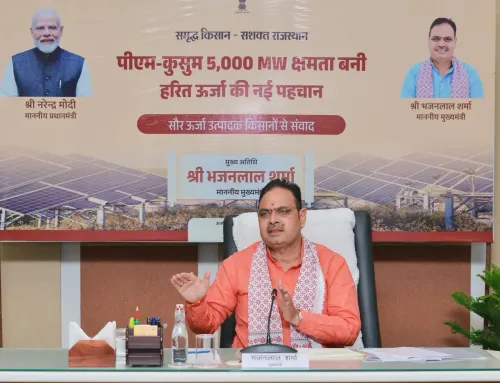
The state’s solar success is not limited to large-scale installations in remote areas. Rajasthan has also become a national leader in decentralized solar energy, propelled by the effective implementation of key central schemes such as PM-KUSUM and PM Suryaghar Yojana.
Under Components A and C of PM-KUSUM, over 1,470 grid-connected small solar power projects with a combined capacity exceeding 2,345 megawatts have been established in rural areas over the last two years, ranking Rajasthan first nationally.
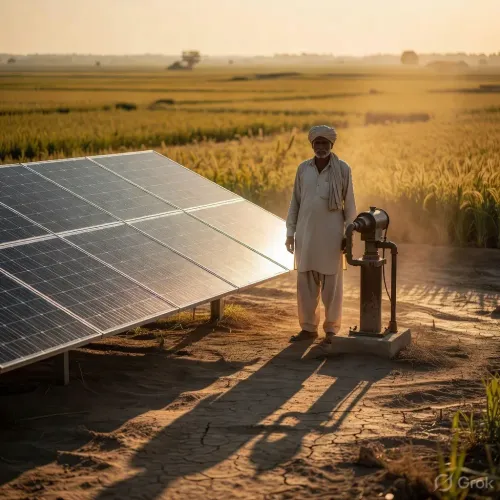
Under Component B, 51,927 off-grid solar pumps have been installed, allowing farmers to transition from diesel pumps to clean, affordable solar options.
Currently, more than 1.54 lakh farmers receive dependable daytime electricity for irrigation through these solar plants. Urban and semi-urban households are also participating in the solar movement.
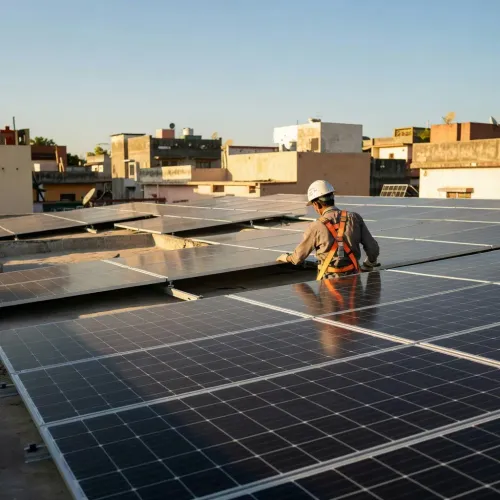
Through the PM Suryaghar Yojana, Rajasthan has installed 1,09,209 rooftop solar systems with a total capacity of 441 megawatts in less than two years.
In terms of installations, the state ranks fifth nationally, assisting families in lowering their electricity costs while promoting environmental sustainability.
Officials credit this rapid advancement to progressive policy choices and efficient governance.
Simplified land allocation processes, investor-friendly regulations, and expedited approvals have eliminated longstanding obstacles and galvanized fresh energy in the sector.
From providing homes and farms with inexpensive electricity to anchoring India’s clean energy objectives, solar energy is revolutionizing lives across Rajasthan.
What was once perceived as a harsh desert terrain is now being envisioned as a vast, natural powerhouse. With a new dawn comes a new identity; Rajasthan is not just witnessing India’s solar revolution—it is spearheading it, officials assert.
Point of View
I believe Rajasthan's ambitious initiatives in renewable energy serve as a beacon for other states in India. Its rapid growth in solar energy reflects not only technological advancement but also a commitment to sustainable development, making it a model for the nation.
NationPress
7 Oct 2026
Frequently Asked Questions
What percentage of India's solar capacity does Rajasthan contribute?
Rajasthan contributes 27.2% to India's total solar capacity.
What is the capacity of Rajasthan's largest solar park?
The largest solar park in Rajasthan has a planned capacity of 2,450 megawatts.
How many rooftop solar systems have been installed in Rajasthan under PM Suryaghar Yojana?
Rajasthan has installed 1,09,209 rooftop solar systems under PM Suryaghar Yojana.
What initiatives have contributed to Rajasthan's decentralized solar energy growth?
The effective rollout of PM-KUSUM and PM Suryaghar Yojana has driven Rajasthan's decentralized solar energy growth.
How much renewable energy capacity has Rajasthan added in the last two years?
In the last two years, Rajasthan has added 17,820 megawatts of renewable energy capacity.