Have Pakistan’s Remittances Reached a Record $38.3 Billion in FY25?

Synopsis
Remittances from overseas Pakistanis have surged to a historic $38.3 billion in FY25, marking a significant increase. However, economists caution that this growing dependency on remittances highlights deeper structural economic issues, potentially impeding necessary reforms and local development.
Key Takeaways
Record remittance inflows of $38.3 billion in FY25.
26 percent increase compared to the previous year.
Remittances surpass merchandise exports for the first time.
Concerns over economic dependency and structural imbalances.
Need for strategic use of remittances to enhance local investment .
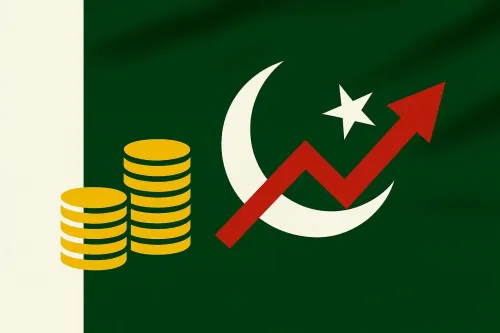
New Delhi, Jan 14 (NationPress) The remittances sent by Pakistanis living abroad have achieved an unprecedented level of $38.3 billion in FY25, reflecting a remarkable increase of over 26 percent compared to the previous year, according to statistics from the State Bank of Pakistan.
This significant surge has provided essential support to Pakistan’s foreign exchange reserves and has enhanced household consumption during a period when the economy grapples with numerous obstacles.
Interestingly, the funds flowing from overseas Pakistanis have now surpassed the country’s merchandise exports, which saw only a modest rise to approximately $32.3 billion in FY25, as reported by Daily Times.
Economists interpret this trend as indicative of a profound structural imbalance within Pakistan’s economic framework, where remittances are increasingly overshadowing revenues from trade and industry.
Experts highlight that the majority of remittances are allocated for everyday expenses rather than long-term investments.
While this influx supports families and sustains economic activity in the short term, it fails to bolster industries, enhance exports, or elevate productivity.
Over the long haul, an excessive reliance on remittances could lead to an overvalued real exchange rate, making local goods less competitive and exacerbating the trade deficit.
The growing dependence on foreign income also has social repercussions. Extended periods of employment abroad often strain family dynamics, particularly for children and spouses who remain in the home country.
In regions where remittances are a primary income source, younger generations may opt for migration instead of skill development, entrepreneurship, or local opportunities, undermining domestic economic progress.
The uneven distribution of remittance flows across different areas can further heighten social and economic disparities.
Political ramifications are also evident. Families reliant on remittances often gain better access to private healthcare, education, and other essential services, which diminishes public pressure on the government to enhance service delivery.
Analysts caution that this trend may foster policy complacency and hinder vital institutional reforms.
While economists acknowledge the immense value of remittances, reflecting the hard work and sacrifices of countless Pakistanis abroad, they urge that these inflows should not be viewed as a long-term substitute for necessary economic reforms.
For sustainable growth, Pakistan must leverage remittances more effectively by promoting investment, revitalizing exports, and reinforcing domestic industries.
Point of View
It's imperative to recognize the dual nature of remittances. They serve as a lifeline for many families but also highlight significant economic vulnerabilities. While we celebrate the contributions of Pakistanis abroad, it is essential to focus on strategies that promote sustainable growth through local investment and industrial development.
NationPress
7 Oct 2026
Frequently Asked Questions
What are remittances?
Remittances are funds sent back home by individuals working abroad, providing financial support to families and the economy.
Why are remittances important for Pakistan?
Remittances are a crucial source of foreign currency, supporting the economy and enhancing household spending.
How do remittances affect the Pakistani economy?
While remittances bolster immediate consumption, they may also create long-term dependency, affecting local industries and economic reforms.
What are the potential downsides of relying on remittances?
Excessive reliance on remittances can lead to an overvalued currency, decreased competitiveness of local goods, and hinder economic development.
How can Pakistan utilize remittances effectively?
Pakistan should encourage investment from remittances to revitalize exports and strengthen domestic industries for sustainable growth.