Why has the IMF Reduced Pakistan’s GDP Growth Projection to 3 Percent?
Synopsis
The IMF's revised GDP growth forecast for Pakistan raises concerns amid a struggling economy. With a contraction in manufacturing and a reliance on remittances, the country's future growth appears uncertain. This article delves into the implications of these projections and the challenges ahead for Pakistan's economic stability.
Key Takeaways
IMF has reduced Pakistan's GDP growth forecast to 3% .
Manufacturing sector contracted by 1.25% in the first half of the fiscal year.
Remittances reached a record high of $8.8 billion .
Pakistan's economy is heavily reliant on foreign aid.
Urgent reforms are needed to attract investment and stabilize growth.
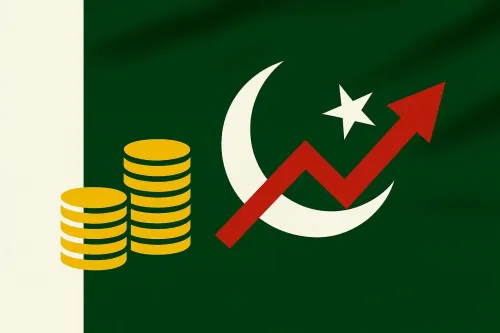
New Delhi, Feb 2 (NationPress) The IMF has revised Pakistan’s GDP growth projection down to 3 percent from 3.2 percent, a concerning development for a nation facing a rapidly growing population, as highlighted by reports in the Pakistani media.
The large-scale manufacturing sector has actually seen a contraction of 1.25 percent during the initial five months of the current fiscal year, with exports showing signs of deceleration. Besides foreign loans and other external support, the only reliable source of income for Pakistan has been remittances, which surged to a record high of $8.8 billion in the first quarter of FY2025, according to an article in The News International.
An economy heavily reliant on the goodwill of foreign lenders and expatriate salaries is unlikely to achieve the sustainable growth it desperately needs. This challenge is further compounded by the conditions attached to ongoing IMF support, which demand higher taxes, reduced subsidies, and stricter budgets. Consequently, the government faces an urgent need to implement challenging economic reforms to attract greater foreign investment and alleviate the burden of inefficient state-owned enterprises. While stabilization is commendable, a stable economy lacking growth, investment, or competitive enterprises is unlikely to maintain its stability for long, the article cautioned.
In a fiscal half marked by a turnaround in the current account, a more stable and robust rupee, decreasing inflation, and significantly lower policy rates, disappointing growth continues to overshadow the economic landscape.
Although the current account surplus, policy rate reductions, and stabilizing prices are positive indicators, they are highly dependent on the external assistance the country has received, particularly from the IMF bailout last summer. In fact, the current account surplus coincided with the UAE’s decision to extend $2 billion in deposits with the State Bank of Pakistan for another year. Thus, it is difficult to attribute much credit to domestic economic policy for this favorable outcome, the article added.
Point of View
I believe that while the IMF's revised GDP forecast is alarming, it underscores the pressing need for Pakistan to implement significant reforms. Relying heavily on foreign aid and remittances is unsustainable. We must focus on creating a robust, self-sustaining economy that can weather global fluctuations.
NationPress
20 Sept 2026
Frequently Asked Questions
What is the current GDP growth forecast for Pakistan?
The IMF has lowered Pakistan's GDP growth forecast to 3 percent.
Why is the GDP growth forecast concerning?
The reduction is alarming for a country with a rapidly growing population and a contracting manufacturing sector.
What role do remittances play in Pakistan's economy?
Remittances have reached a record high of $8.8 billion in the first quarter of FY2025, serving as a critical lifeline for the economy.
What reforms are needed for sustainable growth?
Pakistan needs to implement challenging economic reforms to attract foreign investment and reduce reliance on foreign aid.
How does the current account surplus affect the economy?
The current account surplus is dependent on external support, such as the IMF bailout and UAE deposits, making it precarious.