Pakistan Struggles to Fulfill IMF Conditions as Funding Needs Surge

Synopsis
Amid escalating economic challenges, Pakistan is finding it increasingly difficult to meet IMF conditions for loan extensions while grappling with a widening trade deficit and rising oil import costs due to regional conflicts. This situation raises critical questions about the country's fiscal management and reliance on foreign assistance.
Key Takeaways
Pakistan faces significant economic challenges in meeting IMF conditions.
Trade deficit is widening due to increasing oil import costs and declining exports.
The IMF insists on prioritizing development expenditures for loan disbursement.
Current budget heavily relies on external financing, amounting to nearly $20 billion.
Fluctuations in international oil prices could further impact Pakistan’s economy.
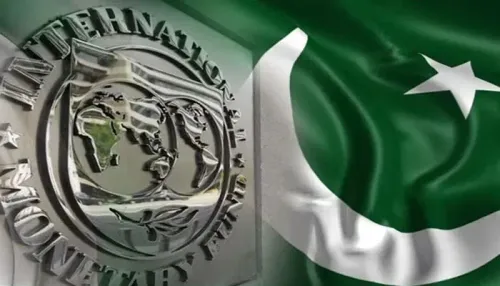
New Delhi, March 15 (NationPress) Pakistan is facing escalating challenges in fulfilling the IMF requirements necessary for loan extensions, exacerbated by a growing trade deficit and soaring oil import costs due to the ongoing conflict in Iran, as indicated in a recent report.
Frequent delays in project execution in Pakistan significantly inflate project costs. This increase is not solely due to sector inefficiencies but also stems from the government's ongoing struggle with a limited fiscal space, hindering the allocation of essential counterpart funds, as reported by the Karachi-based Business Recorder.
The International Monetary Fund, in its last three loan agreements with Pakistan (since 2019, including the current program), has emphasized that the government should prioritize public sector development expenditures. Funds will only be allocated to projects that are nearing completion, the report mentioned.
Considering program support loans as well, it is notable that Pakistan's trade deficit has widened, largely due to the cyclical economic boom-bust cycle driven by ineffective monetary and fiscal policies. In the period from July to January 2026, exports fell by 5.5% while imports surged by 9.8% compared to the same timeframe last year. Despite a remarkable increase in remittances, the current account deficit expanded to a negative $1,074 million, contrasting with a positive $564 million during the same period last year, the article pointed out.
Given that petroleum products make up a large portion of Pakistan's imports, the trade deficit is likely to widen further if the Middle Eastern conflict persists. Following merely two days of hostilities, international oil prices surged by 10%. Alarmingly, senior traders have suspended oil shipments through the Strait of Hormuz after communications from the Islamic Revolutionary Guard Corps indicated a closure of the Strait, although some shipments continue to flow, the report noted.
Despite potential adverse effects on Pakistan's economy from fluctuations in international oil prices, there seems to be little prospect of reducing reliance on foreign loans. The current year's budget has allocated nearly $20 billion for external financing, with foreign exchange reserves largely dependent on loans, including $12 billion in annual rollovers from three allied countries, the article emphasized.
The Economic Affairs Division's website states that it is tasked with the assessment of needs, programming, and negotiations related to external economic assistance for the Government of Pakistan and its entities from foreign governments and multilateral agencies. This division operates under the Ministry of Finance, which ultimately decides the extent of external loans to secure based on projected budget deficits, repayment capacity for interest and principal, and the status of foreign exchange reserves. It is hoped that the Ministry will engage the Cabinet in efforts to lessen dependence on foreign loans, which will likely necessitate stringent fiscal measures, particularly in curbing current expenditures, as the article concluded.
Point of View
It is imperative to acknowledge Pakistan's critical economic challenges, particularly in the context of its obligations to international financial institutions. The ongoing struggle to manage trade deficits and secure foreign loans highlights the need for a comprehensive fiscal strategy that prioritizes economic stability and growth.
NationPress
30 Sept 2026
Frequently Asked Questions
What are the current issues facing Pakistan's economy?
Pakistan is struggling with a widening trade deficit, increasing oil import costs, and challenges in meeting IMF loan conditions.
How does the Iran conflict affect Pakistan's economy?
The Iran conflict has led to rising oil prices, exacerbating Pakistan's trade deficit and reliance on foreign loans.
What measures is the IMF requiring from Pakistan?
The IMF is insisting that Pakistan prioritizes public sector development expenditures and allocates funds only to near-completion projects.
What is the current status of Pakistan's trade deficit?
Pakistan's trade deficit has widened, with a 5.5% decline in exports and a 9.8% increase in imports compared to last year.
How much is Pakistan relying on foreign loans?
The current budget has allocated nearly $20 billion for external financing, indicating a significant reliance on foreign loans.