Digital Monitoring of 14 Lakh Anganwadi Centres Under POSHAN Abhiyaan

Synopsis
Discover how the POSHAN Abhiyaan is revolutionizing nutrition monitoring across India with advanced digital tools, engaging communities, and driving significant health initiatives for vulnerable populations.
Key Takeaways
The POSHAN Abhiyaan monitors over 14 lakh Anganwadi Centres.
Nearly 9 crore beneficiaries are under this initiative.
Community engagement is integral to the program's success.
Poshan Vatikas promote access to nutritious food.
The initiative highlights the importance of a lifecycle approach to nutrition.
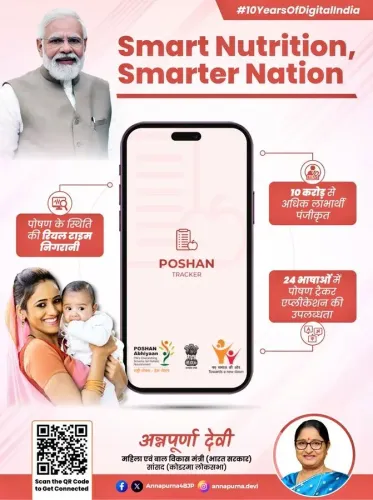
New Delhi, April 14 (NationPress) The integration of digital solutions like the Poshan Tracker Application now facilitates near real-time oversight of more than 14 lakh Anganwadi Centres and approximately 9 crore beneficiaries under this initiative, as announced by the government on Tuesday.
As the POSHAN Abhiyaan marks its eighth anniversary, its Jan Andolan strategy has engaged communities across the nation, with campaigns such as Poshan Maah and Poshan Pakhwada leading to over 150 crore activities, according to an official announcement.
"This mission illustrates the increasing importance of convergence, technology-driven governance, and community involvement in tackling nutrition-related issues," the statement noted.
The program's development has highlighted that coordinated actions across various sectors and enhanced service delivery mechanisms are essential, together with ongoing behavioral change efforts, to improve nutrition results.
The transition to Mission Poshan 2.0 has reaffirmed the commitment to enhancing service quality, broadening early childhood care, and reinforcing last-mile delivery systems.
By merging nutrition with health, early childhood initiatives, education, and community involvement, the mission employs a holistic strategy to assist vulnerable groups, as per government reports.
Launched in 2018, the POSHAN Abhiyaan represented a pivotal change in India's perspective on nutrition, evolving from a welfare-centric view to recognizing it as a national priority interconnected with human capital development, the Sustainable Development Goals (SDG), and long-term growth.
This initiative has unified over 26 ministries and departments within a cohesive nutrition framework, emphasizing the necessity for simultaneous actions regarding sanitation, education, water, women's empowerment, and income.
Significantly, POSHAN Abhiyaan is structured around a lifecycle and preventive method — focusing not just on treating acute malnutrition post-factum, but on proactive measures, as highlighted in the statement.
It prioritizes the critical first 1,000 days of a child's life, from conception to two years, which is vital for their physical growth, cognitive development, and long-term health outcomes.
Additionally, Poshan Vatikas or Nutri-gardens are being established at Anganwadi Centres, government schools, and Gram Panchayat lands to encourage dietary diversity and the consumption of locally sourced nutritious food. These gardens ensure convenient and affordable access to fruits, vegetables, and medicinal plants.
aar/pk
Point of View
Showing dedication to community engagement and technological integration. It stands as a key initiative for addressing nutrition challenges, emphasizing a holistic approach to health and development.
NationPress
16 Sept 2026
Frequently Asked Questions
What is the POSHAN Abhiyaan?
The POSHAN Abhiyaan is an initiative launched by the Indian government in 2018 aimed at improving nutritional outcomes across the country through a comprehensive approach involving various sectors.
How does the Poshan Tracker Application work?
The Poshan Tracker Application enables real-time monitoring of Anganwadi Centres, facilitating better oversight of nutrition programs and beneficiaries.
What are Poshan Vatikas?
Poshan Vatikas, or Nutri-gardens, are gardens set up at community centres to promote dietary diversity and ensure access to nutritious food.
Why are the first 1,000 days critical for infants?
The first 1,000 days of a child's life are crucial for their physical growth, brain development, and overall health outcomes.
How many ministries are involved in the POSHAN Abhiyaan?
The POSHAN Abhiyaan involves collaboration among over 26 ministries and departments to create a unified nutrition framework.