Jitin Prasada at ASSOCHAM: India is a long-term investment partner, not just a market
Synopsis
At ASSOCHAM's Business Reforms Summit, Commerce Minister Jitin Prasada reframed India's investor pitch: the country is not a passive consumer market but an active manufacturing partner. With FTAs unlocking MSME export markets and Gati Shakti reshaping logistics, the Centre is betting that bottom-up growth — from small towns, not just metros — is India's most compelling differentiator for long-term global capital.
Key Takeaways
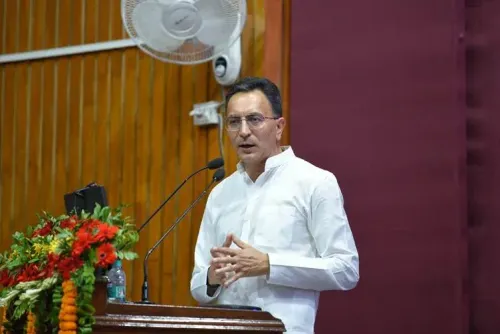
Jitin Prasada , Minister of State for Commerce and Industry, addressed ASSOCHAM's India Business Reforms Summit 2026 in New Delhi on 19 May 2026 .
He urged foreign investors to treat India as a long-term investment partner , not merely a consumer market.
India's economic growth is increasingly driven by smaller towns and rural regions , not just metropolitan cities.
Recent free trade agreements (FTAs) have opened new international markets, with MSMEs identified as the primary growth engine.
The government cited the Gati Shakti portal , national logistics policy, and export promotion measures as key tools for building manufacturing competitiveness.
Prasada underlined rule of law , transparency , and equal footing as pillars of India's investor confidence framework.
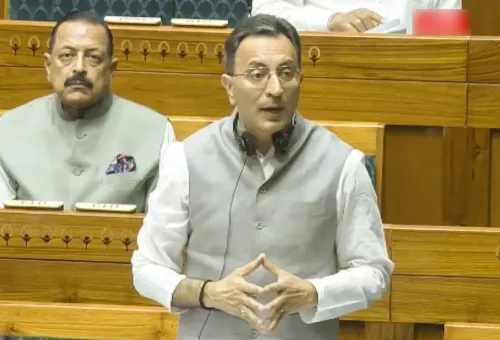
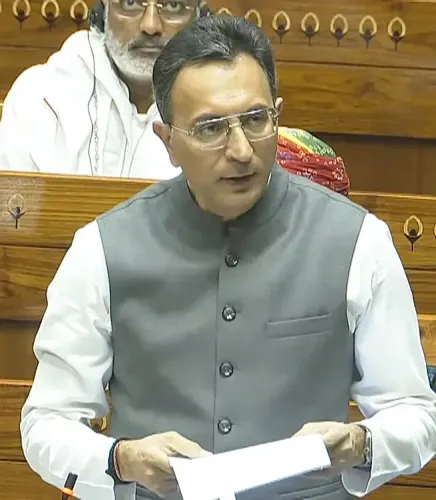
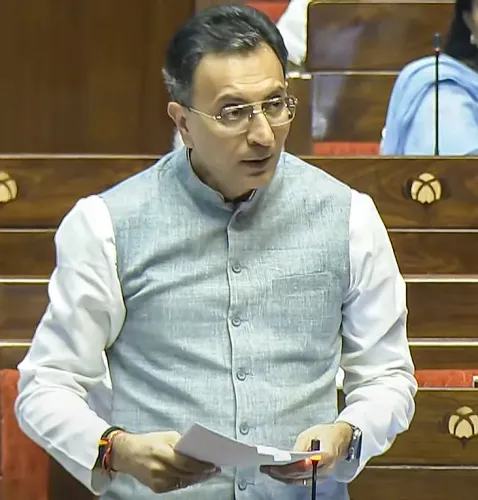
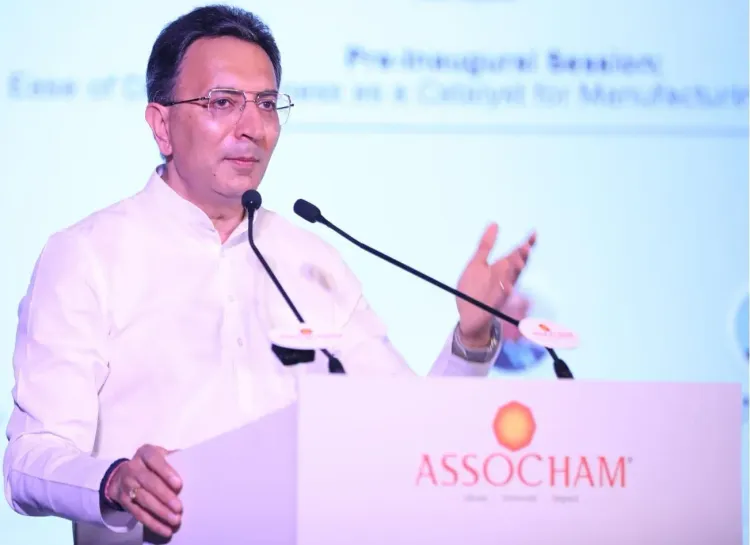
Union Minister of State for Commerce and Industry Jitin Prasada on Tuesday, 19 May 2026, called on global companies to move beyond treating India as a consumer destination and instead engage as long-term investment partners in the country's manufacturing and business ecosystem. He was addressing ASSOCHAM's India Business Reforms Summit 2026 in New Delhi.
India's Growth Is No Longer Metro-Led
Prasada stressed that India's economic transformation is no longer confined to its major cities. Smaller towns and rural regions are generating substantial domestic demand, making the country what he described as 'the biggest market.' 'India is changing bottom up as well. It's not only about our metros. So that's where we are the biggest market,' he said.
This bottom-up growth narrative aligns with a broader policy push to deepen economic activity beyond Tier-1 cities — a shift that has implications for consumer goods, logistics, and financial services companies eyeing India's next growth frontier.
What the Government Is Asking of Foreign Investors
The minister was direct in articulating the Centre's expectations from global capital. Rather than passive market access, the government wants investors to participate in India's production and value chains. 'Don't treat India as just a market. We want to partner with you. We want them to invest in India,' Prasada said.
He also emphasised the institutional foundations underpinning this pitch — rule of law, transparency, and equal treatment for all players. 'This government, India, we have a rule of law. There is transparency. And there's an equal footing for everybody. There is no shortcuts anymore,' he said, signalling a departure from the perception of regulatory unpredictability that had historically tempered foreign investor confidence.
FTAs and the MSME Growth Engine
Prasada highlighted recent free trade agreements (FTAs) as a structural enabler for Indian businesses, particularly micro, small and medium enterprises (MSMEs). He argued that these agreements have unlocked access to international markets at a scale previously unavailable to smaller Indian firms. 'These FTAs have opened up a market you can't imagine. And our MSMEs are going to be the growth engine,' he said.
This comes amid India's active pursuit of bilateral trade pacts with the United Kingdom, the European Union, and several other economies — deals that, if concluded, could meaningfully expand the export runway for India's MSME base, which accounts for a significant share of national employment and manufacturing output.
Infrastructure and Logistics as Competitiveness Levers
The minister also outlined the government's industrial strategy, centring on value addition, logistics upgrades, and export promotion. He specifically cited the Gati Shakti portal, the national logistics policy, and export promotion measures as tools accelerating India's transition into a global manufacturing hub.
'We want to add to the value chain. It's not only about manufacturing. It's about tangible results. Our Gati Shakti portal, the logistics policy, the export promotion policy, all those things coupled are ensuring that India is moving at such a rapid pace,' Prasada said.
With global supply chains continuing to diversify away from single-country dependence, India's window to capture a larger share of manufacturing investment remains open — but the execution of these policy instruments will determine how much of that opportunity is converted into verifiable outcomes.
Point of View
But the gap between India's investment narrative and its on-ground execution record remains a live question. FTAs are being positioned as MSME enablers, yet absorption capacity — access to trade finance, compliance readiness, logistics last-mile — has historically limited how much smaller firms benefit from new market access. The Gati Shakti portal is a genuine infrastructure coordination advance, but logistics costs as a share of GDP remain above global benchmarks. The 'rule of law, no shortcuts' framing is a pointed rebuttal to investor concerns about retrospective taxation and regulatory reversals — concerns that did not arise in a vacuum. The real audience for this speech is not the room at ASSOCHAM; it is the global boardrooms still weighing India against Vietnam, Mexico, and Indonesia for their next manufacturing anchor.
NationPress
26 Oct 2026
Frequently Asked Questions
What did Jitin Prasada say at the ASSOCHAM India Business Reforms Summit 2026?
Jitin Prasada urged global companies to view India as a long-term investment and manufacturing partner rather than a consumer market. Speaking on 19 May 2026, he highlighted India's rule of law, transparency, FTA-driven market access, and infrastructure initiatives such as the Gati Shakti portal as key reasons to invest in India.
How are free trade agreements helping Indian MSMEs?
According to Prasada, recent FTAs have opened international markets that were previously inaccessible to smaller Indian firms. He described MSMEs as India's 'growth engine' and said the agreements are expected to accelerate the sector's export-led expansion.
What is the Gati Shakti portal and why did Prasada mention it?
The Gati Shakti portal is a government platform designed to coordinate infrastructure planning and logistics across ministries and agencies. Prasada cited it alongside the national logistics policy and export promotion measures as tools helping India move rapidly toward becoming a stronger global manufacturing hub.
Why is India's bottom-up economic growth significant for investors?
Prasada noted that economic activity is expanding beyond India's metros into smaller towns and rural areas, creating a vast and diversified domestic market. This broadens the investment case beyond urban consumption, offering opportunities across consumer goods, logistics, and financial services in underserved regions.
What assurances did the government offer to foreign investors?
Prasada assured investors of a stable business environment grounded in rule of law, transparency, and equal treatment for all participants — both domestic and foreign. He stated that the era of regulatory shortcuts is over, a signal aimed at addressing longstanding concerns about policy predictability.