Rajnath Singh, Czech Deputy PM review defence industrial ties, joint ventures
Synopsis
Defence Minister Rajnath Singh and Czech Deputy PM Karel Havlicek reviewed the full spectrum of India-Czech defence industrial ties in New Delhi on 13 October, agreeing to expand joint ventures under the India-Czech Joint Defence Committee — a signal that India's Atmanirbhar Bharat push is drawing in European co-production partners, not just buyers.
Key Takeaways
Defence Minister Rajnath Singh met Czech Deputy PM Karel Havlicek in New Delhi on 13 October 2026 .
Both sides reviewed progress under existing bilateral frameworks and expressed satisfaction over ongoing joint ventures .
They agreed to expand defence industrial collaboration under the India-Czech Joint Defence Committee .
Singh framed the engagement within India's Atmanirbhar Bharat defence policy, adopted as a national priority under PM Narendra Modi .
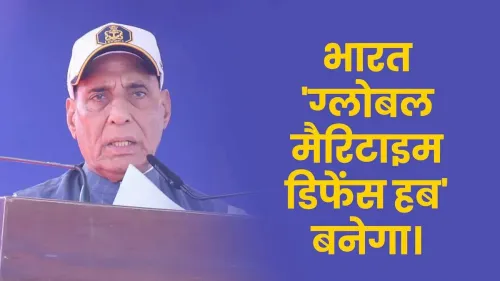
Singh separately highlighted the transformation of modern warfare, citing drones , AI , cyber , and electronic warfare as defining new-age capabilities.
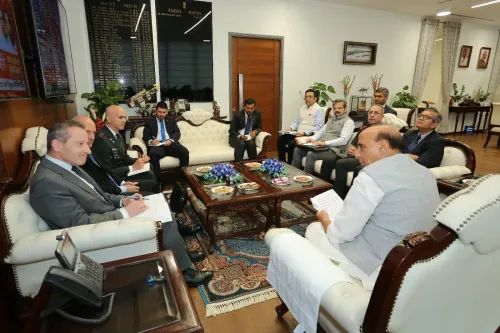
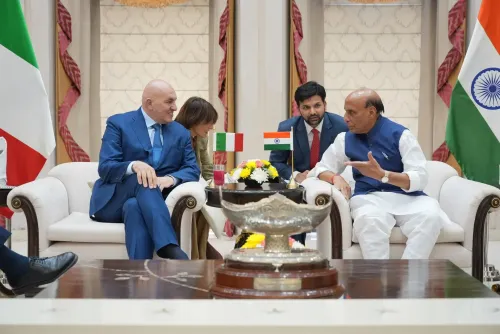
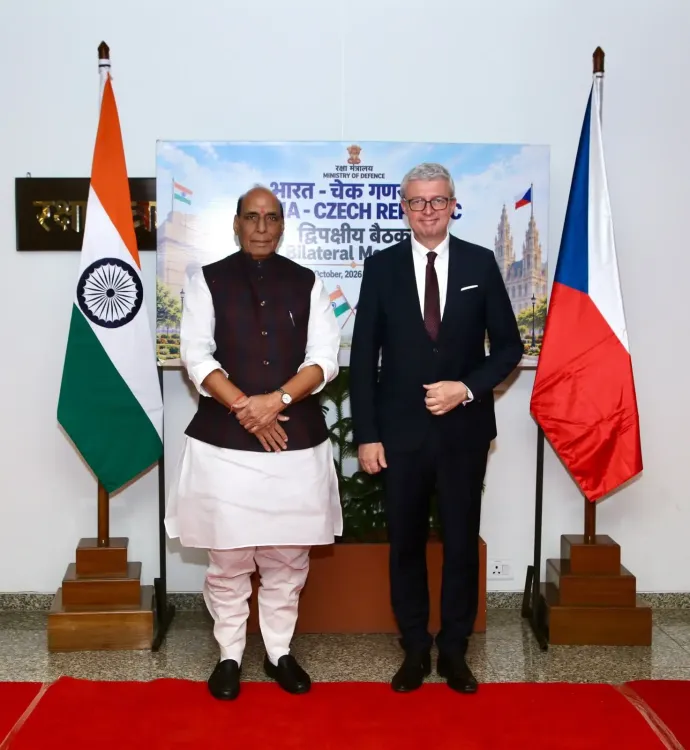
Defence Minister Rajnath Singh on Tuesday, 13 October 2026, held bilateral talks with Czech Republic Deputy Prime Minister and Minister of Industry and Trade Karel Havlicek in New Delhi, with both sides conducting a comprehensive review of defence industrial cooperation and agreeing to deepen joint ventures between Indian and Czech entities.
What Was Discussed
The two leaders reviewed the progress achieved under existing bilateral defence frameworks and expressed satisfaction over the performance of ongoing joint ventures. Singh confirmed that both sides agreed to further expand collaboration under the aegis of the India-Czech Joint Defence Committee.
'We were pleased to note the progress and success of various Joint Ventures. We also agreed to further expand this collaboration under the aegis of India-Czech Joint Defence Committee, to promote Atmanirbhar Bharat,' Singh said in a post on X.
Atmanirbhar Bharat at the Centre
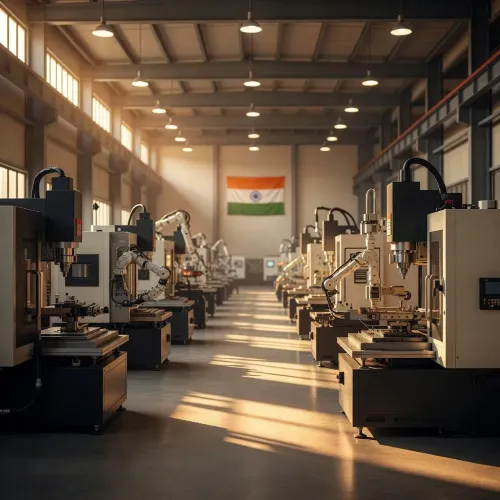
The meeting took place against the backdrop of India's sustained effort to strengthen domestic defence manufacturing under the Atmanirbhar Bharat initiative — a policy framework that Prime Minister Narendra Modi has institutionalised as a national security priority. Singh underscored that India has adopted self-reliance in defence as a guiding national policy, while simultaneously deepening partnerships with trusted international partners such as Czech Republic.
Notably, the Czech Republic has emerged as an increasingly relevant partner for India in niche defence manufacturing segments, and the joint ventures being reviewed represent a maturing bilateral relationship that goes beyond arms procurement into co-production.
Singh on the Future of Warfare
Separately, Singh elaborated on the evolving nature of modern warfare, noting that conflict has extended well beyond traditional domains of land, sea, and air to encompass space, cyber, the electromagnetic spectrum, and the information domain. He pointed to the growing influence of unmanned systems, drones, artificial intelligence, electronic warfare, and long-range precision weapons in shaping contemporary operations.
'Future military power will be defined less by number of platforms we possess. It will be determined by speed of sensing, understanding, deciding, and acting,' Singh said, highlighting that speed, precision, information, and integration have emerged as defining attributes of modern military capability.
Strategic Context
This bilateral engagement comes as India accelerates its defence diplomacy across Europe, seeking technology transfers and co-development arrangements that align with domestic manufacturing goals. The India-Czech Joint Defence Committee provides the institutional mechanism through which both sides formalise and monitor these agreements. With geopolitical uncertainty rising globally, India's approach of combining self-reliance with select international partnerships represents a calibrated strategic posture. Further details on expanded joint venture frameworks are expected to follow consultations within the committee structure.
Point of View
But it signals something important: Atmanirbhar Bharat is no longer just an import-substitution slogan — it is pulling European mid-tier defence manufacturers into co-production arrangements. The India-Czech Joint Defence Committee gives this a institutional backbone that bilateral MoUs often lack. What remains to be seen is whether these joint ventures translate into genuine technology transfer and domestic production depth, or remain shallow assembly partnerships. Singh's remarks on AI, drones, and cyber warfare suggest the government understands where the capability gaps lie; the question is whether the partnership architecture is sophisticated enough to close them.
NationPress
13 Oct 2026
Frequently Asked Questions
What did Rajnath Singh and Karel Havlicek discuss in New Delhi?
Defence Minister Rajnath Singh and Czech Deputy Prime Minister Karel Havlicek reviewed the full spectrum of bilateral defence industrial cooperation on 13 October 2026 in New Delhi. They expressed satisfaction over ongoing joint ventures and agreed to expand collaboration under the India-Czech Joint Defence Committee.
What is the India-Czech Joint Defence Committee?
The India-Czech Joint Defence Committee is the bilateral institutional mechanism through which India and the Czech Republic formalise, monitor, and expand their defence industrial cooperation and joint ventures. It provides a structured framework for co-production and technology collaboration between entities of both countries.
How does this meeting relate to Atmanirbhar Bharat?
Singh explicitly framed the expanded cooperation as being under the aegis of the Atmanirbhar Bharat initiative, which PM Narendra Modi has institutionalised as national policy. The goal is to deepen domestic defence manufacturing while partnering with trusted international partners for co-production rather than outright imports.
What did Singh say about the future of warfare?
Singh said modern warfare has expanded beyond land, sea, and air to include space, cyber, the electromagnetic spectrum, and the information domain. He stressed that future military power will be determined by speed of sensing, understanding, deciding, and acting — not by the number of platforms a country possesses.
Why is the Czech Republic significant as a defence partner for India?
The Czech Republic has emerged as a relevant partner for India in niche defence manufacturing segments, with existing joint ventures already under way. The relationship has evolved from arms procurement toward co-production, making it a meaningful part of India's broader European defence diplomacy.