RBI Governor: AI can make more Indians bankable, define this decade
Synopsis
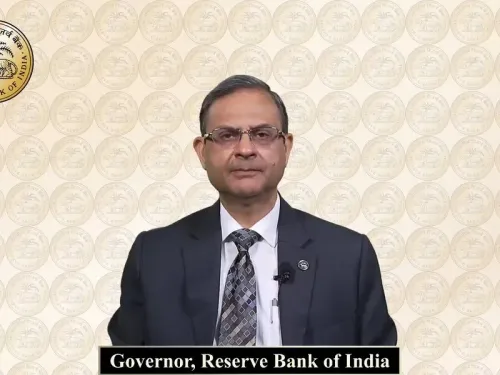
RBI Governor Sanjay Malhotra used the FIBAC 2026 stage to deliver a rare unambiguous signal: the central bank wants banks to harness AI, not just regulate it. His framing — AI as the defining force of this decade, comparable to 1990s liberalisation — raises the stakes for every Indian bank still treating AI as a pilot project.
Key Takeaways
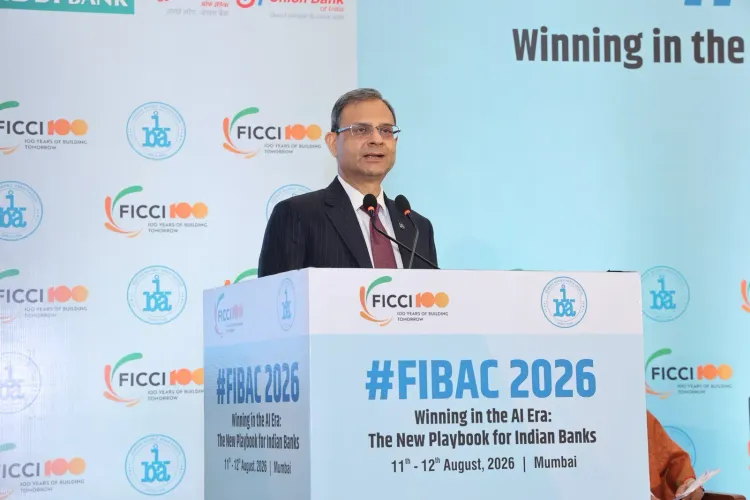
RBI Governor Sanjay Malhotra addressed the FIBAC 2026 conference in Mumbai on 11 August 2026 .
He called AI as transformative for Indian banking as economic liberalisation in the 1990s and digitalisation in the 2010s .
The RBI sees AI as a capability to be responsibly harnessed , not merely a risk to be contained — a significant policy signal.
AI can help banks evaluate borrowers with no formal credit history , potentially expanding financial inclusion to millions.
Malhotra urged bank boards to shape their AI journey with intent rather than letting the technology evolve by default.
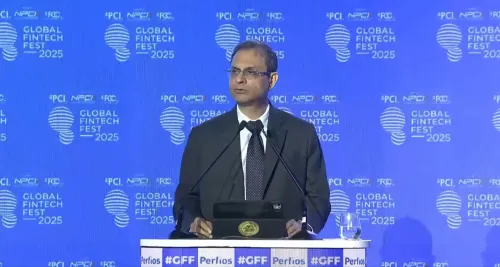
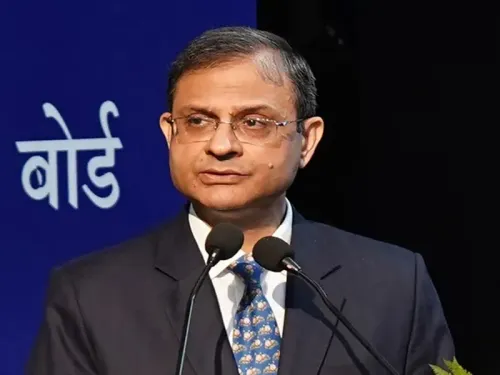
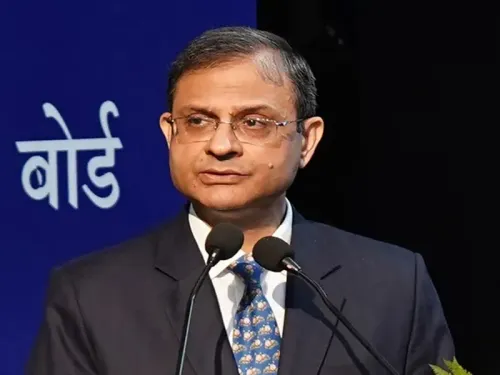
Reserve Bank of India (RBI) Governor Sanjay Malhotra on Tuesday, 11 August 2026, said artificial intelligence (AI) has the potential to transform credit delivery, elevate customer service, and accelerate financial inclusion across India — urging banks to embrace the technology deliberately rather than letting it evolve without direction. He was delivering the inaugural address at the FIBAC 2026 conference in Mumbai.
AI as a Defining Force for Indian Banking
Malhotra drew a sweeping historical parallel, placing AI alongside two earlier inflection points in Indian finance. 'The theme of the conference — Artificial Intelligence — has been well chosen. It is apt and timely. It is a theme that, I believe, will define this decade of Indian banking as decisively as liberalisation defined the 1990s and digitalisation defined the 2010s,' he said.
He was emphatic that AI should not be treated as a discrete technology project or a procurement exercise. 'Artificial Intelligence is not a single technology to be procured, nor a project to be completed. It is a new way of doing business, of running a bank. It is a shift in how we evaluate risk, serve customers, price capital, and organise institutions,' the Governor stated.
RBI's Stance: Harness, Not Just Contain
In what amounts to a policy signal, Malhotra positioned the central bank firmly on the side of adoption over caution. 'I will be unambiguous: the Reserve Bank sees AI as a capability to be responsibly harnessed and not merely as a risk to be contained,' he said — a notable departure from the more guarded regulatory posture seen in several peer central banks globally.
He added that the RBI sees AI as capable of significantly improving the economics of credit delivery, particularly by helping banks evaluate borrowers who lack formal credit histories. This directly addresses one of Indian banking's most persistent structural gaps: an estimated hundreds of millions of adults who remain outside the formal credit system despite having economic activity that could support lending.
Financial Inclusion: The AI Opportunity
The Governor's remarks carry particular weight given India's large unbanked and under-banked population. AI-powered alternative credit scoring — drawing on transaction data, utility payments, and behavioural signals — could allow lenders to extend credit to segments that traditional underwriting models have historically excluded. Malhotra's framing positions AI not merely as an efficiency tool but as an instrument of economic democratisation.
This comes amid a broader push by the RBI to deepen financial inclusion through digital public infrastructure, with platforms such as the Unified Payments Interface (UPI) and the Account Aggregator framework already laying the data rails that AI models could leverage.
A Call to Act With Intent
Malhotra issued a direct challenge to bank leadership in the room. 'Many banks in this room are already deploying AI, and many more are considering it. The only question is whether you shape the AI journey with intent, or you let it shape you by default,' he said. The remark underscores the RBI's expectation that boards and senior management — not just technology teams — own the AI agenda.
As Indian banks accelerate AI pilots across fraud detection, customer onboarding, and loan underwriting, the Governor's address is likely to set the tone for how the regulator evaluates AI governance frameworks in upcoming supervisory reviews.
Point of View
Not contain' framing is a deliberate regulatory nudge — and Indian banks should read it as such. Most large lenders are still running AI in sandboxed pilots; the Governor is signalling that the RBI's supervisory lens will increasingly assess AI governance as a board-level responsibility, not a tech-team footnote. The financial inclusion argument is the more consequential one: if AI-driven alternative credit scoring can genuinely move the needle on the unbanked population, it would do more for inclusion than a decade of priority-sector lending mandates. The risk is that banks chase the efficiency gains first and the inclusion dividend last — exactly the pattern the Governor's remarks seem designed to pre-empt.
NationPress
25 Sept 2026
Frequently Asked Questions
What did RBI Governor Sanjay Malhotra say about AI at FIBAC 2026?
Governor Malhotra said AI has the potential to transform credit delivery, improve customer service, and accelerate financial inclusion in India. He called it as defining for this decade of Indian banking as economic liberalisation was in the 1990s and digitalisation in the 2010s.
What is the RBI's official stance on artificial intelligence in banking?
The RBI's position, as stated by Governor Malhotra, is that AI should be 'responsibly harnessed and not merely treated as a risk to be contained.' This marks a notably pro-adoption stance compared to the more cautious posture of several global central banks.
How can AI improve financial inclusion in India?
According to Malhotra, AI can help banks evaluate borrowers who lack formal credit histories by drawing on alternative data signals. This could bring millions of currently unbanked or under-banked Indians into the formal credit system.
What did the RBI Governor mean by shaping the AI journey with intent?
Malhotra urged bank boards and senior management to proactively define their AI strategy rather than allowing the technology to evolve without direction. He framed it as a governance imperative: 'shape the AI journey with intent, or let it shape you by default.'