RBI orders note authentication machines in border district bank branches
Synopsis
The RBI has moved beyond advisories — it is now mandating machines, hard training deadlines, and data-led hotspot tracking to tackle fake currency at India's most vulnerable entry points. Border-district bank branches, historically under-equipped, are the primary target of this enforcement push.
Key Takeaways
The RBI on 31 July directed banks to install note authentication and sorting machines at branches in border districts .
All detected Fake Indian Currency Notes (FICNs) must be impounded and reported — not returned to tenderers or destroyed at branch level.
Every cash-handling bank employee must be trained on banknote security features by 31 October 2026 .
Forged Note Vigilance (FNV) cells must analyse FICN data to identify hotspots and direct outreach efforts.
A mandatory acknowledgement receipt, authenticated by both cashier and tenderer, must be issued whenever a counterfeit note is detected at a counter.
The directive reinforces an earlier April circular requiring UV lamps or sorting machines at all branches or back offices.
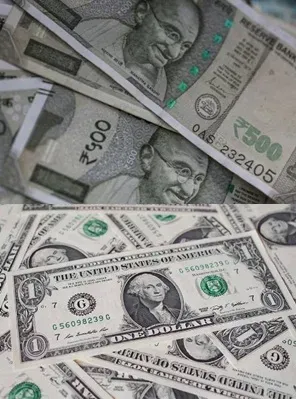
The Reserve Bank of India (RBI) on Friday, 31 July directed all banks to install note authentication and sorting machines at branches located in districts bordering other countries, citing inadequate counterfeit-detection efforts by some lenders. The move is part of a broader push to curb the circulation of Fake Indian Currency Notes (FICNs) in geographically sensitive zones.
What the RBI Directive Says
In a fresh circular, the central bank mandated that every banknote received at these branches must be examined for authenticity using machines. Counterfeit notes, once detected, must be impounded without exception — they must not be returned to the person who tendered them, nor destroyed at the branch level. Detected FICNs must instead be reported strictly as per prescribed guidelines.
The directive also reinforces an earlier instruction issued in April, which required all bank branches or identified back offices to be equipped with ultra-violet lamps, note sorting machines, or authentication machines to aid counterfeit detection.
Staff Training Deadline Set for October 2026
Beyond hardware, the RBI has placed equal emphasis on human capacity. Banks have been directed to train every cash-handling employee on the security features of genuine banknotes and the detection of FICNs. The circular specified a firm deadline: 'all the cash handling staff of the bank are imparted training positively by October 31, 2026,' it stated.
The central bank has also called for a focused, target-based approach to conducting awareness and refresher programmes for cash-handling staff — moving away from ad hoc training toward structured, measurable outcomes.
Forged Note Vigilance Cells to Lead Data Analysis
The RBI has directed banks to activate their Forged Note Vigilance (FNV) cells more effectively. These cells are expected to analyse FICN data to identify hotspots, monitor trends, and direct outreach and capacity-building efforts to the areas of highest risk. This marks a shift toward a data-driven, intelligence-led approach to counterfeit currency management.
Acknowledgement Receipts Now Mandatory
When a counterfeit note is detected at a bank counter or back office, the branch must issue an acknowledgement receipt in a prescribed format to the tenderer after stamping the note. The receipt, bearing a running serial number, must be authenticated by both the cashier and the tenderer. Banks have also been told to display a prominent notice about this procedure at all branches and offices.
Why Border Districts Are in Focus
Border districts have historically been identified as entry points for counterfeit currency, often linked to cross-border smuggling networks. The RBI's targeted directive reflects a recognition that standard branch-level vigilance has not been uniformly enforced in these high-risk corridors. This is not the first time the central bank has flagged the issue — similar advisories have been issued periodically — but the combination of a machine mandate, a hard training deadline, and FNV cell activation signals a more structured enforcement push than previous rounds.
Point of View
Some lenders' detection infrastructure at border branches remains inadequate. A machine mandate and an October training deadline suggest the central bank has lost patience with voluntary compliance. The activation of FNV cells for hotspot analysis is the more consequential move — if banks actually use FICN data to map high-risk corridors, it could shift counterfeit management from reactive to predictive. The test, as always, will be enforcement: past circulars on FICN handling have not always translated into uniform branch-level practice.
NationPress
15 Sept 2026
Frequently Asked Questions
Why has the RBI directed banks to install note authentication machines in border districts?
The RBI found that some banks' efforts to detect counterfeit currency at border-district branches were inadequate. Border districts are considered high-risk entry points for Fake Indian Currency Notes (FICNs), often linked to cross-border networks, making robust machine-based detection essential.
What must banks do when a counterfeit note is detected at a branch counter?
Banks must impound the counterfeit note immediately — it must not be returned to the tenderer or destroyed at the branch. An acknowledgement receipt in the prescribed format, bearing a running serial number and authenticated by both the cashier and the tenderer, must be issued. The note must then be reported as per RBI guidelines.
What is the deadline for training cash-handling staff under the new RBI directive?
The RBI has set 31 October 2026 as the deadline by which all cash-handling staff at banks must be trained on the security features of genuine banknotes and the detection of FICNs.
What role do Forged Note Vigilance cells play under the directive?
Forged Note Vigilance (FNV) cells within banks are directed to analyse FICN data to identify geographic hotspots, monitor trends, and focus outreach and capacity-building efforts in high-risk areas — shifting counterfeit management toward a data-driven approach.
Is this directive new, or does it build on earlier RBI instructions?
It builds on an April circular that already required all bank branches or identified back offices to have ultra-violet lamps, note sorting machines, or authentication machines. The July directive specifically targets border districts and adds the October 2026 staff training deadline and FNV cell activation requirements.