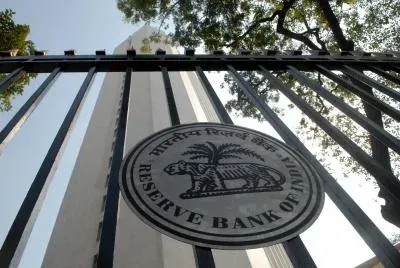
FCNR(B) deposit rates surge as banks race RBI's August 31 swap deadline

Synopsis
The RBI's early closure of its dollar-rupee swap window — moved from September 30 to August 31 — has set off a rate war among Indian banks for NRI deposits. With $52.3 billion already flowing in and HDFC Bank and ICICI Bank deploying countdown timers, this is a rare moment where central bank policy urgency is being translated into retail marketing pressure in real time.
Key Takeaways
The RBI advanced its USD-INR forex swap window deadline to 31 August from 30 September , citing an 'encouraging response.' The swap facility has attracted $52.3 billion in forex inflows through mid-August, up from $41 billion at end-July.
Axis Bank and Federal Bank raised FCNR(B) rates to 6.40% for select tenors, effective 17 August .
HDFC Bank and ICICI Bank have placed countdown timers on their websites to drive last-minute NRI deposit applications.
The RBI introduced the swap facility on 8 June , covering FCNR(B) deposits, ECBs , and OFCBs to support the rupee.
Indian banks are aggressively courting Non-Resident Indian (NRI) deposits by raising interest rates on Foreign Currency Non-Resident [Bank] — FCNR(B) accounts, following the Reserve Bank of India (RBI)'s surprise decision to advance the deadline for its dollar-rupee swap window to 31 August from the original 30 September. The compressed timeline has triggered a last-lap scramble for foreign exchange inflows across both private and public sector lenders.
Why the RBI Moved the Deadline
The RBI introduced its special USD-INR forex swap facility on 8 June, covering FCNR(B) deposits, external commercial borrowings (ECBs), and overseas foreign currency borrowings (OFCBs), to shore up the rupee amid depreciation pressure and boost dollar inflows. The central bank cited an 'encouraging response' as the reason for the early closure — the scheme had already attracted $52.3 billion in foreign exchange inflows by mid-August, up from nearly $41 billion by the end of July, indicating that the targeted quantum of forex had been secured ahead of schedule.
Rate Hikes: What Banks Are Offering
Axis Bank raised its interest rate on FCNR(B) deposits exceeding $1 million to 6.40% for a three-to-five-year tenor, effective 17 August, up from 6.25% — and from 6% when the scheme first launched. For deposits below $1 million, Axis is now offering 6.25%.
Federal Bank similarly raised its FCNR(B) rate to 6.40% from 6.25%, also effective 17 August. It is offering 6.40% on US dollar deposits between $500,000 and less than $3 million for three-to-five-year tenors. For deposits of $3 million and above, Federal Bank offers 6.25% for three-to-five years and 6.40% for four-to-five years.
Digital Urgency: Countdown Clocks and Aggressive Marketing
HDFC Bank and ICICI Bank have deployed countdown timers on their websites, displaying the days, hours, minutes, and seconds remaining before the 31 August deadline — an unusually direct marketing tactic aimed at nudging NRI customers into acting before the window closes. This signals how seriously lenders are treating the deadline as a hard cut-off for competitive FCNR(B) rates.
Scale of Inflows and Broader Context
The $52.3 billion in inflows recorded through mid-August represents a significant forex buffer for India at a time when the rupee has faced sustained depreciation pressure. Notably, the pace of inflows accelerated sharply — from $41 billion at end-July to $52.3 billion by mid-August, suggesting the RBI's early closure was a response to demand exceeding its original target rather than any reversal of intent. This is consistent with the RBI's broader strategy of building forex reserves as a buffer against global volatility.
With the swap window shutting on 31 August, NRI depositors and banks alike have a narrow runway left to lock in the elevated rates currently on offer.
Point of View
But it also compresses the window for banks still chasing inflow targets — creating a manufactured urgency that benefits lenders willing to move fast on rates. The $52.3 billion figure is substantial, but the real question is what happens to FCNR(B) rates after 31 August: if the premium disappears overnight, NRI depositors who locked in at 6.40% will look prescient, while those who hesitated will face a reset market. The countdown-timer tactic by HDFC Bank and ICICI Bank is a telling sign of how thin the competitive differentiation has become — when rate differences are marginal, psychology becomes the product.
NationPress
3 Oct 2026
Frequently Asked Questions
What is the FCNR(B) deposit scheme and why is it in focus now?
FCNR(B) — Foreign Currency Non-Resident [Bank] — deposits allow NRIs to hold fixed deposits in India in foreign currencies such as the US dollar. They are in focus because the RBI's special forex swap facility, which made these deposits more attractive by offering banks a hedging mechanism, is now closing on 31 August — a month earlier than originally planned.
Why did the RBI shorten the swap window deadline to August 31?
The RBI cited an 'encouraging response' to the facility, stating that the required quantum of foreign exchange had already flowed into the country ahead of schedule. The scheme had attracted $52.3 billion in inflows by mid-August, up from $41 billion at end-July.
Which banks have raised FCNR(B) rates and by how much?
Axis Bank raised rates on deposits above $1 million to 6.40% for three-to-five-year tenors, effective 17 August. Federal Bank also moved to 6.40% from 6.25% for US dollar deposits between $500,000 and $3 million for the same tenors, also from 17 August.
Who is eligible to open FCNR(B) deposits?
FCNR(B) deposits are available exclusively to Non-Resident Indians (NRIs) and Persons of Indian Origin (PIOs). Deposits can be held in major foreign currencies including the US dollar, and interest earned is tax-free in India under current rules.
What happens after the August 31 deadline?
Once the RBI's special USD-INR swap window closes on 31 August, banks will lose the central bank's hedging support for new FCNR(B) deposits. Rates are widely expected to normalise downward after the deadline, making the current window the most attractive entry point for NRI depositors.