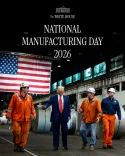
White House Marks National Manufacturing Day, Hails US Comeback
Synopsis
On National Manufacturing Day, the White House honoured American workers and proclaimed an 'extraordinary COMEBACK' of US manufacturing, invoking 250 years of industrial heritage during the nation's semiquincentennial year.
Key Takeaways
The White House marked National Manufacturing Day on 2 October 2026 with an official post honouring American manufacturing workers.
The post references 250 years of American industrial history, tying the tribute to the US semiquincentennial.
The all-caps word 'COMEBACK' signals a deliberate White House claim of credit for a manufacturing resurgence.
National Manufacturing Day falls on the first Friday of October each year and is marked by factory events and official proclamations.
US industrial policy — including reshoring and semiconductor investment — has direct implications for India-US trade relations.
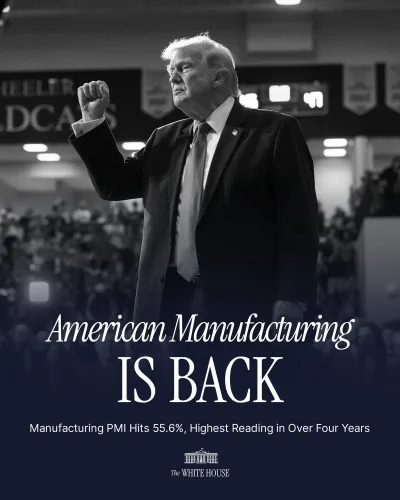
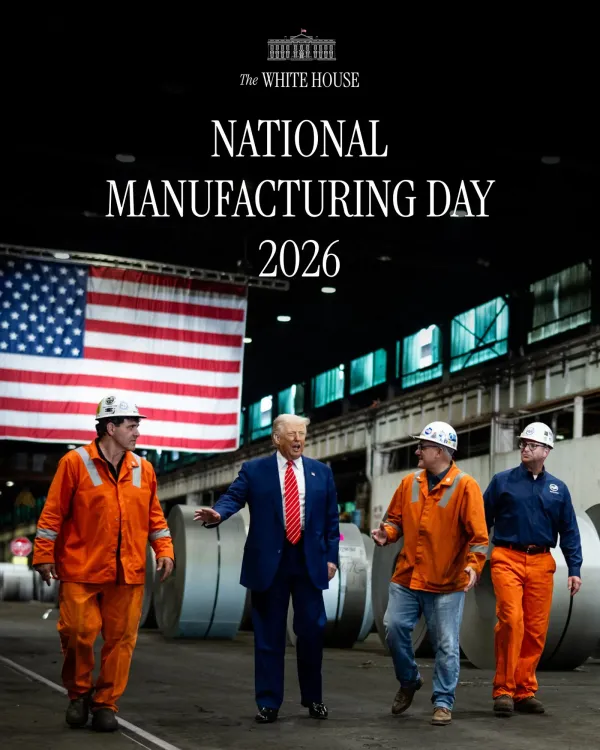
Two and a half centuries after American workers first forged a nation from raw ambition and raw materials, the White House is drawing a direct line from that founding labour to a resurgent industrial present. On National Manufacturing Day, the White House posted a tribute on Friday, 2 October 2026, honouring the workers who 'make, build, and create in America' — and declaring what it called an 'extraordinary COMEBACK of American manufacturing.'
250 years of industrial identity — and why the framing matters now
The number 250 years is not incidental. The United States is in the midst of its semiquincentennial — the 250th anniversary year of its founding in 1776 — and the White House is deliberately weaving the manufacturing narrative into that larger story of national identity. Framing workers as 'the driving force behind our Nation's strength and industrial might' is a pointed assertion: that American greatness is built in factories, not just on trading floors.
National Manufacturing Day, observed annually on the first Friday of October, was established to shine a spotlight on modern manufacturing careers and to counter the perception that American industry is in permanent decline. It is typically marked by plant open-days, student visits to factories, and official proclamations from the executive branch.
The 'COMEBACK' signal — deliberate capitalisation, deliberate politics
The all-caps 'COMEBACK' in the post is the editorial choice that carries the most weight. It signals a White House eager to claim credit for a manufacturing resurgence — one that follows years of political debate over offshoring, trade deficits, and industrial policy. Whether measured by factory job numbers, domestic chip fabrication investment, or reshored supply chains, the argument over who deserves credit for any manufacturing recovery has become a defining feature of recent American economic politics.
For India, which watches US industrial policy closely — particularly decisions on tariffs, semiconductor supply chains, and the location of advanced manufacturing — the posture of a confident, expansionist American manufacturing sector has direct implications for bilateral trade dynamics and investment flows.
Point of View
The administration wraps economic nationalism in founding-era symbolism, a well-worn but effective rhetorical move. For observers in India, the posture matters: a US that is actively re-industrialising — through tariffs, subsidies, or supply-chain incentives — is one that may reshape the terms of technology transfer, defence manufacturing partnerships, and trade negotiations with New Delhi.
NationPress
3 Oct 2026
Frequently Asked Questions
What is National Manufacturing Day in the United States?
National Manufacturing Day is observed on the first Friday of October each year in the United States. It was created to celebrate modern manufacturing careers, encourage students to explore factory and industrial roles, and highlight the sector's contribution to the American economy.
Why did the White House say 'COMEBACK' for US manufacturing?
The all-caps 'COMEBACK' in the White House post is a deliberate signal that the current administration is claiming credit for a resurgence in American manufacturing — pointing to trends such as reshored supply chains, domestic semiconductor investment, and factory job growth as evidence of industrial revival.
What does the 250-year reference in the White House post mean?
The reference to 250 years of American workers ties the post to the US semiquincentennial — the 250th anniversary of the nation's founding in 1776. The White House is using the milestone to frame manufacturing as central to American identity from the very beginning.
How does US manufacturing policy affect India?
US industrial policy decisions — such as tariffs on imports, incentives for domestic semiconductor fabs, and reshoring of supply chains — directly affect India's export competitiveness, its role in global supply chains, and the terms of bilateral trade and technology agreements between New Delhi and Washington.
When was National Manufacturing Day 2026?
National Manufacturing Day 2026 fell on Friday, 2 October 2026 , consistent with its annual observance on the first Friday of October.