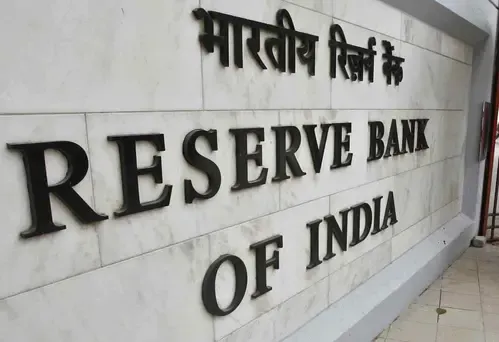
RBI's Commitment to Economic Growth and New NBFC Regulations: Insights from an Expert
Synopsis
Rajesh Sharma from Capri Global Capital highlights the RBI's ongoing commitment to economic growth and the introduction of a new regulatory framework for NBFCs. These changes aim to enhance sector resilience and transparency, ultimately benefiting borrowers and the economy.
Key Takeaways
RBI's focus on growth: The Reserve Bank of India prioritizes economic expansion through regulatory reforms.
New NBFC framework: A revised classification system will bring clarity and supervision to the NBFC sector.
Responsible lending: New guidelines for gold loans emphasize responsible lending practices.
Impact on SMEs: SMEs play a vital role in India's economy, accounting for 37% of exports.
Future growth: Capri Global Capital anticipates a growth trajectory of 16-18% supported by its SME lending.
Mumbai, April 9 (NationPress) The Reserve Bank of India (RBI) is maintaining its commitment to fostering economic growth, and its forthcoming regulatory framework for non-banking financial companies (NBFCs) is anticipated to enhance the sector's resilience and transparency, according to Rajesh Sharma, Managing Director of Capri Global Capital Limited, during a discussion with IANS on Thursday.
Sharma remarked that the RBI's historical regulatory measures have consistently introduced transparency and stability, and the upcoming reforms for NBFCs are in line with this trend.
“These initiatives by the central bank are instrumental in elevating compliance standards while facilitating overall growth in the sector,” he added.
He noted that the RBI has persistently prioritized economic expansion, and the new framework is expected to bolster growth momentum while providing enhanced regulatory oversight.
In light of the RBI's Monetary Policy Committee (MPC) decision earlier this week, Governor Sanjay Malhotra indicated that a revised classification system for NBFCs is forthcoming, with an announcement expected shortly.
The proposed classification will categorize NBFCs into upper, middle, and other categories, thereby improving regulatory clarity and supervision.
On the subject of the RBI's recent directives on gold loans, Sharma stated that the guidelines are designed to foster more responsible lending practices.
“These directives entail stricter income assessments, a heightened emphasis on priority sector lending, and loan approvals linked to repayment capacities,” Sharma elaborated.
He emphasized that the overarching goal is to enhance credit accessibility at lower interest rates for average borrowers, thereby diminishing their dependence on informal moneylenders who impose exorbitant rates.
Regarding the micro, small, and medium enterprises (MSME) sector, Sharma underscored its vital contribution to the economy, highlighting that SMEs account for nearly 37% of India's exports and represent one of the largest employment generators.
He asserted that providing loans to small businesses directly fuels economic growth and remains a focal point for both policymakers and financial institutions.
Sharma noted that SMEs currently make up about 20% of Capri Global Capital's assets under management (AUM).
He expressed optimism that this segment will continue to be a growth driver, as the company anticipates maintaining a 16–18% growth trajectory in the upcoming years, primarily supported by its SME portfolio.
Point of View
It's clear the RBI's proactive measures in regulating NBFCs showcase a commitment to economic stability and growth. The focus on transparency and responsible lending is commendable and reflects a broader strategy to enhance the financial ecosystem.
NationPress
10 Sept 2026
Frequently Asked Questions
What are the proposed changes for NBFCs by the RBI?
The RBI plans to implement a new classification system for NBFCs, categorizing them into upper, middle, and other tiers to improve regulatory clarity and supervision.
How does the RBI's focus on gold loans affect borrowers?
The RBI's new guidelines on gold loans aim to promote responsible lending practices, with stricter income assessments and a focus on priority sector lending to ensure better access to credit.
What percentage of India's exports do SMEs contribute?
SMEs contribute nearly 37% to India's exports, making them a crucial component of the country's economy.
What is Capri Global Capital's focus regarding SMEs?
Capri Global Capital focuses on lending to SMEs, which currently account for around 20% of their assets under management.
What growth trajectory does Capri Global Capital expect?
Capri Global Capital expects to sustain a growth trajectory of 16-18% in the coming years, largely driven by its SME portfolio.