Road infra firms eye ₹40,000 crore InvIT monetisation in FY27: Brickwork
Synopsis
India's road developers are betting big on InvITs — with ₹40,000 crore in planned asset monetisation for FY27, the model has moved from niche to mainstream. Revenue is rising and margins are improving, but a debt service coverage ratio of just 0.5 times means the sector's financial resilience is still a work in progress.
Key Takeaways
Road infrastructure developers plan ₹40,000 crore in asset monetisation via InvITs in FY27 , per Brickwork Ratings .
Sector revenue is projected to grow 8.6 per cent in FY27, up from 7.3 per cent in FY26.
Operating margins are expected to improve to 25.1 per cent from 24.3 per cent , aided by lower steel and bitumen costs.
Nearly 10,000 km of new highway, expressway, and high-speed corridor projects are targeted for award in FY27.
Debt service coverage remains tight at 0.5 times ; interest coverage seen improving from 1.3x to 1.5x .
Counterparty risks, delayed payments, and aggressive bidding remain key sector challenges.
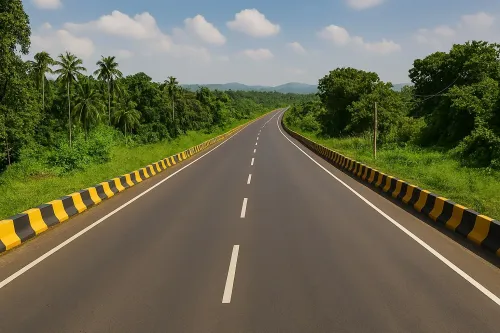
India's road infrastructure developers are targeting asset monetisation worth approximately ₹40,000 crore through Infrastructure Investment Trusts (InvITs) in FY27, as companies seek to unlock capital, reduce leverage, and fund future expansion, according to a report by Brickwork Ratings released on Monday, 13 July 2025.
Key Developments
The Brickwork Ratings report projects sector revenue growth of 8.6 per cent in FY27, accelerating from 7.3 per cent in FY26. Operating margins are expected to widen to 25.1 per cent from 24.3 per cent, aided by faster project execution and easing input costs. Lower steel and bitumen prices are cited as key tailwinds supporting profitability.
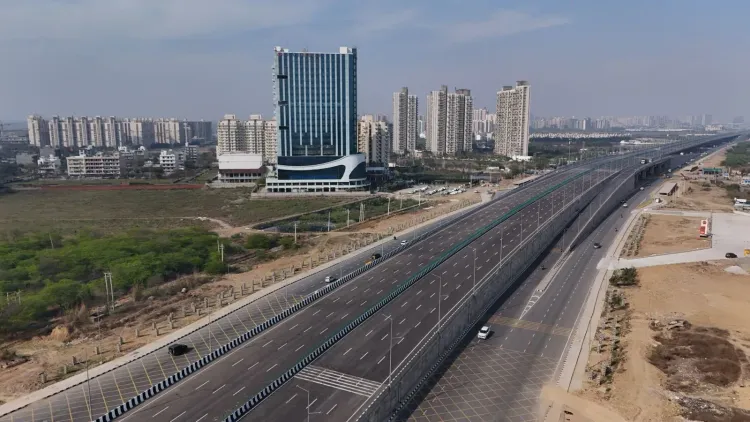
The sector is also targeting the award of nearly 10,000 km of new highway, expressway, and high-speed corridor projects during the financial year, underpinned by continued government investment in road infrastructure.
InvIT Monetisation on the Rise
Developers are increasingly channelling operational road assets into InvITs to generate liquidity, retire debt, and finance greenfield projects. This marks a structural shift in how the sector recycles capital — moving away from balance-sheet-heavy models toward asset-light expansion. Notably, InvIT adoption in Indian road infrastructure has gathered significant momentum since NHAI's InvIT set an early benchmark, and the current pipeline suggests the model is now mainstream rather than experimental.
Debt and Coverage Concerns
Despite stronger earnings prospects, debt servicing remains a pressure point. Debt service coverage is expected to hold at approximately 0.5 times during both FY26 and FY27 — a level that leaves limited headroom. Interest coverage is projected to improve modestly from 1.3 times to 1.5 times, according to the report. Delayed payments from counterparties and execution bottlenecks continue to weigh on cash flows.
Risks the Sector Faces
The report flagged counterparty risks in state-led projects, elongated receivable cycles, and aggressive bidding behaviour as persistent structural challenges. Rising traffic volumes on operational stretches are expected to improve operating leverage by spreading fixed costs over a larger revenue base — but this benefit is contingent on sustained traffic growth and timely project completion.
Outlook for FY27
The road infrastructure sector is broadly expected to maintain a stable credit profile through FY27, supported by resilient toll collections and a healthy project pipeline. The growing adoption of innovative financing models — particularly InvITs — is seen as a credit-positive trend. However, the gap between improving earnings and still-stressed debt coverage ratios signals that financial discipline and execution speed will be critical determinants of sector health in the year ahead.
Point of View
000 crore InvIT pipeline is a vote of confidence in a financing model that was still nascent five years ago — but the 0.5x debt service coverage ratio is a persistent red flag that better margins alone cannot fix. The real question is whether monetisation proceeds are being used to structurally de-lever or simply to fund the next round of aggressive bids. Elongated receivable cycles and state-project counterparty risks suggest the sector's credit profile is stable more by inertia than by fundamental improvement. If execution bottlenecks persist and traffic growth disappoints, the InvIT boom could face a stress test sooner than the headline numbers imply.
NationPress
13 Jul 2026
Frequently Asked Questions
What is the ₹40,000 crore InvIT monetisation plan by road infrastructure firms?
India's road infrastructure developers plan to monetise approximately ₹40,000 crore worth of operational road assets through Infrastructure Investment Trusts (InvITs) in FY27. The strategy is aimed at unlocking capital, reducing debt, and financing new projects, according to a Brickwork Ratings report released on 13 July 2025.
What is an InvIT and why are road developers using it?
An Infrastructure Investment Trust (InvIT) is a listed vehicle that pools investor funds to own and operate infrastructure assets, generating regular income. Road developers use InvITs to monetise completed projects, repay debt, and recycle capital into new construction without straining their balance sheets.
What is the revenue and margin outlook for India's road sector in FY27?
Sector revenue is projected to grow 8.6 per cent in FY27, up from 7.3 per cent in FY26, while operating margins are expected to improve to 25.1 per cent from 24.3 per cent. Lower steel and bitumen prices and faster project execution are the primary drivers.
What risks does the road infrastructure sector face despite improving earnings?
Debt service coverage remains around 0.5 times in both FY26 and FY27, leaving limited financial headroom. Counterparty risks in state-led projects, elongated receivable cycles, and aggressive bidding behaviour continue to pose structural challenges for the sector.
How many kilometres of new highway projects are targeted for award in FY27?
The sector is targeting the award of nearly 10,000 km of new highway, expressway, and high-speed corridor projects in FY27, supported by sustained government investment in road infrastructure.