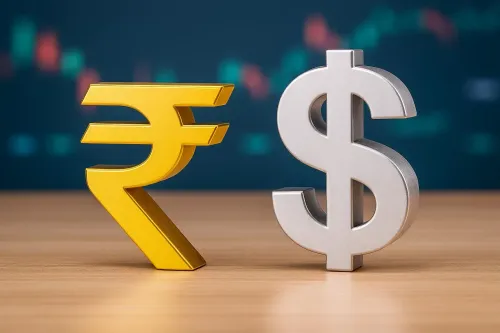
Rupee hits seven-month high at 83.29 as FII inflows, soft crude boost INR
Synopsis
The rupee's seven-month high isn't just a currency story — it's a capital-flow story. With foreign investors pouring a record ₹1 lakh crore into Indian equities in November alone, the RBI has been able to step back from costly dollar sales. The risk: equity inflows are cyclical, and a hawkish Fed with a dollar index near a 19-month high could reverse the tide swiftly.
Key Takeaways
The Indian rupee closed at 93.29 per US dollar on 19 November 2026 — a seven-month high and a gain of 0.16 per cent .
Foreign investors invested a record-high nearly ₹1 lakh crore into Indian equities in November , the primary driver of the rupee's strength.
The rupee has gained approximately 1.8 per cent this month, making it the best-performing Asian currency for the period.
Brent crude at around $92.4 a barrel helped limit import-side dollar demand.
The US dollar index climbed to near 103.8 — a 19-month high — after hawkish Fed minutes , yet the rupee held firm.
Analysts forecast a near-term rupee trading range of 92.75–93.75 , with the bias remaining positive.
The Indian rupee climbed to its strongest level in seven months on Thursday, 19 November, closing at 93.29 against the US dollar — a gain of 0.16 per cent — buoyed by record foreign institutional investor (FII) inflows into domestic equities, easing commodity prices, and expectations that exporters will step up dollar conversions if the rally extends.
What Drove the Rupee's Rise
The currency found its footing as the benchmark Nifty index rose 1 per cent, extending its November gain to over 10 per cent. Foreign investors poured a record-high nearly ₹1 lakh crore into Indian equities this month, dramatically reducing the Reserve Bank of India's (RBI) need to defend the rupee through dollar sales — a burden the central bank had carried for months.
Brent crude trading around $92.4 a barrel also kept import-side dollar demand in check, adding a secondary layer of support. The rupee has appreciated roughly 1.8 per cent in November, making it the best-performing Asian currency over the period.
Intraday Reversal and Early Weakness
The session began on a softer note, with the rupee slipping 8 paise to 93.49 against the dollar from Wednesday's close of 93.41, before reversing course sharply through the afternoon to close stronger.
Analysts noted that the rupee held its ground even against a hawkish backdrop from the US Federal Reserve. According to market participants, overnight Fed minutes showed nearly all officials expect further rate hikes, with some open to a half-point increase in December, pushing the dollar index to around 103.8 — near a 19-month high. Under normal circumstances, that combination would pressure emerging-market currencies significantly.
Analyst Outlook: Positive Bias, But Risks Remain
'The domestic currency continues to take major cues from foreign fund flows, while softer commodity prices are easing import bill concerns and providing additional support. Going ahead, sustained FII buying and lower commodity prices could keep the rupee's momentum positive,' an analyst said.
The near-term trading range is forecast between 92.75 and 93.75, with the overall bias remaining positive for the rupee. However, market participants cautioned that equity-driven inflows are inherently episodic.
'That cushion has limits. Equity flows tend to come in bursts, while higher US rates can last for months. If foreign buying slows, a strong dollar will test the rupee again,' a market participant warned.
RBI's Reduced Intervention
The surge in FII inflows has allowed the RBI to scale back its dollar sales after months of heavy intervention to stabilise the currency. With foreign capital flowing in at record pace, the central bank's foreign exchange reserves have faced less pressure, giving policymakers greater flexibility heading into a potentially volatile global rate environment.
How long the rupee can sustain this momentum will hinge on the durability of foreign equity purchases and whether the Fed's rate trajectory cools US dollar demand globally.
Point of View
But it rests on a narrow pillar: equity flow momentum. Record FII inflows are inherently volatile — they can reverse faster than the Fed can pivot. The RBI has wisely used this window to ease off intervention, but the central bank cannot afford complacency. If US rates stay elevated through early 2027 and foreign buying pauses, the rupee will face a stress test that softer crude alone cannot cushion. The 1.8 per cent November gain flatters a currency that was under sustained pressure just weeks ago.
NationPress
19 Nov 2026
Frequently Asked Questions
Why did the Indian rupee hit a seven-month high on 19 November 2026?
The rupee strengthened to 93.29 per US dollar — a seven-month high — on the back of record FII inflows of nearly ₹1 lakh crore into Indian equities in November, combined with softer Brent crude prices that reduced import-side dollar demand. The Nifty's 1 per cent gain on the day added to the positive sentiment.
What is the near-term trading range forecast for the rupee?
Analysts forecast the rupee to trade between 92.75 and 93.75 per US dollar in the near term, with the overall bias remaining positive as long as FII buying and lower commodity prices persist.
How has the RBI responded to the rupee's strengthening?
The RBI has scaled back its dollar sales after months of heavy intervention to defend the rupee. Record foreign inflows have reduced pressure on the central bank to support the currency, giving it greater policy flexibility.
What risks could reverse the rupee's gains?
Market participants warn that equity inflows tend to come in bursts and can reverse quickly. With the US Fed signalling further rate hikes — including a possible half-point move in December — and the dollar index near a 19-month high, a slowdown in foreign buying could expose the rupee to renewed pressure from a stronger dollar.
How does November 2026 rank for the rupee among Asian currencies?
The rupee has gained approximately 1.8 per cent in November 2026, making it the best-performing Asian currency over the period, according to market data. This outperformance is largely attributed to India-specific FII inflow dynamics rather than a broader regional trend.