How Have Rural Budget Allocations in India Increased by Over 211% in a Decade?
Synopsis
Discover how India's rural budget allocations have skyrocketed over 211% in just ten years, reflecting a commitment to transforming rural areas. Learn about the significant reductions in poverty and improvements in rural infrastructure. This article explores the impact of community-driven initiatives and women's empowerment in enhancing rural livelihoods.
Key Takeaways
Rural budget allocations have risen by over 211% in the past decade.
Extreme poverty has dropped to 5.3% in rural areas.
3.70 crore rural homes built in 11 years.
Significant increase in allocations for education and health.
Women-led collectives play a crucial role in rural development.
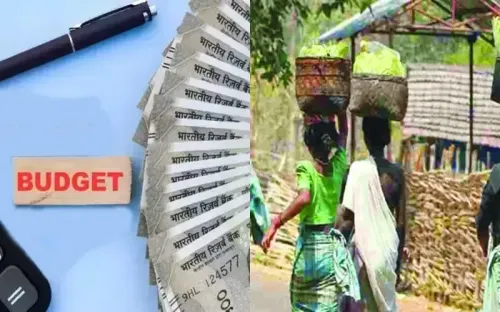
Mumbai, Feb 14 (NationPress) A strong fiscal commitment has catalyzed rural transformation, with rural development budget allocations surging over 211 percent in the last decade to Rs 2.73 lakh crore for the fiscal year 2026-27, as per an official statement.
The incidence of poverty has markedly decreased, with extreme poverty standing at 5.3 percent in 2022-23, which is below the global average. Multidimensional poverty has also dropped from 55.3 percent in 2005-06 to 11.28 percent in 2023, the statement highlighted.
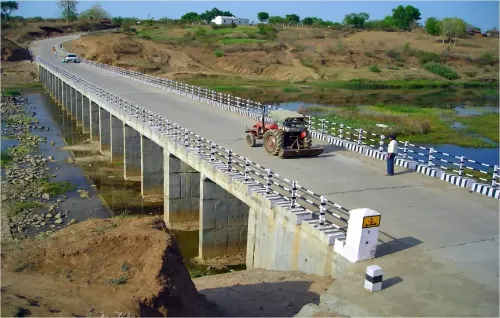
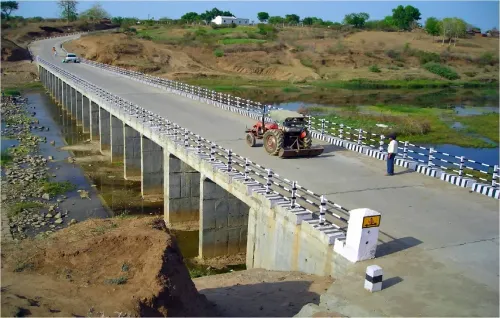
Rural connectivity has reached near universality, with allocations for the Pradhan Mantri Gram Sadak Yojana increasing from Rs 12,581 crore in 2016-17 to Rs 19,000 crore in 2026-27, marking a rise of 51 percent.
The expansion of housing security has been substantial, with 3.70 crore rural homes constructed over the past eleven years. Additionally, allocations for the PMAY-G have escalated by 266 percent, from Rs 15,000 crore in 2016-17 to Rs 54,916.70 crore in 2026-27.
“A vital aspect of this transformation is the gradual move from a government-driven model of development to more community-oriented, decentralized approaches. Local governments and grassroots institutions are increasingly recognized as essential players in the planning, implementation, and monitoring of development initiatives,” the statement indicated.
Fiscal transfers directly to panchayats increased from approximately Rs 2.36 lakh crore under the 15th Finance Commission (2021-26) to nearly Rs 4.35 lakh crore under the 16th Finance Commission (2026-31), thereby enhancing local financial autonomy.
The government emphasized the role of women-led collectives as crucial for last-mile delivery, involving 10.05 crore women across 90.09 lakh self-help groups supported by 9 lakh community cadres.
Between FY22 and FY26 (budget estimate), social services expenditure (SSE) has demonstrated a compound annual growth rate (CAGR) of 12 percent, with education and health expenditures increasing by 11 percent and 8 percent, respectively.
As of mid-January 2026, over 99.6 percent of eligible habitations have been connected under Pradhan Mantri Gram Sadak Yojana (PMGSY-I).
Access to improved drinking water, household electrification, and rural sanitation has grown from 22 percent in 2016 to 64.3 percent in 2025. The Jal Jeevan Mission has expanded tap-water access from 3.23 crore households in 2019 to about 15.74 crore by November 2025, the statement concluded.
aar/na
Point of View
I believe that the surge in rural budget allocations is a testament to the government's dedication to uplifting rural communities. The focus on decentralization and community engagement is crucial for sustainable development. This approach not only empowers local governments but also paves the way for grassroots initiatives that can drive meaningful change.
NationPress
14 Sept 2026
Frequently Asked Questions
What is the percentage increase in rural budget allocations in the last decade?
Rural budget allocations have increased by over 211% in the last decade.
What is the current allocation for rural development in India for 2026-27?
The rural development budget allocation for 2026-27 is Rs 2.73 lakh crore.
How has poverty changed in rural India over the years?
Extreme poverty has decreased to 5.3% in 2022-23, significantly lower than the global average.
What is the role of women-led collectives in rural development?
Women-led collectives are pivotal for last-mile delivery, mobilizing millions of women across self-help groups.
How has rural connectivity improved in India?
Rural connectivity has reached near universality, with significant increases in allocations for the Pradhan Mantri Gram Sadak Yojana.