South Korea overseas financial assets hit $2.88 trillion record in Q1 2025
Synopsis
South Korea's external financial assets hit a record US$2.88 trillion in Q1 2025, but the bigger story is the divergence: liabilities grew nearly ten times faster than assets, shrinking the country's net creditor position by $132.1 billion in a single year. Meanwhile, the KOSPI closed at a record 8,288.7 — its fourth straight gain — riding a global semiconductor wave that also made Micron a trillion-dollar company overnight.
Key Takeaways
South Korea's overseas financial assets reached a record US$2.88 trillion at end- March 2025 , up $15 billion quarter-on-quarter.
Direct investment rose $15.4 billion to $851.7 billion , driven by increased exposure to US markets .
Residents' securities investments fell $15.1 billion to $1.24 trillion amid US equity market weakness in Q1.
External financial liabilities hit a record $2.13 trillion , rising $147.1 billion as foreigners piled into Korean stocks.
Net international investment position fell $132.1 billion year-on-year to $753.6 billion .
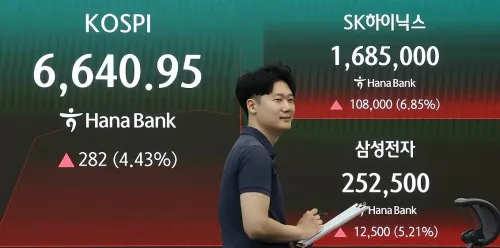
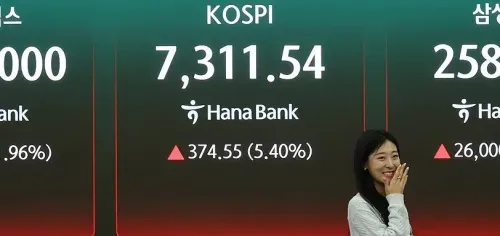
The KOSPI closed at a record 8,288.7 on 27 May , led by Samsung Electronics and SK Hynix .
South Korea's overseas financial assets climbed to a fresh all-time high of US$2.88 trillion at the end of March 2025, lifted primarily by a surge in direct investments into the United States, according to preliminary data released by the Bank of Korea (BOK) on Wednesday, 27 May. The figure marks the largest stock of external financial assets the country has ever recorded.
Key Developments in External Assets
The $2.88 trillion total represents a $15 billion increase from the preceding quarter, though the pace of growth slowed sharply from the $105 billion rise logged in the fourth quarter of 2024. Within the headline figure, direct investment was the standout driver, rising $15.4 billion to reach $851.7 billion, fuelled by stepped-up South Korean corporate and institutional exposure to US markets.
By contrast, residents' securities investments fell $15.1 billion quarter-on-quarter to $1.24 trillion as of end-March, reflecting the turbulence in US equity markets during the first quarter of 2025.
Liabilities Rise Faster Than Assets
External financial liabilities also hit a record, climbing $147.1 billion to $2.13 trillion, driven by a sharp inflow of foreign capital into domestic securities as local stock prices surged. Non-residents' securities investment jumped $108.3 billion to $1.47 trillion, while non-resident direct investment edged down $1.3 billion to $320.7 billion.
Because liabilities grew faster than assets, South Korea's net international investment position — a measure of the country's overall creditor status — fell $132.1 billion year-on-year to $753.6 billion. This is a notable deterioration even as gross assets reached record levels, underscoring the scale of foreign appetite for Korean equities.
KOSPI Closes at Record 8,288.7
The BOK data coincided with a strong session on the Korea Composite Stock Price Index (KOSPI), which gained 181.19 points, or 2.25 percent, to close at a record 8,288.7 on Wednesday — its fourth consecutive session of gains. The index briefly touched 8,457.09 intraday, triggering a buy-side sidecar that halted KOSPI futures trading for five minutes.
The rally was led by Samsung Electronics and SK Hynix, benefiting from a global semiconductor tailwind. Overnight on Wall Street, the S&P 500 and the Nasdaq both closed at all-time highs, with chipmaker Micron surging 19 percent to cross the US$1 trillion market capitalisation threshold for the first time. The South Korean won also strengthened against the US dollar on the day.
What This Means Going Forward
The record gross asset figure reflects South Korea's deepening integration with global — and particularly US — capital markets, even as the net position narrows. With semiconductor stocks driving both the KOSPI rally and the direct investment surge, the country's external balance sheet is increasingly sensitive to shifts in global chip demand and US monetary policy. Any reversal in tech-sector sentiment could simultaneously compress asset valuations and accelerate liability growth through foreign equity outflows.
Point of View
But the net international investment position tells a more cautious story: South Korea's creditor cushion shrank by $132.1 billion in a year, even as the country set new highs on both sides of its external balance sheet. The asymmetry — liabilities growing nearly tenfold faster than assets in Q1 — reflects the degree to which foreign capital is chasing the KOSPI's semiconductor-driven rally rather than any structural improvement in Korea's external position. If global chip sentiment turns, the unwind could be swift: foreign securities holdings at $1.47 trillion represent a large, liquid, and potentially flighty liability.
NationPress
16 Oct 2026
Frequently Asked Questions
What is South Korea's overseas financial assets record in Q1 2025?
South Korea's overseas financial assets reached a record US$2.88 trillion as of end-March 2025, up $15 billion from the previous quarter, according to preliminary Bank of Korea data. The growth was driven primarily by a $15.4 billion rise in direct investments, mainly into the United States.
Why did South Korea's net international investment position fall?
The net international investment position fell $132.1 billion year-on-year to $753.6 billion because external financial liabilities grew far faster than assets. Liabilities surged $147.1 billion to a record $2.13 trillion as foreign investors bought heavily into South Korean equities amid sharp rises in local stock prices.
Why did South Korean residents' securities investments decline in Q1?
Residents' overseas securities investments fell $15.1 billion quarter-on-quarter to $1.24 trillion, as US equity markets faced significant turbulence during the first quarter of 2025, reducing the value of existing holdings.
What drove the KOSPI to a record high on 27 May 2025?
The KOSPI gained 181.19 points, or 2.25 percent, to close at a record 8,288.7, driven by a strong rally in Samsung Electronics and SK Hynix. The gains followed overnight records on Wall Street's S&P 500 and Nasdaq, fuelled by a global semiconductor surge that saw Micron rise 19 percent to a US$1 trillion market cap.
How does South Korea's Q1 2025 asset growth compare to Q4 2024?
The pace of growth slowed considerably: overseas financial assets rose $15 billion in Q1 2025, compared with a $105 billion increase in Q4 2024. Despite the slower growth, the Q1 figure still set a new all-time record for total external financial assets.