South Korea set to become world's 4th-largest exporter in 2026 on semiconductor surge
Synopsis
South Korea is on course to become the world's fourth-largest exporter in 2026 — but the milestone rests almost entirely on semiconductors, which now account for nearly half of its monthly shipments. Strip out chips and Seoul falls to eighth globally, exposing a structural fragility that economists say must be addressed before the AI-driven boom inevitably cycles down.
Key Takeaways
South Korea crossed the $1 trillion cumulative export mark for the first time in 2026 , on track for $1.17 trillion in full-year shipments.
The Ministry of Trade, Industry and Resources expects South Korea to finish the year as the world's fourth-largest exporter , overtaking the Netherlands .
Semiconductors made up 30.5% of exports over the first seven months — rising to nearly 49–50% in August–October.
Excluding semiconductors, South Korea ranks eighth globally , trailing Mexico, Italy, and Japan.
Experts warn the heavy chip dependence leaves the economy vulnerable to a semiconductor cycle downturn and have called for export diversification.
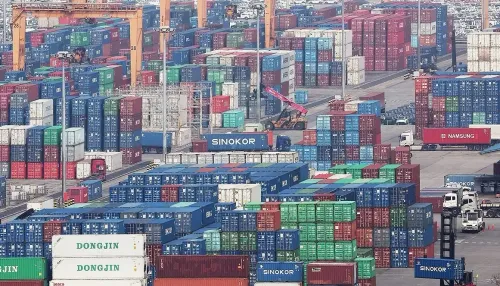
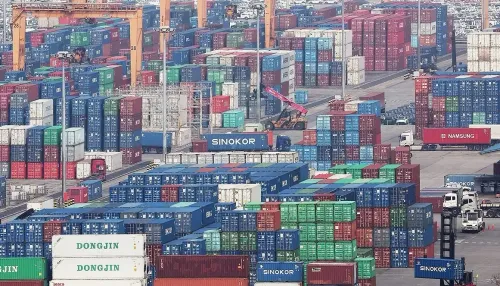
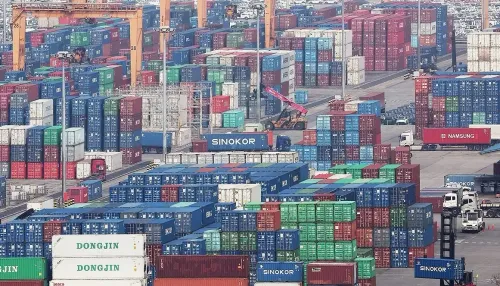
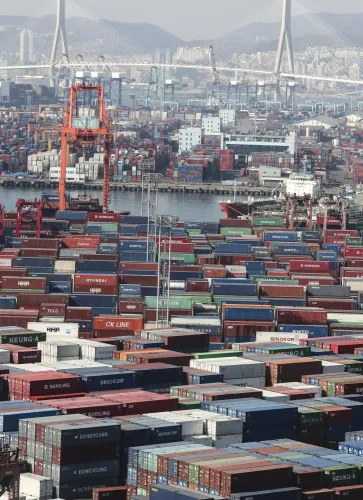
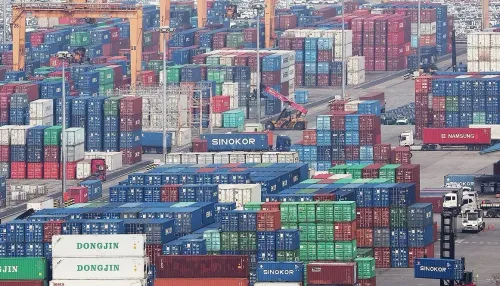
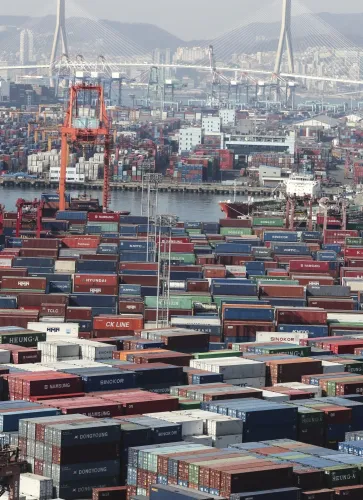
South Korea is on course to rank as the world's fourth-largest exporter in 2026, after its cumulative shipments crossed the $1 trillion mark for the first time last week, according to data released on 22 November 2026. The milestone, powered largely by a semiconductor boom tied to surging global demand for artificial intelligence (AI) infrastructure, could vault Seoul past the Netherlands in the full-year rankings.
Where South Korea Stands Globally
Figures from the World Trade Organization (WTO) and UN Comtrade show South Korea posted $595.3 billion in exports in the first seven months of 2026, ranking fifth at that stage. It trailed China ($2.52 trillion), the United States ($1.44 trillion), Germany ($1.12 trillion), and the Netherlands ($627.7 billion). South Korea's Ministry of Trade, Industry and Resources said the country is believed to have overtaken the Netherlands after July as export momentum accelerated.
For the full year, the ministry projects South Korea's total exports will reach $1.17 trillion, cementing a fourth-place finish — a historic first for the country.
The Semiconductor Dependence Problem
The headline figure comes with a significant caveat. When semiconductor exports are excluded, South Korea drops to eighth place globally. Its non-semiconductor exports totalled $413.6 billion over the seven-month period, behind Mexico ($468.8 billion), Italy ($465.8 billion), and Japan ($428.8 billion).
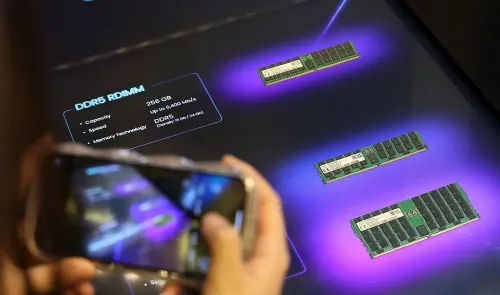
Semiconductors accounted for 30.5% of South Korea's total exports during the period — the second-highest share among the world's top 10 exporters, behind only Taiwan at 32.4%. That concentration has grown sharply in recent months: separate government data show the semiconductor share of South Korea's exports climbed to 47.5% in August, 49.9% in September, and 49% in October.
Experts Warn of Structural Vulnerability
Economists and trade analysts have flagged that such a heavy reliance on a single sector leaves the economy exposed to external shocks — particularly a downturn in the global semiconductor cycle. South Korea has experienced this risk before: a chip price slump in 2023 saw exports contract sharply before the AI-driven recovery reversed the trend.
Analysts have called on the government to actively diversify the country's export base by identifying new high-growth sectors, arguing that sustainable export momentum cannot be built on semiconductors alone. This comes amid broader global concerns about supply chain concentration in advanced chips, which affects trade partners including India, the United States, and European Union nations relying on Korean chip supply.
What Comes Next
Full-year WTO and UN Comtrade data, expected in early 2027, will confirm whether South Korea's fourth-place ranking holds. In the interim, the trajectory of AI-related hardware demand — and the stability of the semiconductor cycle heading into the first quarter — will be the key variables. Any softening in chip demand or pricing could erode the advantage South Korea has built over the Netherlands in the second half of the year.
Point of View
But the numbers carry a structural warning that the headline obscures. When nearly half of monthly shipments are semiconductors, the country is not so much a diversified trading powerhouse as a highly leveraged bet on a single cycle. The AI boom has been a remarkable tailwind, but chip markets are notoriously cyclical — Seoul experienced that painfully in 2023. Without credible policy action to build competitive non-semiconductor export categories, the fourth-place ranking could prove temporary, hostage to the next down-cycle in memory or logic chips.
NationPress
22 Nov 2026
Frequently Asked Questions
Why is South Korea expected to become the world's fourth-largest exporter in 2026?
South Korea's cumulative exports crossed $1 trillion in 2026 for the first time, driven by surging semiconductor shipments tied to global AI demand. The Ministry of Trade, Industry and Resources projects full-year exports of $1.17 trillion, enough to overtake the Netherlands and secure fourth place behind China, the United States, and Germany.
What role do semiconductors play in South Korea's export surge?
Semiconductors accounted for 30.5% of South Korea's total exports in the first seven months of 2026, rising sharply to nearly 49–50% by September and October. The AI-driven boom in chip demand is the primary engine behind the country's export acceleration.
What happens to South Korea's ranking if semiconductors are excluded?
Without semiconductor exports, South Korea drops from fourth to eighth place globally, with non-semiconductor exports of $413.6 billion over the seven-month period — below Mexico, Italy, and Japan. This highlights how concentrated the country's export strength is in a single sector.
How does South Korea's semiconductor export share compare with other nations?
South Korea's 30.5% semiconductor share of total exports over January–July 2026 is the second-highest among the world's top 10 exporters, behind only Taiwan at 32.4%. Both economies are considered structurally exposed to semiconductor cycle swings.
What are experts saying about South Korea's export outlook?
Analysts warn that heavy reliance on semiconductors makes South Korea susceptible to external shocks, particularly a downturn in the chip cycle. They have urged the government to identify and develop new export growth sectors to reduce this concentration risk and sustain long-term export momentum.