Why Did S. Korea's Seaport Cargo Decline 1.1% in Q3?
Synopsis
In the third quarter of this year, South Korea's seaports witnessed a 1.1% decrease in cargo processing amid global trade uncertainties. The Ministry of Oceans and Fisheries reported a mixed performance in container traffic, prompting a close watch on market conditions.
Key Takeaways
1.1% decline in cargo processed at seaports.
Container cargo increase of 0.7% .
Total export-import cargo: 336.68 million tons .
Exports to U.S. down by 5.8% .
Shipments to China up by 7% .
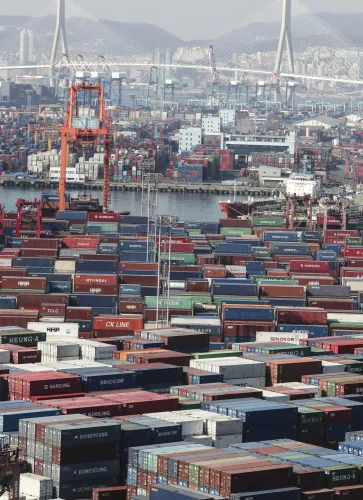
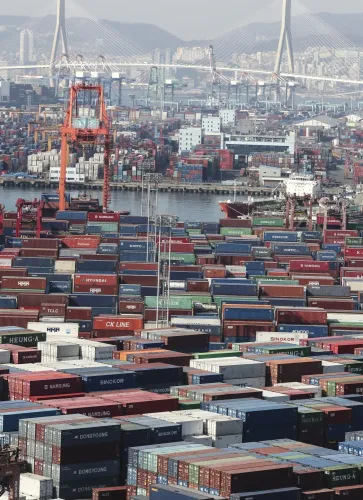
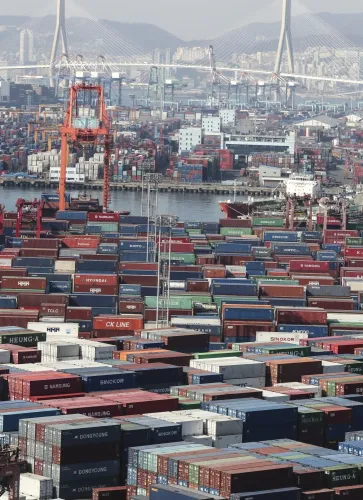
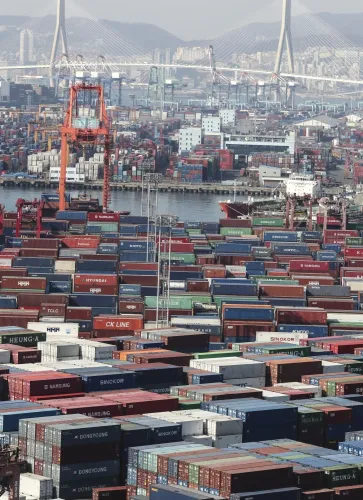
Seoul, Oct 30 (NationPress) The volume of cargo processed at South Korean seaports experienced a decline of 1.1 percent compared to the previous year in the third quarter, as revealed by the ministry of oceans on Thursday.
The total cargo handled across the nation's seaports amounted to 390.28 million tons during the July-September timeframe, a slight decrease from 390.46 million tons in the same quarter last year, according to the Ministry of Oceans and Fisheries, as reported by Yonhap news agency.
Among this, export-import cargo reached 336.68 million tons, as specified by the ministry.
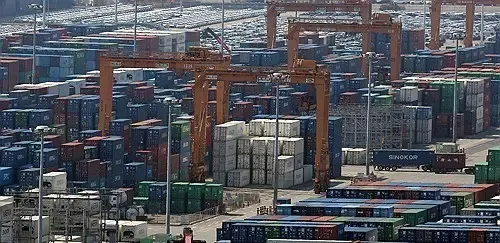
In a positive note, container cargo at the seaports rose by 0.7 percent year-on-year to 7.9 million twenty-foot equivalent units (TEUs) in the third quarter. Of this, 4.38 million TEUs were classified as export-import cargo, reflecting an increase of 0.8 percent from the previous year.
The overall export cargo processed at seaports saw a growth of 1.8 percent year-on-year, reaching 2.21 million TEUs, according to the ministry. Notably, exports to the U.S. declined by 5.8 percent, while shipments to China surged by 7 percent.
Despite the persistent uncertainties in global trade, container cargo volume continued to show an upward trend in the third quarter, following growth in the first half of the year, stated Oceans Minister Chun Jae-soo. “However, the growth rate is decelerating, prompting us to closely monitor market conditions and collaborate with relevant agencies,” he added.
South Korea's transshipment cargo handling, or cargo processed while en route to final destinations, increased by 0.6 percent year-on-year to 3.47 million TEUs.
On the other hand, non-container cargo processed at seaports dropped by 1.5 percent year-on-year to 257.1 million tons in the third quarter, according to the ministry.
In the meantime, Seoul's stock market saw gains late Thursday morning as investors awaited the results of a crucial summit between the world's two largest economies.
The benchmark Korea Composite Stock Price Index (KOSPI) increased by 39.99 points, or 0.98 percent, reaching 4,121.14 during early trading.
The KOSPI opened slightly higher following a trade agreement struck during a summit between U.S. President Donald Trump and President Lee Jae Myung on Wednesday.
Point of View
It's evident that South Korea's seaport cargo decline reflects broader global trade challenges. While container traffic shows resilience, the mixed signals from export-import numbers raise concerns. It's crucial for authorities to adapt strategies that support the maritime industry, ensuring stability in these turbulent times.
NationPress
25 Sept 2026
Frequently Asked Questions
What caused the decline in seaport cargo?
The 1.1% decrease in cargo processed at South Korean seaports is attributed to ongoing uncertainties in the global trade environment.
How did container cargo perform?
Container cargo processed at seaports increased by 0.7% year-on-year, reaching 7.9 million TEUs in the third quarter.
What were the export-import cargo figures?
The total export-import cargo amounted to 336.68 million tons during the July-September period.
How did exports to major countries perform?
Exports to the U.S. fell by 5.8% , whereas shipments to China rose by 7% .
What is the current state of the stock market in Seoul?
Seoul stocks were trading higher, with the benchmark KOSPI rising 39.99 points or 0.98% .