Is the Annual Cap on US Investment More Beneficial for S. Korea Than a Currency Swap?

Synopsis
In a recent statement, South Korea's Finance Minister Koo Yun-cheol highlighted the advantages of a $20 billion annual investment cap with the US over a currency swap arrangement, emphasizing the flexibility and reduced costs it brings to the nation's economy.
Key Takeaways
Annual investment cap set at $20 billion Excludes currency swap arrangement Flexibility in foreign exchange payments Total investment pledge is $350 billion Potential savings on interest costs
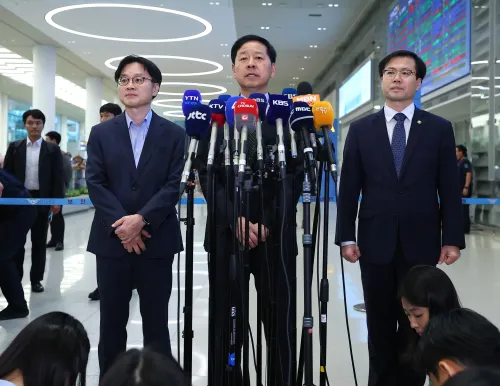
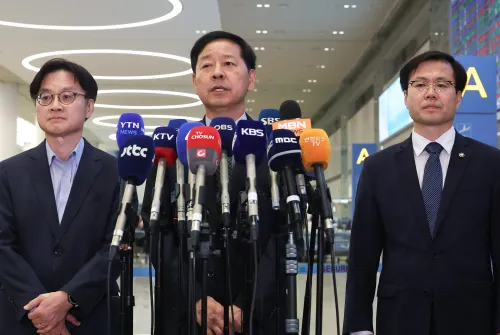
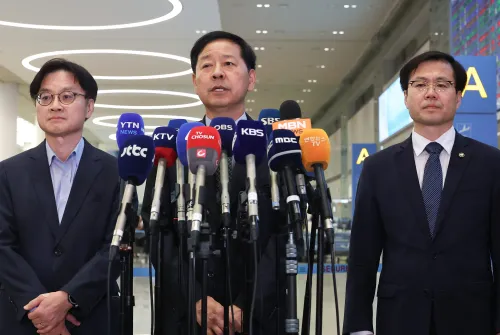
Seoul, Oct 30 (NationPress) Finance Minister Koo Yun-cheol stated on Thursday that South Korea's arrangement with the United States to limit annual cash investments to $20 billion—without a currency swap agreement—is more beneficial for the nation's interests.
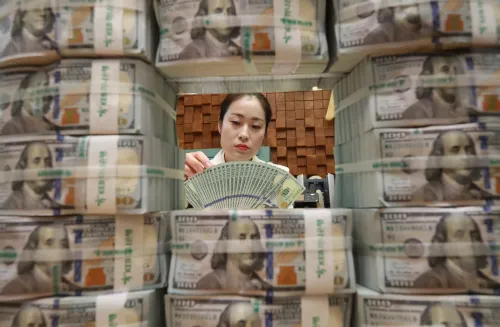
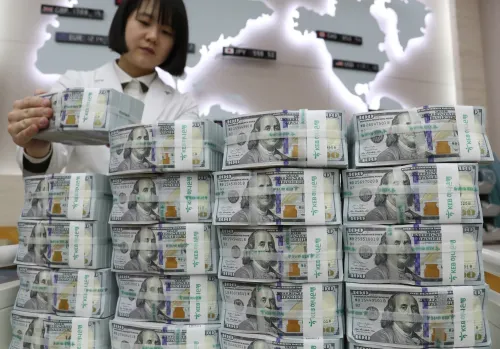
Koo made these statements during a parliamentary audit, following the finalization of a tariff agreement between South Korea and the US. This deal includes a $200 billion cash investment in the US with annual investment limits set at $20 billion, as part of a wider $350 billion investment commitment, according to Yonhap news agency.
The remaining $150 billion will be directed toward bilateral shipbuilding cooperation projects.
“By establishing an annual investment limit, we can adjust the payment amount more flexibly if challenges arise in the foreign exchange market, avoiding additional costs,” Koo stated, emphasizing that a currency swap with the US would involve an interest rate of approximately 4 percent.
“We believe this strategy to be significantly more favorable to our national interests,” he continued.
Previously, the Seoul government had suggested a foreign exchange swap line with the US, with President Lee Jae Myung cautioning that the Korean economy could face a crisis similar to the 1997 financial meltdown if his administration complied with US investment demands without protective measures.
Kim Yong-beom, the presidential chief of staff for policy, mentioned in a press briefing that both parties came to a mutual understanding regarding South Korea’s concerns about potential disruptions in the foreign exchange market during trade discussions, which led to the focus on annual investment caps, diminishing the necessity for a currency swap.
Meanwhile, stocks in Seoul lost earlier gains and closed nearly unchanged on Thursday, as the results of a highly anticipated US-China summit failed to alleviate trade uncertainties. The local currency appreciated against the dollar.
The benchmark Korea Composite Stock Price Index (KOSPI) increased by 5.74 points, or 0.14 percent, closing at 4,086.89.
Point of View
It is crucial to recognize the strategic advantage that South Korea is securing through its new agreement with the US. By establishing an annual investment cap, the country positions itself to navigate potential economic fluctuations more effectively while safeguarding its national interests.
NationPress
29 Sept 2026
Frequently Asked Questions
What is the annual investment cap agreed upon by South Korea and the US?
The annual investment cap is set at $20 billion.
Why is the investment cap considered more beneficial than a currency swap?
The cap allows for flexible adjustments in payments during foreign exchange market challenges, avoiding additional costs associated with currency swaps.
What is the total investment commitment between South Korea and the US?
The total investment commitment is $350 billion.
What are the implications of not having a currency swap arrangement?
Without a currency swap, South Korea can avoid the approximately 4% interest rate that would accompany such an arrangement.
How did the stock market react to this news?
Seoul stocks closed almost flat as the anticipated US-China summit did not alleviate trade uncertainties.