Did South Korea Achieve Its Largest Current Account Surplus for November?

Synopsis
Discover how South Korea achieved its record current account surplus of $12.24 billion in November, driven by strong semiconductor exports and a growing economy. This remarkable financial milestone underscores the nation's resilience and economic strength in an ever-evolving global market.
Key Takeaways
South Korea achieved a **record current account surplus** of **$12.24 billion** in November.
The surplus was driven primarily by robust **semiconductor exports**.
South Korea has recorded a surplus every month since **May 2023**.
The cumulative surplus for the first **11 months** of the previous year reached **$101.82 billion**.
Imports slightly declined by **0.7 percent**, while exports rose by **5.5 percent**.
Seoul, Jan 9 (NationPress) South Korea has recorded its largest current account surplus for any November, driven by robust exports during an upturn in the semiconductor sector, according to data released by the Bank of Korea (BOK) on Friday.
The current account surplus reached US$12.24 billion in November, a significant rise from the $6.81 billion surplus reported in the previous month, based on the findings from the BOK, as noted by Yonhap news agency.
This figure represents the highest recorded surplus for any November since the BOK began tracking this data in 1980.
Since May 2023, South Korea has maintained a current account surplus every month, marking its second-longest streak in history.
For the first 11 months of the previous year, the cumulative surplus amounted to $101.82 billion, compared to $86.68 billion during the same timeframe in 2024, setting a new record for this period, as reported by the BOK.
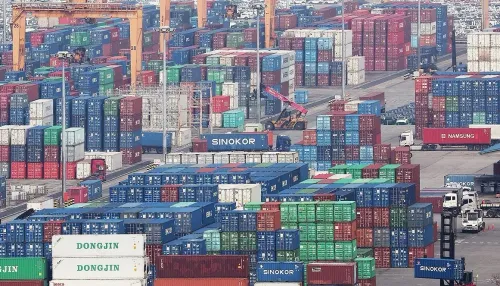
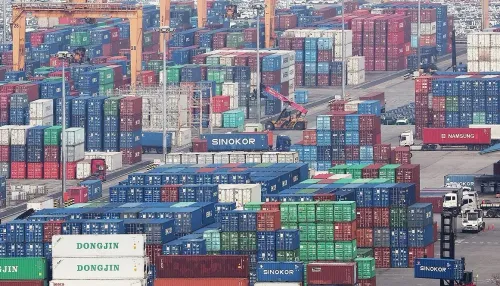
The goods account surplus stood at $13.31 billion in November, increased from $7.82 billion the month prior, with exports climbing 5.5 percent year-on-year to $60.11 billion.
Notably, chip exports surged 38.7 percent compared to the previous year, while vehicle exports rose by 10.9 percent.
Imports saw a slight decline of 0.7 percent year-on-year to $46.8 billion in November.
The services account experienced a deficit of $2.73 billion in November, primarily due to a spike in overseas travel demand, though this was an improvement from the $3.75 billion deficit recorded in the previous month.
The primary income account, which includes foreign worker wages and dividends from abroad, achieved a surplus of $1.83 billion, primarily fueled by dividend income.
Meanwhile, the secondary income account showed a deficit of $180 million, as per the data.
In the financial account, net assets increased by $8.27 billion in November, expanding from the prior month's $6.81 billion.
Specifically, overseas direct investments by South Korean residents rose by $4.09 billion, while foreign direct investment in South Korea climbed by $1.76 billion, resulting in a net increase of $2.33 billion in the financial account.
“Considering the significant growth in the trade surplus in December, we anticipate that last year’s current account surplus will reach the $115 billion target set by the central bank,” stated BOK official Song Jae-chang during a press briefing.
Point of View
It's clear that South Korea's economic performance is not just a number; it signifies a vibrant and resilient economy. The record current account surplus reflects our strength in the global market, particularly in the semiconductor industry. As we continue to navigate the complexities of international trade, it's vital that we maintain this momentum and adapt to global challenges.
NationPress
2 Oct 2026
Frequently Asked Questions
What is a current account surplus?
A current account surplus occurs when a country's exports of goods, services, and income exceed its imports, signaling a favorable balance of trade.
How does the semiconductor industry impact South Korea's economy?
The semiconductor industry is a crucial driver of South Korea's economy, contributing significantly to exports and economic growth, especially during periods of high global demand.
What factors contribute to a country achieving a current account surplus?
Factors include strong export performance, competitive pricing, low import levels, and favorable exchange rates.