South Korea Achieves Record Monthly Current Account Surplus Amid Semiconductor Surge
Synopsis
In February, South Korea marked a historic high in its monthly current account surplus, driven by a semiconductor boom and robust exports. This milestone reflects the nation's economic resilience and growth trajectory amidst global challenges.
Key Takeaways
Record surplus: South Korea achieved a monthly current account surplus of $23.19 billion in February.
Semiconductor exports: Significant growth in semiconductor exports fueled this surplus.
34-month streak: The country has maintained a current account surplus for 34 consecutive months.
Impact of global events: Rising oil prices may affect imports in the near future.
Financial growth: Net assets increased significantly in February, indicating robust financial health.
Seoul, April 8 (NationPress) — In February, South Korea achieved its largest-ever monthly current account surplus, fueled by the ongoing semiconductor upcycle and robust export activities, according to data released by the central bank on Wednesday.
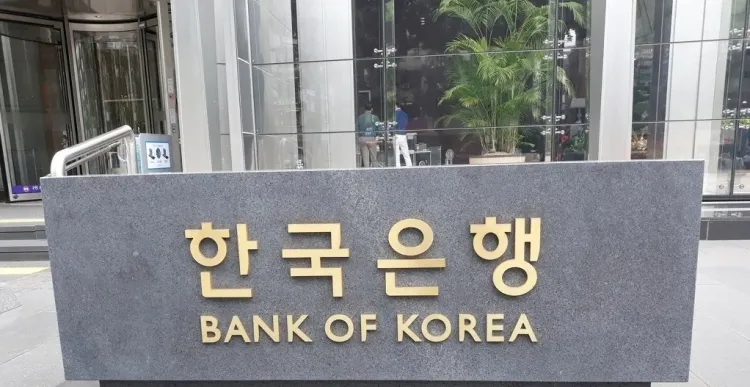
The total current account surplus reached a remarkable $23.19 billion in February, a significant increase from $13.26 billion recorded in January, as reported by the Bank of Korea (BOK), according to Yonhap news agency.
This figure marks the highest monthly surplus to date, eclipsing the previous record of $18.7 billion set in December 2025.
South Korea has maintained a current account surplus for 34 consecutive months since May 2023, extending its remarkable streak, which is the second longest in the nation’s history.
“This marks the first instance where the monthly current account surplus surpassed $20 billion. Despite having fewer working days in February, the goods account surplus surged to a record high, primarily due to exceptional semiconductor exports,” stated Yoo Sung-wook, head of the BOK's financial statistics department.
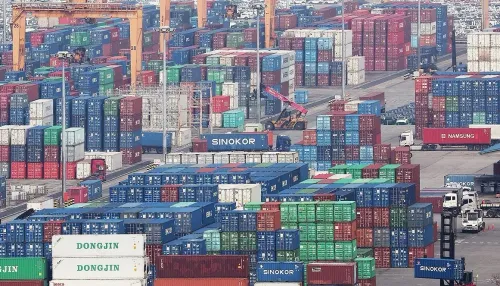
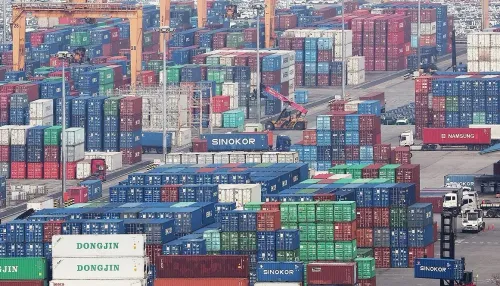
The goods account surplus stood at a record $23.36 billion in February, attributed to a 29.9% year-on-year increase in exports amounting to $70.37 billion, while imports rose by 4% to approximately $47 billion.
Exports of chips surged by 157.9% compared to the previous year, with shipments of IT products and computer peripherals increasing by 103.3% and 183.6%, respectively.
According to the BOK, the average daily semiconductor exports in February reached $1.33 billion, surpassing the daily average of $480 million noted during the previous semiconductor supercycles of 2018 and 2022.
In February, the services account recorded a deficit of $1.86 billion, primarily due to growing demand for international travel.
The primary income account, which encompasses wages for foreign workers and income from dividends and interest earned abroad, realized a surplus of $2.48 billion, mainly driven by dividend earnings.
On the other hand, the secondary income account reflected a deficit of $790 million.
In the financial account, South Korea's net assets increased by $22.8 billion in February, a notable rise from the $5.63 billion increase recorded the previous month.
Overseas direct investments by South Korean residents climbed by $3.81 billion, while foreign direct investment into South Korea rose by $940 million.
In the realm of securities investments, local investors augmented their overseas stock holdings by $8.64 billion in February, whereas foreign investors reduced their investments by $11.94 billion to capitalize on recent gains, as per the data.
Regarding the implications of the war in the Middle East, Yoo cautioned that rising global oil prices may start impacting imports as early as April.
Point of View
It is crucial to recognize the significance of South Korea's record current account surplus. This achievement not only reflects the resilience of the nation's economy but also highlights the pivotal role of the semiconductor industry in driving growth amidst global uncertainties.
NationPress
19 Sept 2026
Frequently Asked Questions
What was South Korea's current account surplus in February?
South Korea recorded a current account surplus of $23.19 billion in February, the largest ever for a single month.
What factors contributed to this surplus?
The surplus was primarily driven by a semiconductor upcycle and strong export performance.
How long has South Korea maintained a current account surplus?
South Korea has reported a current account surplus every month since May 2023, totaling 34 consecutive months.
What impact did the semiconductor industry have on exports?
Semiconductor exports surged by 157.9% year-on-year, significantly contributing to the overall export growth.
How did global events affect South Korea's economy?
Experts warn that rising global oil prices due to the war in the Middle East could begin to impact imports starting in April.