Samsung board chair warns 18-day strike could cost ₩30 trillion
Synopsis
Samsung's board chair has broken cover with a rare public apology and a stark financial warning — an 18-day union walkout could cost ₩30 trillion at a moment when the company has just posted a near-ninefold profit surge. With South Korea's president and industry minister also weighing in, the dispute has rapidly escalated from a corporate labour row into a national economic flashpoint.
Key Takeaways
Samsung Electronics board chairman Shin Je-yoon warned on Tuesday that a planned strike could cost up to ₩30 trillion (US$20.3 billion) .
Unionised workers plan an 18-day general walkout from 21 May to 7 June 2025 , demanding 15% of operating profit as bonuses.
Samsung posted ₩57.23 trillion in operating profit in Q1 2025 , up from ₩6.68 trillion a year earlier, on AI memory chip demand.
President Lee Jae Myung cautioned against excessive labour demands, while Industry Minister Kim Jung-kwan called the company's performance a national achievement.
Shin warned delays could cause customers to turn to rivals, threatening Samsung's semiconductor market leadership.
Samsung Electronics board chairman Shin Je-yoon on Tuesday issued a rare public appeal urging unionised workers to resolve their grievances through dialogue, warning that a planned 18-day general strike could inflict losses of up to ₩30 trillion (US$20.3 billion) on the South Korean tech giant and damage the broader economy. The statement, posted on the company's internal intranet, comes ahead of a walkout scheduled from 21 May to 7 June, called by unionised employees demanding higher performance-based bonuses.
What the Board Chair Said
"As chairman of the board, I feel a deep sense of responsibility for the current situation and apologize for causing concern," Shin said in his message. He cautioned that both management and labour stood to lose in a worst-case scenario, warning of weakened business competitiveness, erosion of customer trust, and financial losses for shareholders and investors.
Shin specifically flagged the stakes in the semiconductor segment. "In the semiconductor business, timing and customer trust are critical," he said. "Delays in development or production, or missed delivery deadlines, could undermine our core competitiveness and market leadership as customers turn to rivals." He called for sincere dialogue to build a constructive labour-management relationship going forward.
What the Union Is Demanding
Unionised workers at Samsung Electronics have reportedly demanded that the company allocate 15 percent of its operating profit to employee bonuses. The demand follows a dramatic recovery in the company's financials — Samsung posted an operating profit of ₩57.23 trillion for the first quarter, a sharp rebound from ₩6.68 trillion in the same period a year earlier, driven by surging demand for high-end memory chips used in artificial intelligence (AI) applications.
The union argues the profit windfall justifies a proportionate share for workers. Management has not publicly disclosed the counter-offer, if any.
Political Leaders Weigh In
The planned strike has drawn attention from South Korea's top political leadership. President Lee Jae Myung last week cautioned — without naming Samsung directly — that excessive labour demands could harm unions and workers more broadly. "If certain labour organizations face public outcry for excessive or unfair, self-serving demands, it would harm not only the unions themselves but other workers as well," Lee said during a meeting with senior aides at Cheong Wa Dae.
Industry Minister Kim Jung-kwan added that Samsung Electronics' strong performance reflects not only the company and its workers but also broader national efforts and contributions — a signal that the government views the dispute as a matter of national economic interest.
Why the Stakes Are Unusually High
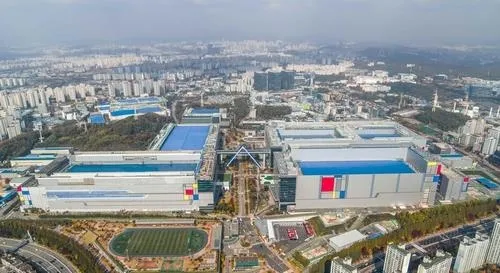
Samsung Electronics is South Korea's largest company and a critical node in global semiconductor supply chains. An 18-day production disruption in its chip division could ripple into delivery timelines for major global clients at a time when AI-driven memory demand is near peak. This is also not the first time labour tensions have surfaced at Samsung — the company has faced recurring disputes over bonus structures, but an extended general strike of this scale would be unprecedented in its recent history.
Notably, the strike threat arrives as geopolitical pressures on global chip supply chains remain elevated, making any supply disruption from a tier-one manufacturer particularly consequential for customers and competitors alike.
What Happens Next
With the strike window opening on 21 May, both sides have limited time to reach an agreement. Shin has called for sincere negotiations, and political pressure from both the presidency and the industry ministry appears to be building on the union. Whether that pressure translates into a settlement or hardens positions remains to be seen. All eyes will be on whether formal talks resume before the deadline.
Point of View
Driven by AI memory demand, and the union's 15% profit-share demand is arithmetically enormous: 15% of ₩57 trillion is roughly ₩8.5 trillion in bonuses alone. The board chair's public apology is unusual for a Korean chaebol and signals that management is genuinely rattled. What mainstream coverage underplays is the geopolitical dimension: a prolonged Samsung chip production halt does not just hurt shareholders — it disrupts supply to hyperscalers and device makers globally at a moment when alternative suppliers are already capacity-constrained. The South Korean government's intervention, framed carefully to avoid naming Samsung, is a tacit acknowledgment that this is no longer just a corporate dispute.
NationPress
1 Oct 2026
Frequently Asked Questions
Why are Samsung Electronics workers planning a strike in May 2025?
Unionised workers at Samsung Electronics have announced an 18-day general strike from 21 May to 7 June 2025, demanding that the company allocate 15% of its operating profit as performance-based bonuses. The demand follows Samsung's near-ninefold surge in Q1 2025 operating profit to ₩57.23 trillion, driven by AI memory chip demand.
How much could the Samsung strike cost the company?
Some estimates suggest the strike could cost Samsung Electronics up to ₩30 trillion (approximately US$20.3 billion) if it runs the full 18-day duration from 21 May to 7 June. Board chairman Shin Je-yoon has also warned of lasting damage to customer trust and supply chains beyond direct financial losses.
Who is Shin Je-yoon and what did he say about the strike?
Shin Je-yoon is the board chairman of Samsung Electronics. He posted a message on the company's intranet on Tuesday expressing a deep sense of responsibility, apologising for the situation, and calling for sincere dialogue to resolve the labour dispute before the strike begins.
Has the South Korean government responded to the Samsung strike threat?
Yes. President Lee Jae Myung warned last week — without naming Samsung — that excessive labour demands could harm unions and workers broadly. Industry Minister Kim Jung-kwan separately noted that Samsung's strong performance reflects national efforts, signalling the government views the dispute as a matter of broader economic concern.
How did Samsung Electronics perform financially before the strike threat?
Samsung Electronics posted an operating profit of ₩57.23 trillion in the first quarter of 2025, a dramatic recovery from ₩6.68 trillion in the same quarter a year earlier. The surge was driven by strong demand for high-end memory chips used in artificial intelligence applications.