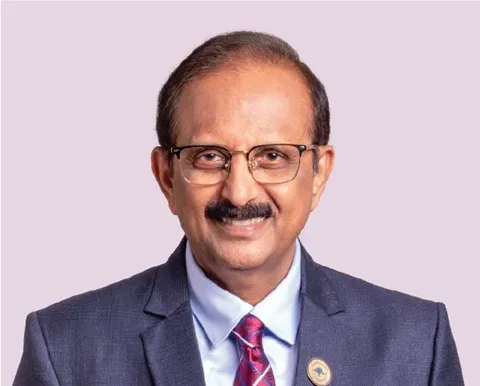
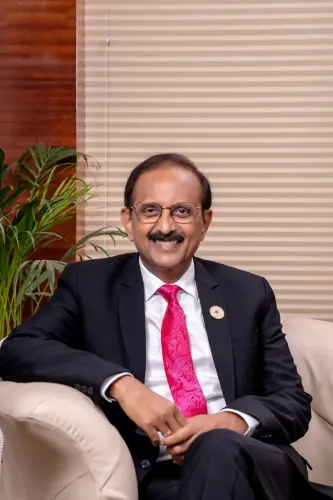
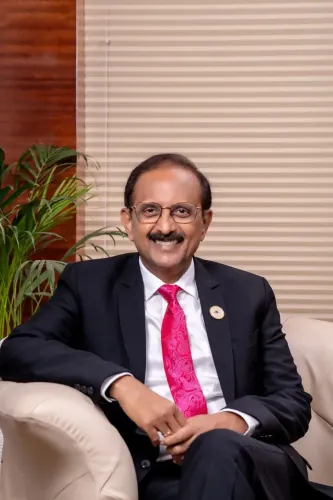
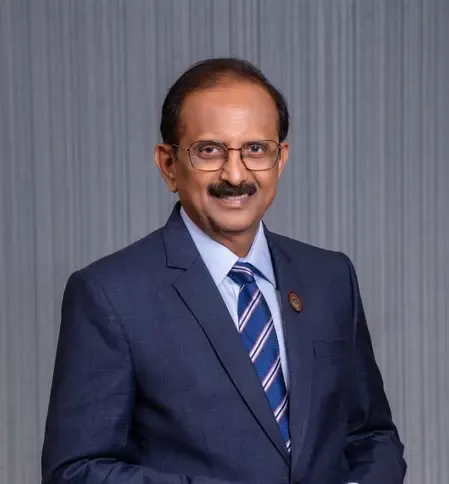
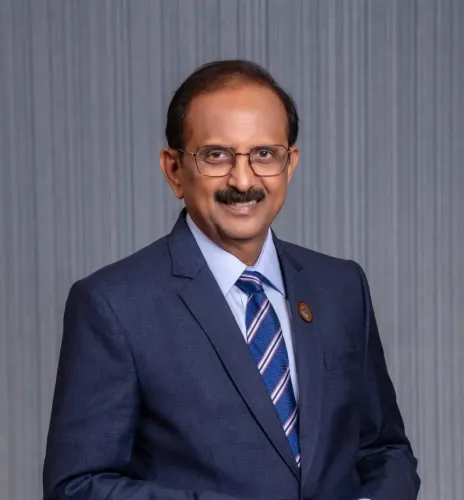
SBI Chairman CS Setty: Sunrise sectors to lead next global investment cycle
Synopsis
SBI Chairman CS Setty used the 13th Banking & Economics Conclave to make a pointed argument: India's real challenge is not talent, it is converting talent into globally competitive enterprises. With sunrise sectors set to attract the next wave of global capital, he is signalling that India's largest public-sector bank intends to help build that financial architecture — a significant strategic repositioning.
Key Takeaways
SBI Chairman CS Setty addressed the 13th SBI Banking & Economics Conclave in New Delhi on 23 September .
He identified renewable energy , semiconductors , battery storage , green hydrogen , robotics and biotechnology as the drivers of the next global investment cycle.
Setty said India's challenge is converting its talent and innovation strengths into commercially viable businesses with global reach.
He called on banks to adapt financing models to serve capital-intensive , technology-driven industries.
Economic development, he argued, must be measured not just by growth rates but by global competitiveness and sectoral leadership.
State Bank of India (SBI) Chairman CS Setty on Wednesday, 23 September said the next phase of global investment will be driven by sunrise sectors — including renewable energy, semiconductors, battery storage, green hydrogen, robotics and biotechnology — and stressed that India's banking and financial sector must play a central role in supporting this structural shift. Setty made the remarks at the inauguration of the 13th SBI Banking & Economics Conclave in New Delhi.
Key Remarks at the Conclave
Setty said these emerging industries are poised to attract significant global capital in the years ahead, creating fresh opportunities for economic growth and technological advancement. He noted that India is well-positioned to participate in this shift, backed by its skilled workforce, entrepreneurial ecosystem and growing technological capabilities.
However, he cautioned that the country's challenge is not a shortage of talent or innovation potential, but the ability to convert those strengths into commercially viable businesses, advanced manufacturing capabilities and intellectual property with a global presence.
India's Competitive Edge and Its Gaps
According to Setty, the larger opportunity lies in building enterprises that can compete internationally and establish India as a leader in frontier technologies. He emphasised that economic development should not be measured solely by high growth rates, but also by the capacity to translate that growth into global competitiveness and sectoral leadership.
The transition, he noted, requires strengthening India's ability to build world-class enterprises capable of holding their own in international markets — a challenge that goes beyond policy and into execution at scale.
The Evolving Role of Banks
Setty highlighted the shifting mandate of banks and financial institutions as the economy pivots toward high-value manufacturing, green technologies and innovation-led growth. He said the financial sector must adapt its frameworks and financing models to meet the requirements of capital-intensive and technology-driven industries.
Banks, he argued, will be instrumental in creating the financial architecture necessary to support innovation, investment and scale. As industries increasingly focus on sustainability and global competitiveness, the banking system will need to evolve alongside them to provide long-term structural support.
What This Signals for India's Financial Sector
This comes amid a broader global realignment of capital flows toward clean energy and deep-tech sectors, with countries such as the United States, China and members of the European Union already competing aggressively for dominance in semiconductors and green hydrogen. For Indian banks — historically more comfortable with infrastructure and working-capital lending — the pivot to financing frontier-technology ventures represents both an opportunity and a structural test. The remarks from the head of India's largest public-sector lender carry particular weight, signalling that SBI is preparing to reorient its own lending priorities in line with this emerging investment thesis.
Sectoral financing guidelines and updated frameworks from the banking system are expected to take shape as these industries scale up domestically over the coming years.
Point of View
Or whether that capital will continue to flow from foreign venture funds and multilateral institutions while domestic banks watch from the sidelines. Rhetoric from a bank chairman at a conclave is not a lending policy — the proof will be in where SBI's sectoral credit flows in the next two to three years.
NationPress
23 Sept 2026
Frequently Asked Questions
What did SBI Chairman CS Setty say at the Banking & Economics Conclave?
CS Setty said the next global investment cycle will be led by sunrise sectors such as renewable energy, semiconductors, green hydrogen, robotics and biotechnology, and that India's banking sector must adapt its financing models to support these capital-intensive industries. He spoke at the 13th SBI Banking & Economics Conclave in New Delhi on 23 September.
Which sectors does SBI see as sunrise or high-growth areas?
SBI Chairman CS Setty specifically named renewable energy, semiconductors, battery storage, green hydrogen, robotics and biotechnology as the sectors expected to attract significant global capital in the coming years and shape the next phase of economic growth.
What challenge did Setty highlight for India in competing globally?
Setty said India's challenge is not a lack of talent or innovation potential, but the ability to convert those strengths into commercially viable businesses, advanced manufacturing capabilities and intellectual property with a global presence. He stressed the need to build world-class enterprises that can compete in international markets.
Why does it matter that SBI is talking about frontier technology financing?
As India's largest public-sector lender, SBI's strategic signals carry significant weight for how the broader banking system allocates credit. A pivot toward financing frontier-technology and green-energy sectors would represent a structural shift from the infrastructure and working-capital lending that has historically dominated Indian bank books.
What is the SBI Banking & Economics Conclave?
The SBI Banking & Economics Conclave is an annual forum organised by the State Bank of India that brings together banking, finance and economic policy voices. The 2026 edition — the 13th — was held in New Delhi on 23 September and was inaugurated by SBI Chairman CS Setty.