SEBI eyes 5-day FPI onboarding, plans to scrap extra disclosures

Synopsis
SEBI wants foreign investors in Indian markets within five business days, down from several months today. Chairman Tuhin Kanta Pandey also proposed scrapping extra FPI disclosures and reviewing listing and IPO rules. SEBI is exploring a homegrown AI model for the securities market, the broadest compliance reset signalled in recent years.
Key Takeaways
SEBI Chairman Tuhin Kanta Pandey said on 27 November 2026 that FPI onboarding could shrink from several months to five business days .
SEBI has proposed scrapping the additional disclosure framework for FPIs to align with global standards.
About 740 FPIs , holding nearly 17 per cent of FPI assets under custody, have registered under SWAGAT-FI .
The LODR and ICDR frameworks are under review, with a plan for a single penalty instead of multiple exchange fines for one lapse.
SEBI is exploring a domestically governed AI model , responsible-AI guidelines and an AI sandbox .
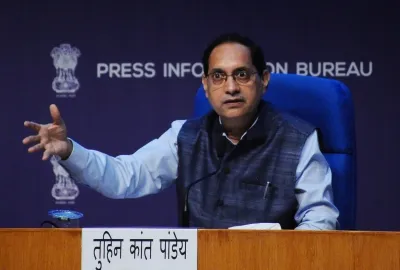
The Securities and Exchange Board of India (SEBI) is aiming to cut the onboarding time for foreign portfolio investors (FPIs) from several months to as little as five business days, SEBI Chairman Tuhin Kanta Pandey said in Mumbai on Friday, 27 November 2026. Pandey said the regulator will rely on digital workflows and deeper system integration to make India's capital markets more efficient and globally competitive.
He was speaking at the 17th Capital Markets Conference organised by industry body ASSOCHAM. He also said SEBI has proposed doing away with the additional disclosure framework for FPIs, a move intended to bring India's regulatory regime closer to international standards.
Faster Entry for Foreign Investors
Pandey said the regulator has spent the past few months easing compliance requirements for foreign investors. The most visible result is the SWAGAT-FI (Single Window Automatic and Generalised Access for Trusted Foreign Investors) initiative.
About 740 FPIs have already registered under SWAGAT-FI, according to Pandey. Together they account for nearly 17 per cent of total FPI assets under custody. The framework gives trusted, low-risk FPIs a single-window mechanism, simpler compliance and longer KYC review cycles.
The five-day target would be a big change from current timelines, which Pandey described as running into several months. Lengthy onboarding has been a familiar complaint from global funds weighing an entry into Indian markets.
Overhaul of Listing and Issuance Rules
Beyond FPIs, SEBI is carrying out a comprehensive review of the Listing Obligations and Disclosure Requirements (LODR) framework. The aim is to remove disclosures that duplicate filings companies already make to the Ministry of Corporate Affairs.
The regulator also plans a system under which a company would face a single penalty instead of multiple stock exchange fines for the same compliance lapse. That would ease a long-standing friction point for listed entities.
At the same time, SEBI is reviewing the Issue of Capital and Disclosure Requirements (ICDR) framework. ICDR governs public issues, including IPOs, FPOs, preferential allotments and qualified institutional placements. The review will also cover rules for SME IPOs and the Innovators Growth Platform.
Brokers, Advisers and Distributors
For stock brokers, SEBI is examining a graded compliance framework. Under it, regulatory requirements would match each brokerage's scale of operations, client exposure and dependence on technology.
Pandey said the regulator is also working to harmonise the rules governing investment advisers and mutual fund distributors. Those two segments currently operate under separate frameworks.
AI Push for the Securities Market
On technology, Pandey said SEBI is exploring a domestically governed artificial intelligence model for the securities market. Its purpose would be to give smaller regulated entities access to secure and affordable AI tools.
The regulator is also preparing guidelines on the responsible use of AI. It is proposing an AI sandbox where innovators could test applications in a controlled environment.
What Comes Next
Taken together, the measures point to a regulatory shift: fewer overlapping compliance layers and faster market access, while SEBI retains its supervisory role. Most of the proposals are still under review. The details of the final frameworks, and how quickly they are notified, will decide whether the five-day onboarding goal turns into a real advantage for India's capital markets.
Point of View
And the SWAGAT-FI numbers show progress, but 17 per cent of custody assets also means most foreign money still sits outside the fast lane. Dropping the additional FPI disclosure framework will please global funds. SEBI must make sure easier entry does not reopen the beneficial-ownership blind spots that framework was meant to close. The homegrown AI model is a smart equaliser for smaller intermediaries, provided the guidelines come before the deployment rather than after it.
NationPress
27 Nov 2026
Frequently Asked Questions
What is SEBI's new target for FPI onboarding?
SEBI aims to cut the onboarding time for foreign portfolio investors from several months to as little as five business days. It plans to do this through digital workflows and greater system integration, Chairman Tuhin Kanta Pandey said on 27 November 2026.
What is the SWAGAT-FI initiative?
SWAGAT-FI (Single Window Automatic and Generalised Access for Trusted Foreign Investors) is a SEBI framework for trusted, low-risk FPIs. It offers single-window access, simpler compliance and longer KYC review cycles. About 740 FPIs, holding nearly 17 per cent of FPI assets under custody, have registered so far.
What changes is SEBI proposing for FPI disclosures?
SEBI has proposed doing away with the additional disclosure framework for FPIs. The regulator says the move would bring India's regime closer to international standards.
How will listed companies be affected by SEBI's LODR review?
SEBI is reviewing the LODR framework to remove disclosures that duplicate filings made to the Ministry of Corporate Affairs. It also plans to impose a single penalty instead of multiple stock exchange fines for the same compliance lapse.
What is SEBI planning on artificial intelligence?
SEBI is exploring a domestically governed AI model so smaller regulated entities can access secure, affordable AI tools. It is also preparing responsible-AI guidelines and proposing an AI sandbox for controlled testing of applications.