India's ₹42 lakh crore PMS industry at inflection point: SEBI

Synopsis
SEBI has put India's ₹42 lakh crore PMS sector on notice: scale responsibly or risk losing credibility. With 2.1 lakh accounts and ambitions to push into Tier-2 and Tier-3 cities, the industry's next chapter hinges on whether it can pair growth with the governance standards that regulators — and investors — are now demanding.
Key Takeaways
India's PMS industry manages approximately ₹42 lakh crore in assets across more than 2.1 lakh investor accounts as of June 2026.
SEBI Executive Director Manoj Kumar said the sector is at a 'defining inflection point' requiring transparency, governance, and investor protection.
Expansion into Tier-2 and Tier-3 cities and stronger distribution networks were flagged as critical growth levers.
APMI Chairman Biharilal Deora said the association has undertaken around 50 strategic initiatives since 2022 .
The APMI Leadership Conclave 2026 in New Delhi brought together regulators, portfolio managers, family offices, and wealth management professionals.
India's portfolio management services (PMS) sector — which oversees assets worth approximately ₹42 lakh crore and serves over 2.1 lakh investor accounts — stands at a defining crossroads and holds the potential to become a cornerstone of the country's broader investment ecosystem, a senior Securities and Exchange Board of India (SEBI) official said on Thursday, 11 June 2026.
SEBI's Call for Governance and Transparency
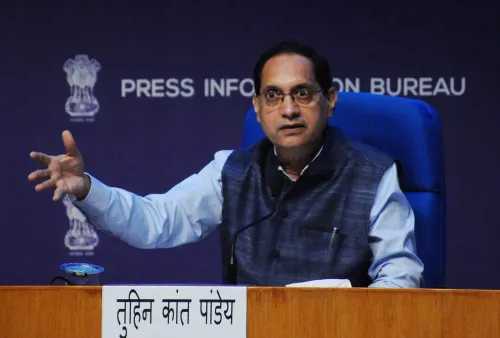
Addressing the APMI Leadership Conclave 2026 in New Delhi, Manoj Kumar, Executive Director at SEBI, said the industry's next growth phase must be built on three pillars: transparency, strong governance, and investor protection. 'The PMS industry in India is at a defining inflection point. As investor aspirations evolve and demand for personalised wealth management solutions continues to grow, the industry has an opportunity to emerge as a significant pillar of India's investment ecosystem,' Kumar said.
He further stressed that industry-wide standardisation, enhanced data transparency, and a stronger distribution ecosystem are essential for sustainable sectoral growth — signalling that SEBI intends to hold the industry to a higher structural standard as it scales.
Tier-2 and Tier-3 Expansion in Focus
Kumar identified deeper market penetration into Tier-2 and Tier-3 cities as a critical frontier, alongside greater investor awareness and responsible distribution practices. This comes amid a broader national push to democratise wealth management beyond India's metropolitan centres, where PMS uptake has historically been concentrated among high-net-worth individuals.
Collaboration among stakeholders, Kumar added, will be key to building a resilient, trusted, and globally competitive PMS industry — a framing that signals SEBI's intent to position Indian portfolio management as a credible alternative on the world stage.
APMI's Strategic Priorities
Biharilal Deora, Chairman of the Association of Portfolio Managers in India (APMI) — the representative body for SEBI-registered portfolio managers — said the sector has matured significantly, driven by rising investor awareness, growing demand for customised investment solutions, and a supportive regulatory framework.
'At APMI, we remain committed to fostering constructive engagement between industry participants and SEBI to advance our shared objectives of investor protection, industry development and market integrity,' Deora said. He noted that APMI has undertaken approximately 50 strategic initiatives since commencing operations in 2022, spanning investor protection, regulatory compliance, digital transformation, and professional capacity building.
Who Was at the Conclave
The conclave brought together regulators, portfolio managers, distributors, family offices, and wealth management professionals to map the opportunities and priorities shaping the sector's next phase. The broad participation underscores the industry's growing institutional weight — and the regulatory attention it is beginning to attract.
With SEBI sharpening its focus on PMS governance, the sector's ability to scale responsibly into new geographies and investor segments will likely define its trajectory over the next decade.
Point of View
But without standardised disclosure norms and independent distribution oversight, it risks replicating the mis-selling patterns seen in mutual funds a decade ago. APMI's 50 initiatives since 2022 are a credible start, but self-regulation has limits. The real question is whether SEBI will follow this conclave speech with binding rule changes — or whether the industry will be left to self-correct on trust alone.
NationPress
26 Oct 2026
Frequently Asked Questions
What is India's PMS industry and how large is it?
Portfolio management services (PMS) refers to professionally managed investment accounts tailored for high-net-worth individuals. India's PMS industry currently manages approximately ₹42 lakh crore in assets and serves over 2.1 lakh investor accounts, making it a significant and fast-growing segment of the country's wealth management landscape.
What did SEBI say about the PMS industry at the APMI conclave?
SEBI Executive Director Manoj Kumar said the industry is at a 'defining inflection point' and must anchor its next growth phase in transparency, strong governance, and investor protection. He also called for industry-wide standardisation and deeper penetration into Tier-2 and Tier-3 markets.
What is APMI and what role does it play?
The Association of Portfolio Managers in India (APMI) is the representative body for SEBI-registered portfolio managers. Since commencing operations in 2022, it has undertaken around 50 strategic initiatives covering investor protection, regulatory compliance, digital transformation, and professional capacity building.
Why is Tier-2 and Tier-3 expansion important for the PMS sector?
PMS uptake has historically been concentrated among high-net-worth investors in major cities. Expanding into Tier-2 and Tier-3 markets would broaden the investor base, increase financial inclusion, and drive the next phase of sectoral growth — provided it is accompanied by responsible distribution and investor awareness efforts.
What happens next for the PMS industry following SEBI's remarks?
SEBI's emphasis on governance and transparency signals that regulatory scrutiny of the PMS sector is likely to intensify. Industry bodies, portfolio managers, and distributors will be expected to align with higher disclosure and compliance standards, particularly as the sector pursues geographic expansion beyond metropolitan India.