SEBI pilots DLT tokenisation for corporate bonds, faster settlement in sight
Synopsis
SEBI has quietly kicked off one of India's most consequential fintech experiments — a DLT-based tokenisation pilot for corporate bonds. If it clears regulatory hurdles and RBI finalises its norms, instantaneous bond settlement could become a reality, potentially transforming a debt market that has long lagged India's equity exchanges in depth and participation.
Key Takeaways
SEBI has initiated a pilot to explore DLT-based tokenisation of corporate bonds, announced on 26 May 2025 .
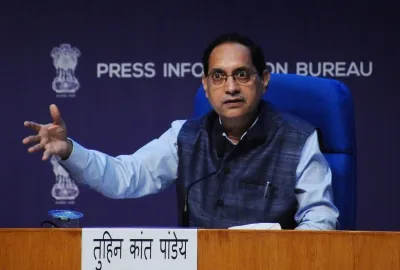
SEBI Chairman Tuhin Kanta Pandey said the pilot aims to assess improved liquidity and instantaneous settlement in the debt market.
The Reserve Bank of India (RBI) has issued draft guidelines on DLT and is expected to release final norms shortly.
SEBI and exchanges are ready to roll out the framework once RBI regulatory clearance is received.
Pandey noted India's equity market is more diversified than Taiwan 's, which is dominated by a few large tech firms.
Securities and Exchange Board of India (SEBI) has launched a pilot project to explore the tokenisation of corporate bonds using distributed ledger technology (DLT), with the potential to significantly improve liquidity and enable near-instantaneous settlement in India's debt market. SEBI Chairman Tuhin Kanta Pandey disclosed the initiative on Tuesday, 26 May, in remarks to reporters in New Delhi.
What the Pilot Entails
The pilot is designed to assess whether blockchain-based systems can streamline bond trading and settlement while managing the technology and operational risks involved. Pandey confirmed the scope directly: 'It's a pilot project that we have decided to initiate on use of DLT for tokenisation of corporate bonds.'
Corporate bonds in India are already traded on established platforms, but SEBI is evaluating whether DLT-based tokenisation can meaningfully lift market functioning beyond current capabilities. As Pandey put it: 'We are saying whether we can use the DLT and tokenisation method for bonds as well. Once you do that, there will be a greater possibility of more liquidity and instantaneous settlement.'
Regulatory Coordination with RBI
The initiative is not being pursued in isolation. The Reserve Bank of India (RBI) has already issued draft guidelines on DLT applications in financial markets and is expected to release final norms shortly. Pandey indicated that SEBI and the exchanges are ready to operationalise the framework as soon as regulatory clearance is received from the central bank.
The pilot will also serve as a platform to bring together key stakeholders — including issuers, intermediaries, and market infrastructure institutions — to stress-test the operational and technological model before any wider rollout is considered.
Why This Matters for India's Debt Market
India's corporate bond market has historically lagged equity markets in depth and liquidity, a gap that policymakers have long sought to close. DLT-based tokenisation could address two structural pain points simultaneously: settlement risk, which currently requires a T+1 or T+2 cycle, and fragmented secondary market participation. Notably, this pilot follows a broader global trend of central banks and securities regulators experimenting with tokenised bonds — the European Central Bank and Hong Kong Monetary Authority have conducted similar trials in recent years.
SEBI Chief on Global Equity Trends and India's Market Position
Pandey also commented on global equity market dynamics, noting that investor enthusiasm around artificial intelligence (AI), chips, memory, and electronics linked to AI infrastructure is currently driving valuations across major jurisdictions. 'Some of the leading companies at this moment are those related to AI directly or indirectly,' he said.
On comparisons between India and Taiwan in market capitalisation trends, Pandey underscored a key structural difference: India remains a diversified market, unlike Taiwan, where a handful of large technology companies dominate overall valuations. This distinction, he suggested, provides India's markets with broader resilience against sector-specific shocks.
What Comes Next
The immediate next step is the conclusion of the pilot and a review of its findings, after which SEBI and the exchanges will await RBI's final DLT guidelines before scaling the framework. If successful, the initiative could mark a structural shift in how Indian corporate bonds are issued, traded, and settled — with implications for retail participation and institutional efficiency alike.
Point of View
But the real test lies in execution and inter-regulatory alignment. India's corporate bond market has underperformed its potential for years — low secondary market liquidity, high intermediation costs, and retail exclusion are structural, not incidental, problems. Tokenisation can theoretically fix all three, but only if the RBI's final guidelines are permissive enough to allow genuine innovation rather than a sandbox exercise that never scales. The coordination question between SEBI and RBI — two regulators with overlapping jurisdiction over debt markets — will determine whether this pilot becomes policy or a footnote.
NationPress
10 Oct 2026
Frequently Asked Questions
What is SEBI's DLT tokenisation pilot for corporate bonds?
It is a pilot project initiated by the Securities and Exchange Board of India to test whether distributed ledger technology can be used to tokenise corporate bonds, with the goal of improving liquidity and enabling faster, potentially instantaneous, settlement in India's debt market. SEBI Chairman Tuhin Kanta Pandey confirmed the initiative on 26 May 2025.
What is DLT tokenisation and how does it apply to bonds?
Distributed ledger technology tokenisation involves representing ownership of a financial asset — such as a corporate bond — as a digital token on a blockchain. This can allow bonds to be traded and settled in real time, reducing counterparty risk and broadening market access to a wider range of participants.
What role does the RBI play in this initiative?
The Reserve Bank of India has already issued draft guidelines on the use of DLT in financial markets and is expected to finalise them soon. SEBI and the exchanges have indicated they are ready to implement the framework once RBI's regulatory clearance is in place.
Why does India's corporate bond market need reform?
India's corporate bond market has historically been less liquid and less accessible than its equity markets. Settlement cycles, fragmented participation, and limited retail access are longstanding concerns. DLT-based tokenisation could address settlement risk and improve secondary market depth if successfully implemented.
How does India's market compare to Taiwan's, according to SEBI?
SEBI Chairman Pandey noted that India's equity market is broadly diversified across sectors, unlike Taiwan's, where valuations are heavily concentrated in a few large technology companies. This diversification, he suggested, makes India's market more resilient to sector-specific shocks.