Global semiconductor revenue to hit $1.9 trillion by 2027, AI drives surge
Synopsis
Gartner's latest forecast puts global semiconductor revenue at $1.9 trillion by 2027 — nearly double 2025 levels. The real story is memory: DRAM is set to surge 246.6% and NAND flash 371.9% in 2026 alone, with AI data centres expected to account for more than half of all semiconductor revenue by 2030. This is no ordinary upcycle.
Key Takeaways
Global semiconductor revenue is forecast to reach $1.6 trillion in 2026 , up 92% from $809 billion in 2025, per Gartner .
Revenue is projected to climb further to $1.9 trillion in 2027 .
Memory will account for 54% of total semiconductor revenue in 2026, up from 27% in 2025.
DRAM revenue is set to surge 246.6% and NAND flash revenue by 371.9% in 2026.
The AI data centre share of semiconductor revenue is expected to grow from 36.5% in 2026 to over 53% by 2030.
Supply-demand conditions are projected to remain tight through 2027 despite new capacity additions.
Global semiconductor revenue is projected to reach $1.6 trillion in 2026 — a 92% jump from $809 billion in 2025 — before climbing further to $1.9 trillion in 2027, according to a new report by technology research firm Gartner, Inc. The firm says the industry is entering a 'fundamentally new phase of growth,' powered by sustained AI infrastructure investment and a stronger-than-anticipated memory pricing cycle.
Memory Takes Centre Stage
Memory semiconductors are the single largest driver of this expansion. Memory revenue is forecast to total $837 billion in 2026 and cross the $1 trillion mark in 2027. According to Gartner, memory will account for 54% of total semiconductor revenue in 2026, a dramatic rise from just 27% in 2025.
Within memory, the growth figures are striking. DRAM revenue is expected to surge 246.6% in 2026, while NAND flash revenue is projected to expand by 371.9% — both driven by insatiable demand from AI data centres and high-bandwidth memory (HBM) requirements.
AI Infrastructure Reshaping the Semiconductor Ecosystem
Ben Lee, Director Analyst at Gartner, attributed the structural shift to the rapid scaling of AI workloads. 'Rising AI infrastructure is reshaping investment across the semiconductor ecosystem and redefining the industry's application mix,' Lee said. He added that the AI data centre ecosystem is expected to grow from 36.5% of semiconductor revenue in 2026 to more than 53% by 2030.
As AI clusters grow larger, faster, and more power-intensive, they are pulling in rising investment across CPUs, networking silicon, power management chips, analog devices, and optical interconnect technologies — broadening the semiconductor demand base well beyond memory alone.
Supply-Demand Balance Remains Tight
Despite additional capacity expected to enter the market in 2027, Gartner analysts project that supply-demand conditions will remain tight. Continued AI infrastructure deployments are forecast to keep memory consumption elevated, preventing any significant pricing correction.
Shrish Pant, Director Analyst at Gartner, noted that 'AI infrastructure has fundamentally changed the dynamics of the memory market.' Pant added that 'continued AI infrastructure deployments, higher memory content per AI server and sustained demand for high-bandwidth memory (HBM) will support memory revenue growth through 2027 and beyond.'
What This Means for the Broader Industry
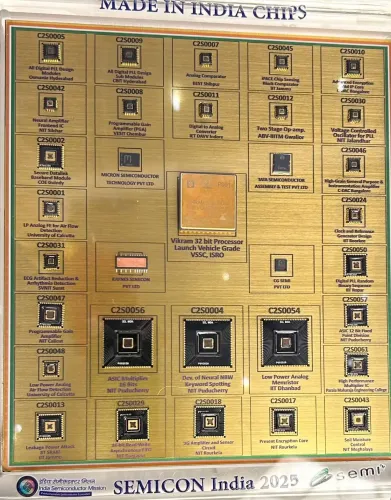
The Gartner projections underscore a decisive pivot in where semiconductor value is being created — away from consumer electronics cycles and toward AI-driven enterprise and cloud infrastructure. This comes amid a global race among chipmakers to scale HBM and advanced packaging capacity, with players such as Samsung, SK Hynix, and Micron all ramping production to meet AI server demand. For India, which is actively courting semiconductor investments under its chip incentive programme, the trajectory signals a widening window of opportunity — provided domestic capacity can come online before the demand peak passes.
Point of View
But the more significant signal is structural: memory, long the most volatile and commoditised segment of semiconductors, is now the industry's growth engine — not a drag on it. That inversion is entirely AI-driven, and it is not a blip. With AI data centres projected to consume more than half of all semiconductor revenue by 2030, the old consumer-electronics demand cycle has been effectively dethroned. For policymakers in New Delhi, the urgency of the India Semiconductor Mission becomes sharper: the window to build domestic capacity aligned with this AI-memory supercycle is measured in months, not years.
NationPress
9 Oct 2026
Frequently Asked Questions
What is the global semiconductor revenue forecast for 2026 and 2027?
According to Gartner, global semiconductor revenue is projected to reach $1.6 trillion in 2026 — a 92% increase from $809 billion in 2025 — and is expected to grow further to $1.9 trillion in 2027. The growth is primarily driven by AI infrastructure investment and a strong memory pricing cycle.
Why is memory semiconductor revenue growing so rapidly?
Memory revenue is surging because AI data centres require massive amounts of high-bandwidth memory (HBM) and DRAM, pushing demand well ahead of available supply. Gartner forecasts DRAM revenue to rise 246.6% and NAND flash revenue to grow 371.9% in 2026 alone.
How big a role does AI play in semiconductor growth?
AI is the primary structural driver. The AI data centre ecosystem is expected to account for 36.5% of global semiconductor revenue in 2026, rising to more than 53% by 2030, according to Gartner. This represents a fundamental shift in where semiconductor value is created.
Will supply keep up with semiconductor demand through 2027?
Gartner projects that despite additional capacity entering the market in 2027, supply-demand conditions will remain tight. Continued AI infrastructure deployments and higher memory content per AI server are expected to sustain elevated demand and support pricing.
Which memory technologies are most in demand?
High-bandwidth memory (HBM), DRAM, and NAND flash are the most sought-after memory types. HBM in particular is critical for AI servers, and sustained demand for it is a key factor behind Gartner's bullish memory revenue outlook through 2027 and beyond.