Why Did Sensex and Nifty Open Lower After US Tariff Announcement?
Synopsis
In a turbulent market influenced by geopolitical tensions and foreign outflows, the Indian benchmark indices, including Sensex and Nifty, opened lower. Analysts attribute this movement to new tariff announcements by the US and a possible impact on global trade. Dive into the details of this unfolding financial story.
Key Takeaways
Sensex fell by 85 points , while Nifty dropped 22 points .
Sectoral indices showed mixed performance, with Nifty Media and PSU Bank gaining.
Immediate market support is seen at 25,650–25,700 .
US tariffs on trade with Iran may continue to impact global markets.
Upcoming Q3 results could bring stock-specific movements.
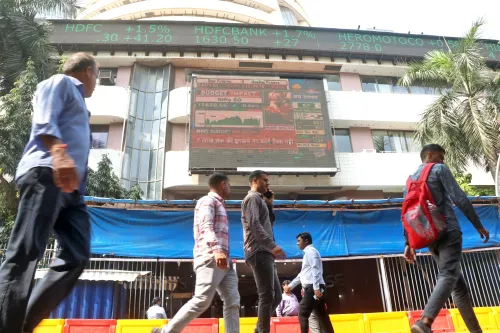
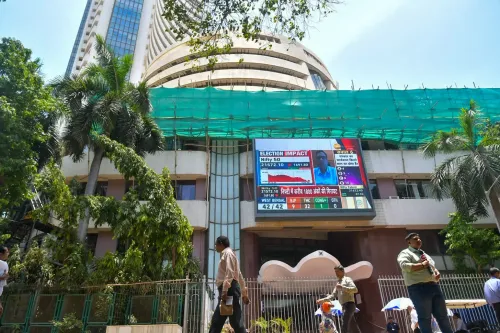
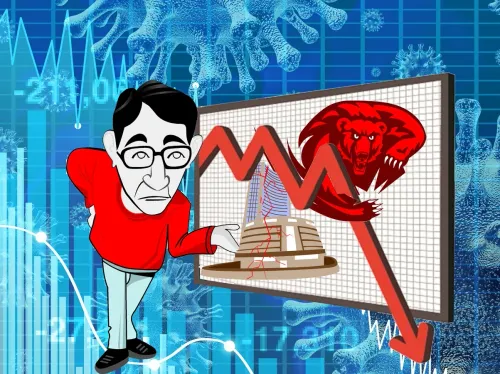
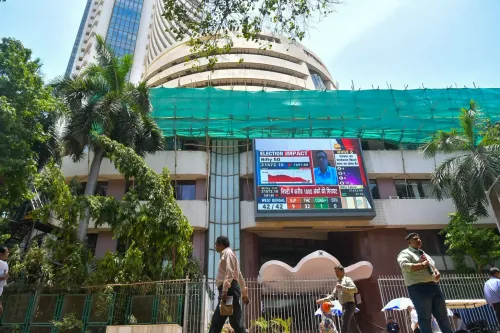
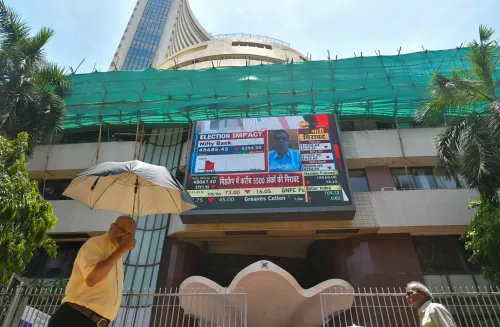
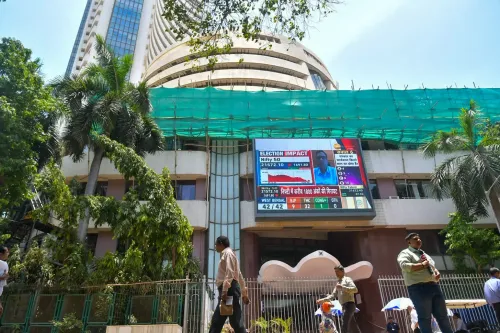
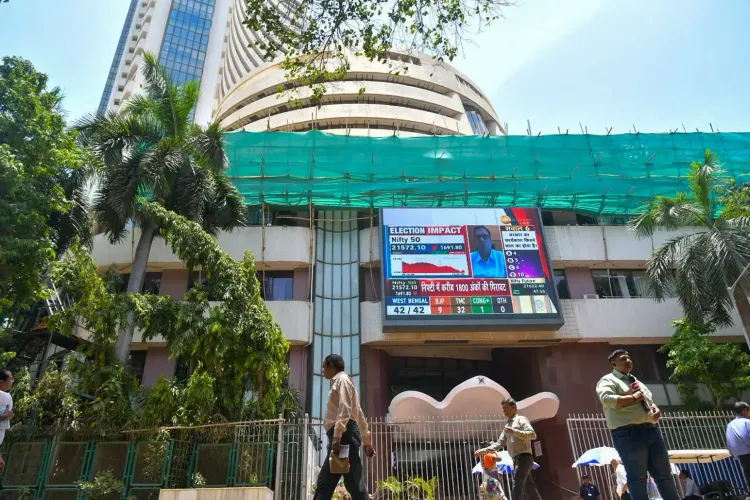
Mumbai, Jan 13 (NationPress) In the wake of a notable recovery from previous lows, the Indian benchmark indices opened with a slight downward trend on Tuesday, influenced by escalating geopolitical tensions and ongoing foreign institutional outflows.
As of 9:29 AM, the Sensex fell by 85 points, equivalent to 0.10 percent, settling at 83,792, while the Nifty dipped by 22 points, or 0.08 percent, to reach 25,768.
The broader market indices displayed minor variation compared to the benchmark, with the Nifty Midcap 100 rising by 0.11 percent and the Nifty Smallcap 100 increasing by 0.38 percent.
Among the significant gainers on the Nifty were ONGC and SBI. Sector performance was mixed, with the majority in the negative zone. Notably, Nifty Media and PSU Bank sectors emerged as the top performers, climbing 0.79 percent and 0.67 percent respectively.
Market analysts highlighted immediate support in the 25,650–25,700 range, while resistance levels were identified around 25,950–26,000.
Experts indicated that US President Donald Trump's implementation of tariffs has significantly impacted global trade, particularly affecting nations subjected to such punitive measures. His recent announcement regarding the imposition of 25 percent tariffs on countries engaging in trade with Iran clearly indicates that this strategy of tariff weaponization is set to persist.
Concerns have been raised regarding the allegations against Fed Chair Jerome Powell, suggesting that markets are likely to remain under pressure due to the president's unpredictable and unprecedented actions.
The Indian markets managed a recovery on Monday after US Ambassador to India, Sergio Gor, expressed a strong commitment towards establishing a trade agreement with India, with negotiations set to recommence.
Furthermore, upcoming Q3 earnings reports are expected to drive stock-specific activities in the short term, as per market analysts.
Across the Asia-Pacific region, markets exhibited positive movements during morning trades, as investors seemed to overlook the geopolitical issues surrounding Iran and Venezuela, alongside a criminal inquiry into US Fed Chair Jerome Powell.
Japan’s benchmark Nikkei 225 surged over 3 percent following news that the ruling Liberal Democratic Party is planning to dissolve the Lower House and call for a snap election in February.
In other Asian markets, China's Shanghai index declined by 0.03 percent, while Shenzhen fell by 0.31 percent. The Nikkei gained 3.21 percent, and Hong Kong's Hang Seng Index increased by 0.93 percent. Meanwhile, South Korea's Kospi rose by 0.74 percent.
In the US, markets mostly closed in positive territory, with Nasdaq increasing by 0.26 percent. The S&P 500 rose by 0.16 percent, and Dow was up by 0.17 percent.
On January 12, foreign institutional investors (FIIs) sold net equities worth Rs 3,638 crore. In contrast, domestic institutional investors (DIIs) were net buyers with equities worth Rs 3,769 crore.
aar/na
Point of View
It's essential to recognize how global events significantly influence our markets. The recent tariff measures by the US highlight the interconnectedness of economies and the potential repercussions for India. In these uncertain times, our focus should remain on resilience and strategic planning to navigate the evolving financial landscape.
NationPress
6 Oct 2026
Frequently Asked Questions
What are the reasons for the decline in Sensex and Nifty?
The decline is attributed to rising geopolitical tensions, foreign institutional outflows, and recent tariff announcements by the US targeting nations trading with Iran.
How are other Asian markets reacting?
Most Asian markets are trading positively, with Japan's Nikkei 225 showing significant gains despite global concerns.
What impact will the US tariffs have on global trade?
The US tariffs may lead to further strain on global trade relationships and could impact stock market performance in affected nations.