Sensex, Nifty open flat as oil price risks offset domestic strength
Synopsis
Indian equity benchmarks opened in virtual stalemate on 13 August — Sensex barely positive, Nifty marginally in the red — as strong domestic high-frequency data collided with stubborn crude oil risk. With Brent slipping past $87 and technicals flashing a potential move toward 25,000, the market's next direction hinges on oil's next move and whether domestic flows hold.
Key Takeaways
Sensex opened 145.56 points higher at 78,111.91 on 13 August ; Nifty50 slipped 4.35 points to 24,431.60 .
Nifty Media (+ 0.61% ) and Nifty Auto (+ 0.39% ) led sectoral gains.
Nifty Realty (- 0.81% ), Nifty IT (- 0.69% ), and banking indices shed up to 0.61% .
Brent crude fell over 1% to $87.75/barrel ; WTI dropped 1.64% to $81.90/barrel .
Technical analysts see a potential move toward 24,540–24,666 , then 24,850–25,100 , with support near 24,490 .
High-frequency indicators — GST collections, auto sales, credit growth — continue to signal domestic economic resilience.
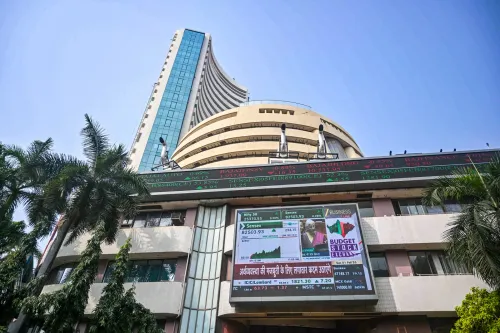
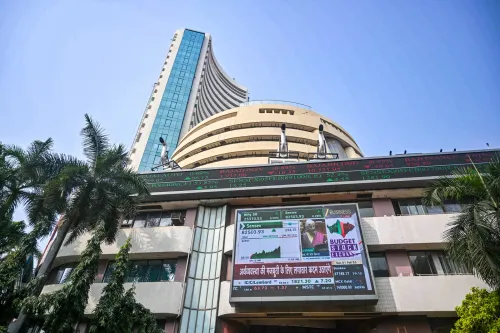
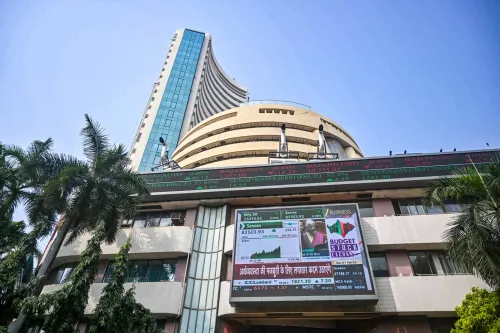
Sensex and Nifty opened nearly unchanged on Thursday, 13 August, as investors weighed resilient domestic macroeconomic signals against persistent concerns over elevated crude oil prices. The BSE Sensex edged 145.56 points or 0.19% higher to 78,111.91, while the Nifty50 slipped a marginal 4.35 points or 0.02% to 24,431.60, reflecting a market caught between competing forces.
Sector Snapshot
The session opened with a clear split across sectors. Nifty Media led gains, rising 0.61%, followed by Nifty Auto, which advanced 0.39%. Rate-sensitive and heavyweight counters bore the brunt of selling pressure — Nifty Realty declined 0.81%, Nifty IT fell 0.69%, and Nifty PSU Bank, Oil & Gas, and Private Bank indices shed up to 0.61%.
What Market Experts Said
According to market experts, equities are likely to remain in a consolidation phase in the near term. High-frequency indicators — including GST collections, freight movement, automobile sales, and credit growth — continue to signal economic resilience and could support earnings growth in the quarters ahead. Sustained inflows from domestic institutional investors have also provided a floor to the market.
Technical analysts noted that Wednesday's rebound from the 20-day moving average and the formation of a hammer candlestick pattern have improved the near-term outlook. 'The recent price action has opened the possibility of a move towards the 24,540–24,666 zone initially, followed by 24,850–25,100. However, some consolidation may emerge near 24,490,' analysts noted.
Crude Oil Eases, But Risk Lingers
Brent crude slipped more than 1% to $87.75 a barrel, while US West Texas Intermediate (WTI) fell 1.64% to $81.90 per barrel. The dip offered some relief on inflationary pressures and input costs, though experts cautioned that the trajectory of oil prices remains a key risk variable for Indian equities in the near term. India imports a significant share of its crude requirements, making the market structurally sensitive to global oil moves.
What to Watch
Markets will track further crude oil data, domestic inflation prints, and any signals from global central banks. A sustained consolidation above the 24,490 support level could set the stage for a move toward the 25,000 zone, according to technical analysts. Any sharp reversal in oil prices or a shift in domestic institutional flows would alter that calculus.
Point of View
While rate-sensitive and IT counters are under pressure — a pattern that reflects two separate market narratives running simultaneously. The real story is not the index level but the tug-of-war between robust domestic demand signals and an oil price that refuses to fully retreat. With Brent still above $87, any supply-side shock could quickly flip the consolidation into a corrective move. The hammer candlestick rebound is technically encouraging, but technical patterns in a macro-driven market are only as reliable as the next crude print.
NationPress
27 Sept 2026
Frequently Asked Questions
Why did Sensex and Nifty open flat on 13 August?
Sensex opened marginally higher at 78,111.91 and Nifty slipped slightly to 24,431.60 on 13 August as investors balanced strong domestic economic indicators against concerns over elevated crude oil prices. The market reflected a consolidation mood rather than a directional move.
Which sectors fell in early trade on 13 August?
Nifty Realty declined 0.81%, Nifty IT fell 0.69%, and Nifty PSU Bank, Oil & Gas, and Private Bank indices shed up to 0.61%. Rate-sensitive and heavyweight sectors faced the most selling pressure in early trade.
What is the near-term technical outlook for Nifty?
Technical analysts noted that Wednesday's rebound from the 20-day moving average and a hammer candlestick pattern have improved the short-term outlook. They see a potential move toward 24,540–24,666, followed by 24,850–25,100, with consolidation possible near 24,490.
How did crude oil prices move and why does it matter for India?
Brent crude fell over 1% to $87.75 a barrel and WTI dropped 1.64% to $81.90 a barrel. Lower oil prices ease inflationary pressure and reduce input costs for Indian industries, but the trajectory remains uncertain — a key risk for a market that is structurally sensitive to crude given India's large import dependence.
What domestic indicators are supporting Indian equities?
High-frequency data including GST collections, freight movement, automobile sales, and credit growth continue to signal economic resilience, according to market experts. Sustained domestic institutional inflows are also providing support to the broader market.