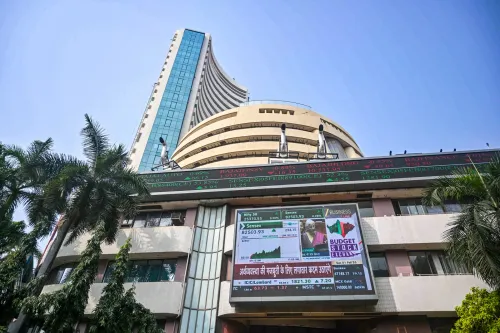
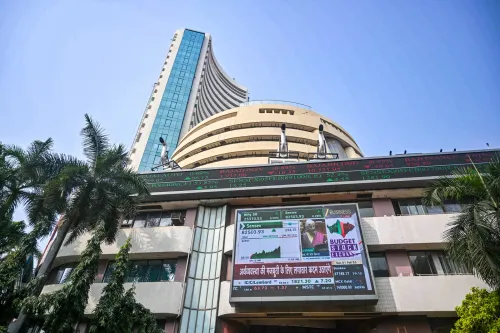
Sensex opens 438 points lower as crude oil surge, global cues weigh

Synopsis
Indian markets opened Friday in the red, with Sensex shedding over 438 points as Brent crude crossed $83 a barrel and global caution set in ahead of US data. The split — financials and banking selling off while IT, auto and realty gained — reflects a market in consolidation, not collapse, with analysts watching Q1 results for the next directional cue.
Key Takeaways
Sensex opened at 78,516.08 , down 438.68 points (0.56%) on 7 August .
Nifty50 slipped 97.10 points (0.39%) to 24,538.90 at open.
Financials , banking , and cement sectors fell up to 1% ; IT , auto , realty , and FMCG gained up to 1.5% .
Brent crude rose over 1% to $83.83/barrel ; WTI at $78.42/barrel amid geopolitical tensions.
Analysts expect financials , autos , telecom , and capital goods to sustain growth, but warn elevated valuations may limit upside.
Indian equity benchmarks opened in the red on Friday, 7 August, as a sharp rise in global crude oil prices and cautious global sentiment ahead of key US economic data dampened early trade. Sensex opened at 78,516.08, down 438.68 points or 0.56%, while the Nifty50 slipped 97.10 points or 0.39% to 24,538.90.
Sectors Under Pressure
Financials and banking bore the brunt of early selling. Nifty Financial Services Ex-Bank, Nifty Cement, Nifty PSU Bank, and Nifty Private Bank indices each declined up to 1% in the opening session. The pressure reflected investor caution as crude-linked inflation concerns clouded the rate outlook.
Bright Spots in IT, Auto and Realty
Not all sectors followed the downward trend. Nifty IT, Nifty MidSmall IT & Telecom, Nifty Auto, Nifty Realty, and Nifty FMCG surged up to 1.5%, providing a partial offset to broader index losses. The divergence signals selective buying even as headline indices slid.
What Market Experts Are Saying
According to market analysts, the broader market is in a consolidation phase, gradually inching higher. This trend is expected to persist in the near term before an eventual upside breakout, they noted.
Experts flagged three key takeaways from Q1 results. First, companies in financials, automobiles, pharmaceuticals, and telecom have largely delivered double-digit revenue and profit growth, lending resilience to their valuations. Second, IT continues to face headwinds from sluggish demand and uncertainty around the impact of artificial intelligence on the sector. Third, metals and oil commodities have delivered a mixed picture.
Looking ahead, analysts expect financials, automobiles, telecom, and capital goods to sustain growth momentum, though elevated valuations in the broader market may cap further upside.
Crude Oil Surge Adds to Pressure
Global crude prices climbed sharply amid persistent geopolitical tensions. Brent crude jumped more than 1% to $83.83 per barrel, while US West Texas Intermediate (WTI) also traded over 1% higher at $78.42 per barrel. Rising oil prices raise import costs for India — the world's third-largest crude importer — and can stoke inflationary pressures, complicating the Reserve Bank of India's monetary policy calculus.
What to Watch
Investors will closely track upcoming US economic data releases, which could set the direction for global risk appetite. Any hawkish signal from the US could further pressure rate-sensitive sectors such as banking and financials. The interplay between crude prices and domestic inflation data will remain a key variable for market direction in the sessions ahead.
Point of View
IT, auto and realty found buyers — suggesting institutional money is rotating rather than retreating. The crude spike above $83 is the variable to watch; India's import bill sensitivity means every dollar sustained above that level tightens the fiscal math and dims the case for an RBI rate cut. With Q1 results showing double-digit growth in autos, pharma and telecom, the earnings foundation is not the problem — it is valuation headroom and external shocks that could delay the breakout analysts are anticipating.
NationPress
21 Sept 2026
Frequently Asked Questions
Why did the Sensex fall at open on 7 August?
The Sensex opened 438.68 points lower at 78,516.08 on 7 August, dragged by rising global crude oil prices and cautious sentiment ahead of key US economic data. Geopolitical tensions pushed Brent crude above $83 a barrel, raising inflation concerns for India.
Which sectors fell and which gained in early trade?
Financials, banking, and cement sectors declined up to 1%, while IT, auto, realty, FMCG, and telecom indices gained up to 1.5% in early trade. The divergence pointed to selective buying even as headline indices fell.
What do experts say about the market outlook?
Market analysts say the broader market is consolidating and gradually moving higher, with an upside breakout expected in the near term. They expect financials, automobiles, telecom, and capital goods to maintain growth momentum, though elevated valuations may limit further upside.
How are crude oil prices affecting Indian markets?
Brent crude rose over 1% to $83.83 per barrel and WTI climbed to $78.42, driven by persistent geopolitical tensions. Higher crude prices increase India's import costs and can stoke inflation, complicating monetary policy decisions.
What were the key takeaways from Q1 results highlighted by experts?
Experts noted that financials, automobiles, pharmaceuticals, and telecom companies delivered double-digit revenue and profit growth. IT faced headwinds from sluggish demand and AI-related uncertainty, while metals and oil commodities showed a mixed performance.