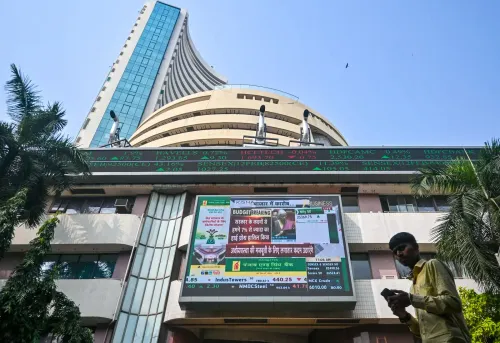
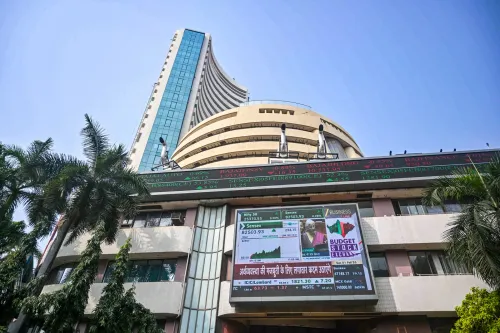
Sensex, Nifty snap two-week rally as crude prices rise on global uncertainty
Synopsis
Indian equities snapped a two-week winning streak as crude's rebound overshadowed a genuinely strong earnings season — 33 of 50 Nifty constituents beat estimates. Mid-caps held their ground, but the headline indices couldn't escape the twin drag of rising oil prices and Middle East uncertainty, leaving markets in a cautious wait-and-watch mode ahead of US retail sales and FOMC minutes.
Key Takeaways
Nifty 50 fell 0.83 per cent for the week, closing at 24,366 on 15 August .
BSE Sensex lost 0.62 per cent over the week, ending at 78,009 , down 70 points on the day.
33 of 50 Nifty constituents beat earnings estimates, signalling healthy corporate earnings breadth.
Nifty Midcap 100 and Nifty Smallcap 100 each gained 0.50 per cent , outperforming the benchmark.
Consumer durables and realty gained; metals , automobiles , and FMCG saw profit-booking.
Key triggers ahead: crude oil trajectory , FOMC minutes , US retail sales , and Chinese economic data .
Indian equity benchmarks Sensex and Nifty snapped a two-week winning streak during the week ending 15 August, weighed down by rising crude oil prices and persistent global uncertainty. The Nifty 50 declined 0.83 per cent over the week, closing 15 August at 24,366 after shedding 0.12 per cent on the final trading day. The BSE Sensex ended at 78,009, down 70 points or 0.09 per cent on the day, and lost 0.62 per cent across the week.
What Drove the Weekly Losses
Softer-than-expected US labour market data initially raised hopes of a patient US Federal Reserve, briefly supporting sentiment. However, a rebound in crude oil prices shifted attention back to inflation risks, according to analysts. Evolving geopolitical developments — particularly Middle East tensions — kept large-cap sentiment capped through the week. Markets remained broadly range-bound as these headwinds were partially offset by a solid domestic earnings season.
Domestic Supports That Limited the Damage
On the home front, several factors cushioned the fall. Better-than-expected corporate earnings, stability in the rupee, a moderation in the domestic 10-year bond yield, and a gradual improvement in foreign institutional investor (FII) participation collectively supported the macro environment. Notably, 33 of the 50 Nifty constituents outperformed earnings estimates — a breadth reading that analysts described as healthy despite a challenging external backdrop.
Sectoral Performance: Winners and Laggards
Consumer durables and realty were among the week's notable gainers, supported by improving demand trends and domestic growth optimism. PSU banks remained relatively buoyant, underpinned by healthy asset quality, attractive valuations, and a favourable credit growth outlook. On the other side, metals, automobiles, and FMCG witnessed profit-booking amid concerns over higher input costs.
Mid-Caps Outshine the Benchmark
Broad market indices diverged from the headline benchmarks. Both the Nifty Midcap 100 and Nifty Smallcap 100 added 0.50 per cent during the week, aided by better earnings visibility. Market participants noted that the mid-cap outperformance continued to create opportunities for a bottom-up stock selection approach even as large-cap indices stayed under pressure.
What Markets Are Watching Next
Investors are closely tracking the trajectory of crude oil prices, further geopolitical developments, US retail sales data, FOMC minutes, and Chinese economic data for cues on global growth and the Fed's policy direction. A sustained rise in crude could intensify inflation concerns and complicate the rate-cut timeline, keeping Indian equities in a cautious zone in the near term.
Point of View
Mid-caps gained, and FII participation was improving — none of which fits a bearish narrative. The real drag was external: crude's rebound and Middle East risk, neither of which Indian policymakers can control. The more important question is whether this earnings strength is durable enough to absorb a prolonged crude spike. If oil stays elevated and the Fed delays cuts, the FII flow that has been quietly returning could reverse, and mid-cap valuations — which have run ahead of large-caps — would be the first casualty.
NationPress
29 Sept 2026
Frequently Asked Questions
Why did Sensex and Nifty fall this week?
Sensex and Nifty posted weekly losses for the week ending 15 August primarily due to a rebound in crude oil prices, which revived inflation concerns, and ongoing geopolitical uncertainty in the Middle East. Softer US labour data had initially lifted sentiment but was not enough to offset these headwinds.
How much did Nifty and Sensex fall during the week?
The Nifty 50 declined 0.83 per cent over the week to close at 24,366, while the BSE Sensex lost 0.62 per cent to end at 78,009 — down 70 points on the final trading day of 15 August.
Which sectors gained and which fell this week?
Consumer durables and realty were among the week's notable gainers, supported by improving demand trends. PSU banks also held up well. Metals, automobiles, and FMCG saw profit-booking amid higher input cost concerns.
How did mid-cap and small-cap stocks perform compared to the benchmark?
Mid-cap and small-cap indices outperformed the headline benchmarks. Both the Nifty Midcap 100 and Nifty Smallcap 100 added 0.50 per cent during the week, aided by better earnings visibility.
What should investors watch in the coming week?
Key data points to track include crude oil price movements, FOMC minutes, US retail sales figures, and Chinese economic data. These will provide cues on global growth momentum and the US Federal Reserve's rate outlook, both of which directly influence FII flows into Indian equities.