Nifty, Sensex fall for 2nd straight week on global headwinds
Synopsis
Indian equities logged a second consecutive weekly loss as of 6 June, with the Nifty shedding 0.77% and Sensex down 0.71% for the week. West Asia tensions, a growth forecast downgrade, and mid-cap selling pressure outweighed RBI's supportive liquidity moves — and with earnings season over, analysts see range-bound trade until global clarity improves.
Key Takeaways
Nifty 50 fell 0.77% for the week, closing at 23,366 on 6 June .
BSE Sensex ended the week down 0.71% , closing Friday at 74,243 , off 116 points on the day.
Nifty Midcap100 underperformed sharply, declining 1.57% for the week; Nifty Smallcap100 edged down just 0.16% .
West Asia geopolitical tensions and crude price volatility remained the primary headwinds.
RBI liquidity measures and rupee stability below ₹85 to the dollar provided partial support.
Key Nifty 50 resistance is at 23,450–23,550 ; support at 23,250 .
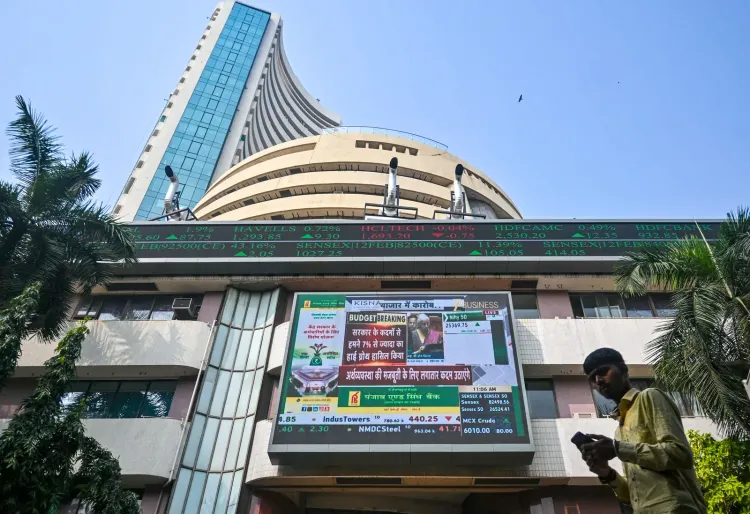
Indian equity benchmarks Nifty and Sensex declined for a second consecutive week as of 6 June, with persistent external pressures overshadowing modest domestic policy support. The Nifty 50 shed 0.77% over the week, closing Friday's session down 0.21% at 23,366, while the BSE Sensex ended the day 116 points lower, or 0.16%, at 74,243 — a weekly loss of 0.71%.
Key Developments This Week
Geopolitical tensions in West Asia and their knock-on effect on crude oil prices remained the dominant drag on sentiment, though some moderation in oil prices offered intermittent relief. The Reserve Bank of India (RBI) Monetary Policy Committee's supportive liquidity measures and efforts to stabilise the currency provided a partial counterweight, but a downward revision in growth forecasts tempered optimism and prompted selective profit-booking.
On the currency front, the Indian rupee strengthened against the US dollar, slipping below the ₹85 mark, as investors responded positively to the central bank's moves to attract foreign capital. Policy steps aimed at easing access for global investors and reducing tax-related frictions in bond markets were cited as key positives supporting capital inflows.
Broader Market Divergence
The broader market showed notable divergence from benchmark indices. The Nifty Midcap100 posted sharper losses, declining 1.57% during the week, while the Nifty Smallcap100 edged only marginally lower by 0.16%. According to analysts, 'Indian equities traded in a range-bound manner with a mild negative bias, witnessing a modest recovery toward the end of the week.'
Technical Levels to Watch
Market participants have flagged the 23,450–23,550 zone as a strong resistance band for the Nifty 50, with 23,250 acting as a crucial support level. For Bank Nifty, immediate resistance is placed around the 54,800–55,000 zone, while the 54,000–53,800 band continues to serve as near-term support.
What Investors Are Watching Next
With the earnings season now behind, analysts expect range-bound movement to persist until there is greater clarity on growth momentum and external stability. 'Investor focus will shift to the sustainability of RBI's supportive stance, evolving inflation trends, and the trajectory of bond yields,' market participants said. Progress on the monsoon and its implications for rural demand, along with developments in India–US trade discussions and crude price movements, are seen as the next set of incremental triggers for directional positioning.
Point of View
The RBI's liquidity cushion may not be enough to hold the 23,250 support. India–US trade talks are the wildcard; any adverse headline there could accelerate FII outflows that the rupee's recent stability has so far masked.
NationPress
21 Oct 2026
Frequently Asked Questions
Why did Nifty and Sensex fall for a second straight week?
The Nifty and Sensex declined for a second consecutive week ending 6 June due to a combination of geopolitical tensions in West Asia driving crude price uncertainty, a downward revision in domestic growth forecasts, and cautious global sentiment. RBI's supportive liquidity measures provided only partial relief.
Where did Nifty and Sensex close on 6 June?
The Nifty 50 closed at 23,366, down 0.21% on the day and 0.77% for the week. The BSE Sensex ended at 74,243, shedding 116 points or 0.16% on Friday and 0.71% over the week.
How did mid-cap and small-cap stocks perform compared to benchmarks?
Mid-caps underperformed significantly — the Nifty Midcap100 fell 1.57% during the week, while the Nifty Smallcap100 edged down just 0.16%, showing a divergence from both each other and the benchmark indices.
What are the key technical levels for Nifty next week?
Market participants have identified 23,450–23,550 as a strong resistance zone for the Nifty 50, with 23,250 as a crucial support level. For Bank Nifty, resistance sits at 54,800–55,000 and support at 54,000–53,800.
What factors will drive Indian markets in the coming weeks?
Analysts are watching the RBI's policy stance, inflation trends, bond yield movements, monsoon progress and its rural demand implications, crude oil price direction, and developments in India–US trade negotiations as the key triggers for the next directional move.