FM Sitharaman chairs 8th pre-Budget consultation with labour and employment sectors
Synopsis
Finance Minister Nirmala Sitharaman has completed her eighth pre-Budget consultation, this time with labour and employment sector stakeholders. Industry bodies Assocham and FICCI used the platform to push for a dedicated robotics PLI scheme, restoration of LTCG tax exemptions, and a new development finance framework for manufacturing — all aimed at finally closing the decade-old gap between India's 17% manufacturing GDP share and its 25% target.
Key Takeaways
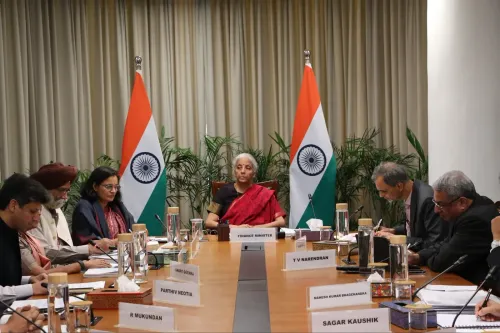
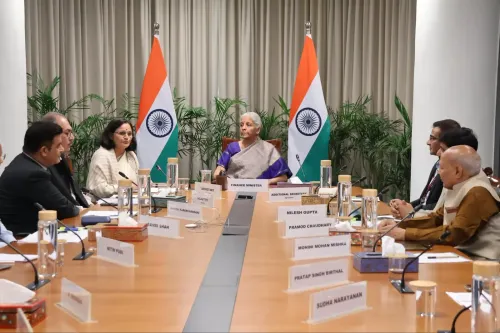
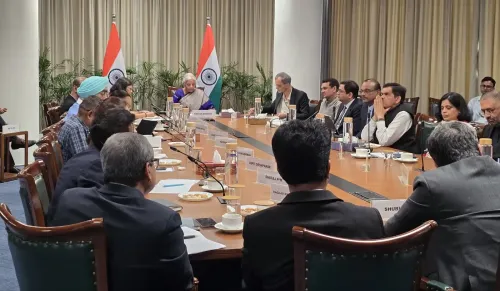
Finance Minister Nirmala Sitharaman chaired the eighth pre-Budget consultation on 20 November 2026 , focused on the employment and labour sectors .
DEA Secretary Anuradha Thakur and senior Labour Ministry officials attended the meeting.
Assocham recommended a dedicated PLI scheme for robotics, automation equipment, sensors, and precision components to boost advanced manufacturing.
FICCI called for restoration of the LTCG tax exemption on listed securities and a dedicated development finance framework for manufacturing .
India's manufacturing share of GDP remains near 17 per cent , well below the long-standing 25 per cent target.
The pre-Budget consultation series has now covered eight sectors , including IT, infrastructure, capital markets, MSMEs, and startups.
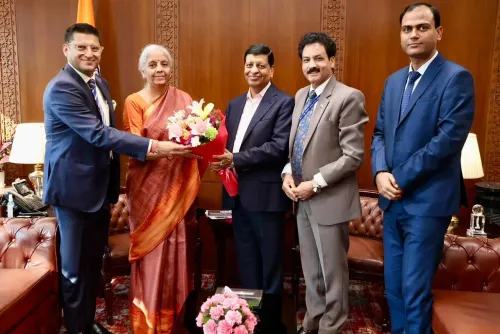
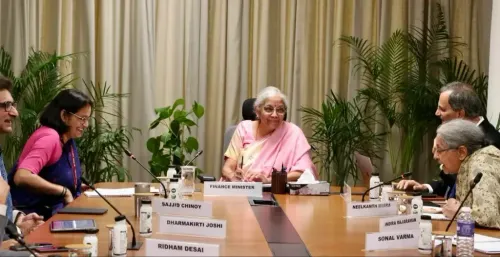
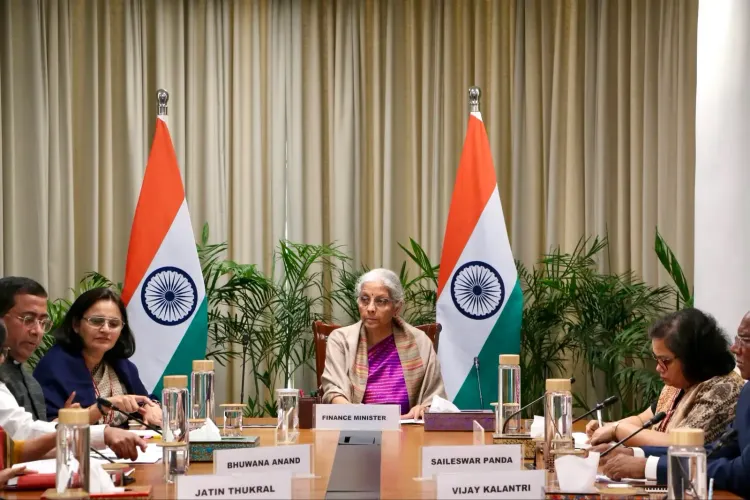
Finance Minister Nirmala Sitharaman on Friday, 20 November 2026 chaired the eighth pre-Budget consultation with stakeholders from the employment and labour sectors, as part of the government's preparatory process for the Union Budget 2027-28. The meeting, held in New Delhi, signals a broadening of the Centre's stakeholder outreach ahead of one of the most closely watched budget cycles in recent years.
Who Was in the Room
Anuradha Thakur, Secretary of the Department of Economic Affairs (DEA) under the Ministry of Finance, was among those in attendance, along with senior officials from the Labour Ministry, according to an official statement. The session was part of a structured consultation series that has already covered infrastructure, energy, sustainability, information technology, capital markets, banking, financial services, insurance, MSMEs, and the startup ecosystem.
Industry Demands: PLI for Robotics, R&D Incentives
Industry representatives called on the government to focus on advanced manufacturing, MSME competitiveness, and energy security. Among the headline recommendations was a dedicated Production-Linked Incentive (PLI) scheme for robotics, automation equipment, sensors, and precision components — a push aimed at positioning India as a globally competitive advanced manufacturing hub.
Industry body Assocham urged the government to strengthen existing PLI schemes with a view to raising manufacturing's share of GDP to 25 per cent. It specifically recommended 'a dedicated PLI scheme for robotics, automation equipment, sensors, precision components and related technologies, encouraging domestic production, research and development, investment, technological self-reliance and India's emergence as a globally competitive advanced manufacturing hub.' The chamber also called for the restoration of enhanced tax incentives for research and development.
FICCI's Capital Markets and Manufacturing Finance Push
The Federation of Indian Chambers of Commerce and Industry (FICCI) put forward a separate set of demands centred on capital markets and manufacturing finance. FICCI called for the restoration of the long-term capital gains (LTCG) tax exemption on listed securities and a calibrated increase in the securities transaction tax (STT) on delivery-based transactions to protect government revenues.
The industry body also proposed the establishment of a dedicated development finance framework for manufacturing within the Budget, alongside a graded LTCG structure offering lower tax rates for longer holding periods and complete exemption for investments held beyond three years. FICCI argued that deep and vibrant capital markets are essential to mobilising the long-term capital needed to support India's manufacturing expansion.
Context: A Budget Cycle Under Scrutiny
This is the eighth in a series of structured pre-Budget consultations that Finance Minister Sitharaman has conducted ahead of Budget 2027-28. The process, which spans multiple sectors, is designed to channel industry and expert inputs before the final fiscal framework is drafted. Notably, the labour and employment consultation comes at a time when job creation remains one of the most politically and economically sensitive metrics for the current government. India's manufacturing share of GDP has remained near 17 per cent for over a decade, well short of the long-standing 25 per cent target — a gap that industry bodies are pressing the Budget to close.
With consultations now spanning the full spectrum of the economy, the shape of Budget 2027-28 will likely be tested on how many of these recommendations make it to the Finance Minister's speech.
Point of View
But the industry asks are not. A dedicated robotics PLI and the restoration of LTCG exemptions are substantive fiscal interventions that would, if accepted, mark a meaningful shift in how India incentivises both manufacturing depth and capital market participation. What is conspicuously missing from the public readout is any government response — these consultations risk becoming a one-way input channel if the Budget eventually ignores the structural asks. The labour-employment framing also matters: job creation is the government's most politically exposed metric, and what the Budget does — or does not do — on that front will face intense post-Budget scrutiny.
NationPress
20 Nov 2026
Frequently Asked Questions
What was the eighth pre-Budget consultation about?
Finance Minister Nirmala Sitharaman chaired the eighth pre-Budget consultation on 20 November 2026, focusing on the employment and labour sectors ahead of Union Budget 2027-28. Industry bodies and senior government officials participated to present recommendations on job creation, manufacturing, and tax policy.
What did Assocham recommend for Union Budget 2027-28?
Assocham recommended a dedicated PLI scheme for robotics, automation equipment, sensors, and precision components to position India as a globally competitive advanced manufacturing hub. It also called for strengthening existing PLI schemes to help raise manufacturing's share of GDP to 25 per cent and for the restoration of enhanced R&D tax incentives.
What did FICCI demand in the pre-Budget consultation?
FICCI called for the restoration of the long-term capital gains (LTCG) tax exemption on listed securities, a calibrated increase in securities transaction tax (STT) on delivery-based transactions, and the creation of a dedicated development finance framework for manufacturing. It also proposed a graded LTCG structure with complete exemption for investments held beyond three years.
How many pre-Budget consultations has FM Sitharaman held so far?
Finance Minister Sitharaman has completed eight pre-Budget consultations covering sectors including infrastructure, energy, sustainability, IT, capital markets, banking, financial services, insurance, MSMEs, startups, and now employment and labour. The consultations form part of the Centre's structured stakeholder engagement before drafting the Union Budget.
Why is the manufacturing GDP target significant in this context?
India's manufacturing share of GDP has hovered near 17 per cent for over a decade despite a long-standing government target of 25 per cent. Industry bodies are using the Budget consultation process to press for new incentives — including robotics PLI and development finance — that could help close this persistent gap.