Sitharaman: Budgets Back Manufacturing Independence
Synopsis
Finance Minister Nirmala Sitharaman at PLF2026 outlined India's budget-backed dual strategy: building long-term domestic manufacturing capacity while enabling short-term supply-chain diversification away from single-country dependence, anchored by PLI schemes and the Atmanirbhar Bharat framework.
Key Takeaways
Dual-track strategy: Government budgets support both long-term domestic manufacturing and short-term alternative sourcing to remove single-country dependence.
PLI scheme lineage: The Production Linked Incentive programme, launched in 2020-21 for mobile manufacturing, now spans 14 sectors including electronics, pharma, and automobiles.
Atmanirbhar Bharat framework: The 2020 self-reliance initiative has served as policy scaffolding across multiple Union Budgets.
Post-2020 urgency: Supply disruptions in 2020 accelerated India's push to onshore strategic production and diversify import sources.
Investment signal: Sitharaman's remarks at PLF2026 affirm no policy reversal — the manufacturing incentive architecture is being reinforced, not wound down.
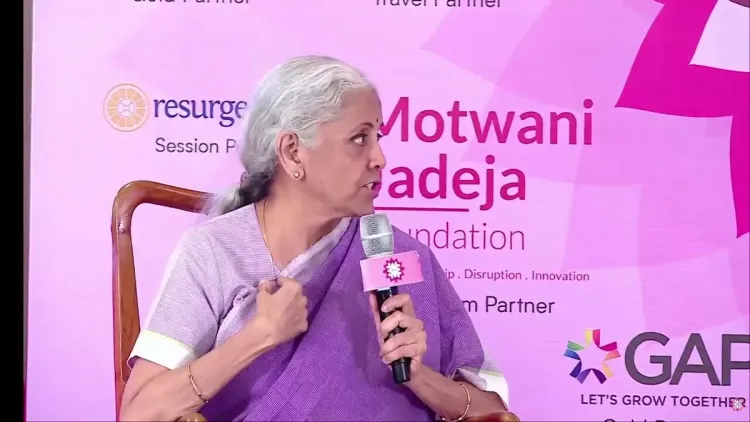
India's dependence on foreign supply chains is a strategic vulnerability — and Union Finance Minister Nirmala Sitharaman says the government has been systematically dismantling it, one budget at a time. Speaking at #PLF2026 on Friday, 25 September 2026, Sitharaman spelled out a two-track approach: build domestic manufacturing capacity for the long haul, and for immediate needs, shift sourcing away from single-country dependence right now.
Her words carried the directness of a policy architect: 'We have ensured that through several budget announcements, that we are giving industry the necessary support to either start the manufacturing here for the long run, or immediately for the short run, source it from elsewhere and remove the dependence.' The short run and the long run, addressed at once — that is the design.
The PLI Blueprint and What Came Before It
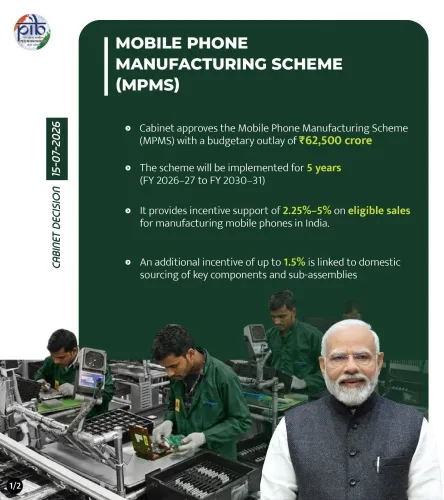
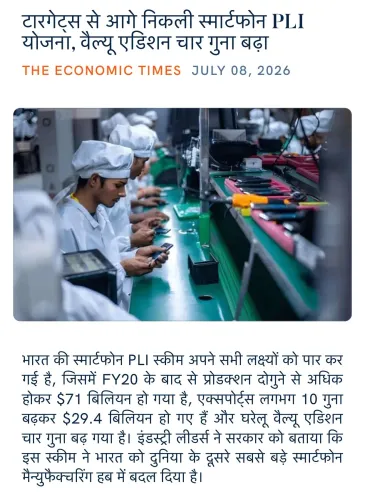
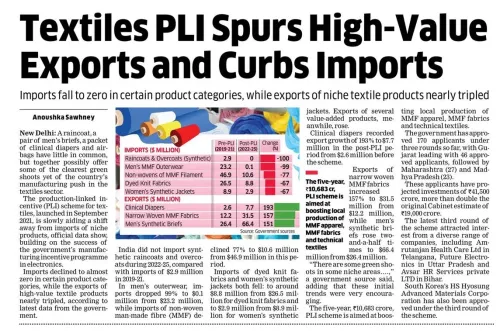
The architecture behind Sitharaman's statement stretches back to September 2014, when the Make in India programme first set out to position India as a global manufacturing destination. The real acceleration, however, came with the Production Linked Incentive (PLI) scheme, first announced in the Union Budget 2020-21 for mobile manufacturing and then expanded to 14 sectors — from electronics and pharmaceuticals to automobiles and specialty textiles.
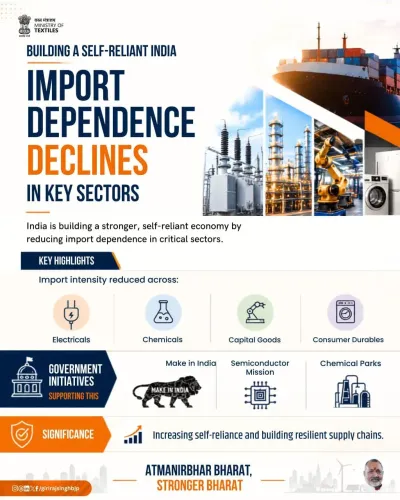
The timing was not coincidental. 2020 supply-chain disruptions — shortages in semiconductors, active pharmaceutical ingredients, and critical components — exposed how deeply integrated India had become with single-source import dependencies. The PLI response was a fiscal lever: reward companies in India for actual incremental production, not merely for setting up shop.
Incentivising the Break From Dependence
Sitharaman framed the broader philosophy plainly: 'We have gone ahead in incentivising people who want to get themselves out of this dependence and be able to produce it here.' That framing — incentivising the will to decouple — is central to the Atmanirbhar Bharat initiative launched in 2020, which has served as the ideological and policy scaffolding for multiple budget cycles since.
The dual-track strategy matters for manufacturers navigating global uncertainty. One track — domestic capacity — is a multi-year play requiring investment, workforce, and supply ecosystems. The other track — alternative sourcing — is a near-term hedge that prevents strategic exposure while the longer arc builds out. Successive Union Budgets have tried to support both simultaneously through tariff adjustments, import duty rationalisation, and direct production incentives.
What Investors and Industry Are Watching Next
The proof of any incentive architecture is in the investment numbers and output data it generates. The real test for PLI schemes lies in whether targeted sectors hit their production milestones, whether global manufacturers deepen India-based operations, and whether the next Union Budget announces mid-course corrections or further expansions. Sitharaman's statement at PLF2026 signals no reversal — if anything, it doubles down on the long-term commitment to manufacturing-led growth as a national priority.
India's supply-chain story is no longer purely defensive. It is, increasingly, a pitch to the world: if you want to build away from risk, build here.
Point of View
Atmanirbhar-framed manufacturing push is durable policy, not a one-cycle experiment. The explicit two-track framing (long-run domestic capacity plus short-run sourcing diversification) is a sophisticated acknowledgement that decoupling from import dependence cannot happen overnight, and that good industrial policy holds both timelines simultaneously. What makes the statement politically significant is its accumulative logic: 'several budget announcements' is a claim of institutional commitment, not a single initiative. The open question remains whether investment inflows and actual production data in targeted PLI sectors will validate the architecture before geopolitical tailwinds fade.
NationPress
25 Sept 2026
Frequently Asked Questions
What did Nirmala Sitharaman say at PLF2026 about manufacturing?
Sitharaman said the government has used multiple Union Budget announcements to support industry in starting long-term domestic manufacturing or immediately sourcing from alternative suppliers to remove dependence on single countries.
What is the PLI scheme and how many sectors does it cover?
The Production Linked Incentive scheme offers fiscal incentives tied to incremental domestic production. It was first announced in the Union Budget 2020-21 for mobile manufacturing and has since been expanded to 14 sectors including electronics, pharmaceuticals, and automobiles.
What is Atmanirbhar Bharat and how does it relate to import dependence?
Atmanirbhar Bharat, launched in 2020 , is India's self-reliance initiative designed to strengthen local production and reduce dependence on imports through budgetary support, tariff adjustments, and direct production incentives across strategic sectors.
Why did India accelerate its domestic manufacturing push after 2020?
Supply-chain disruptions in 2020 exposed India's vulnerability to single-source import dependence, particularly in semiconductors and active pharmaceutical ingredients, accelerating the rollout of PLI schemes and Atmanirbhar Bharat policies.
What should industry watch for in upcoming Union Budgets on manufacturing?
Analysts are watching for implementation progress and investment inflows under expanded PLI schemes, potential mid-term reviews of manufacturing targets, and any further tariff or incentive adjustments to support domestic production goals.